
Antique Furniture Buffet
An antique furniture buffet provides practical service and grand presence, spanning centuries of craftsmanship in mahogany, oak, and burr walnut.
Antique Furniture Buffet
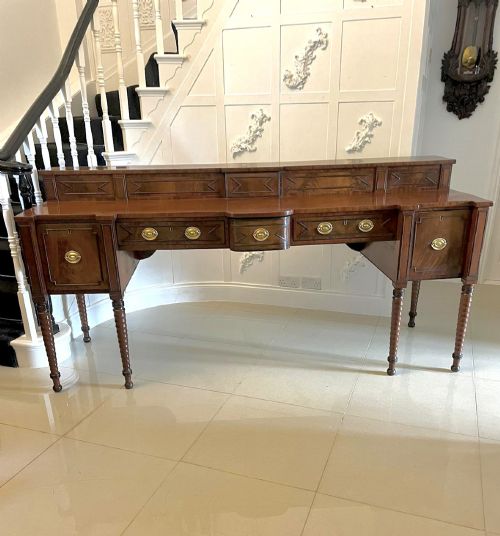
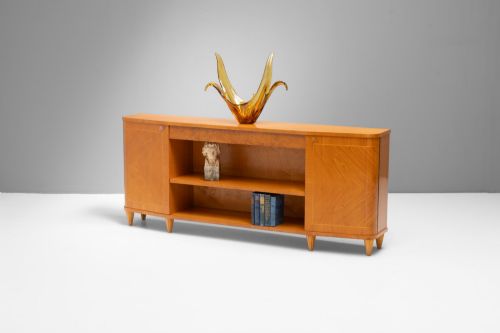
When you search for an antique furniture buffet, you are examining a diverse group of large serving pieces, sideboards, enfilades, and tiered dumb waiters designed for dining rooms and grand halls. These pieces range from eighteenth-century Georgian and George III designs to nineteenth-century Victorian, Regency, and Edwardian interpretations, alongside twentieth-century Art Deco and Swedish Grace examples.
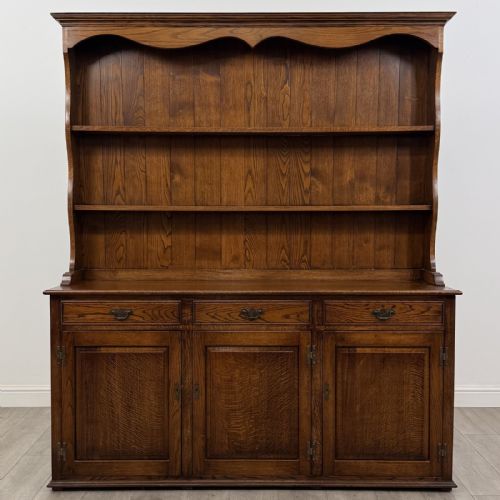
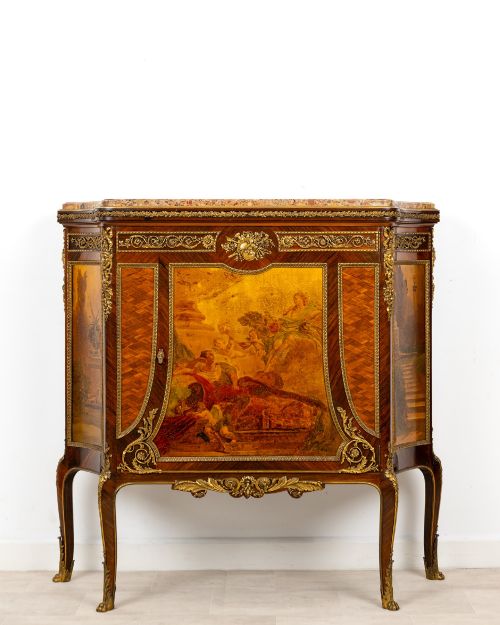
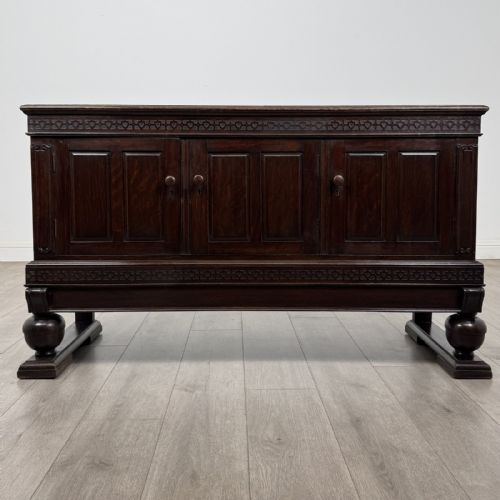
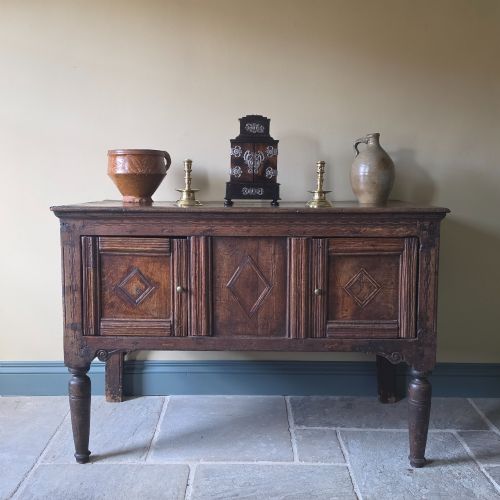
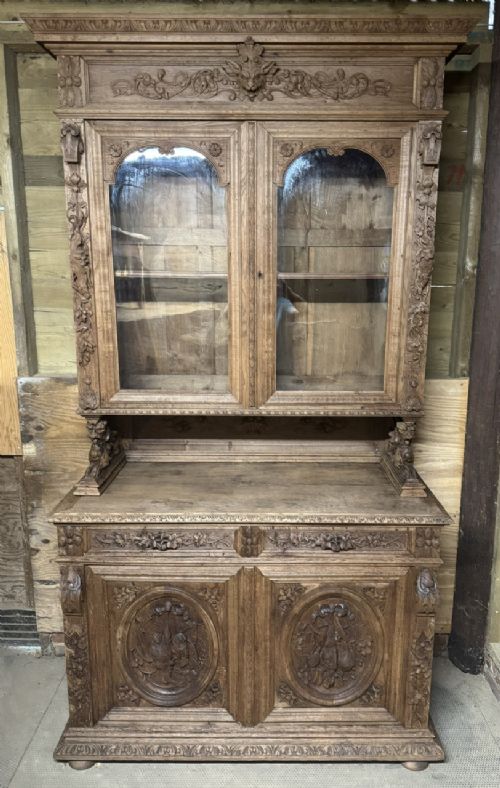
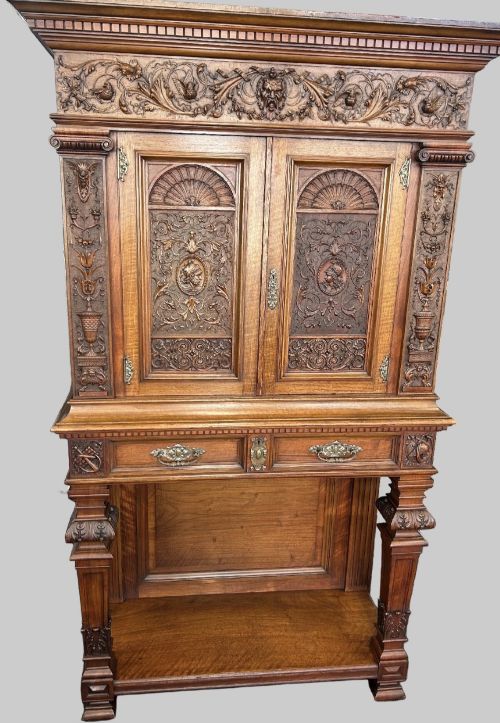
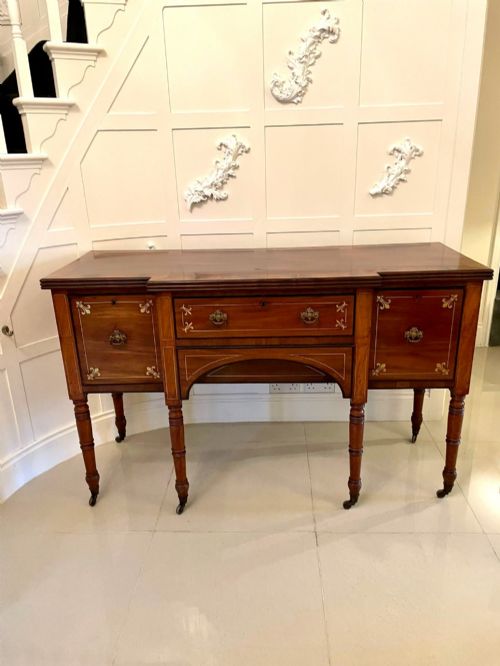
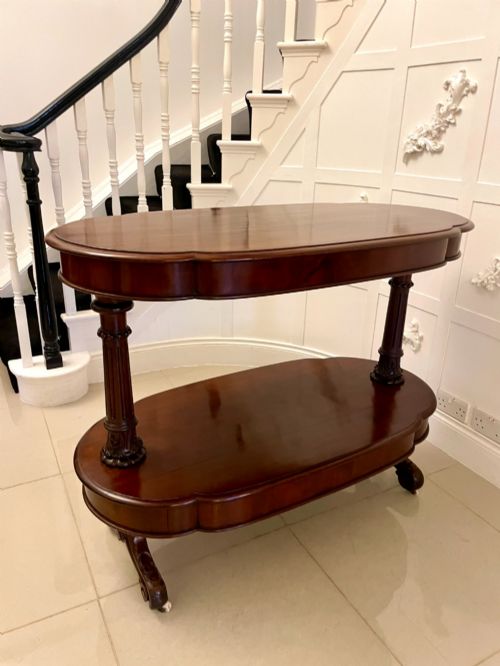
The most common iterations on this page are nineteenth-century mahogany sideboards and carved oak buffets, alongside specialised serving furniture such as three-tier dumb waiters and etageres. Pieces span distinct regional and stylistic revivals, incorporating Jacobean geometric panels, Sheraton satinwood inlay, and French Henri II or Vernis Martin details.
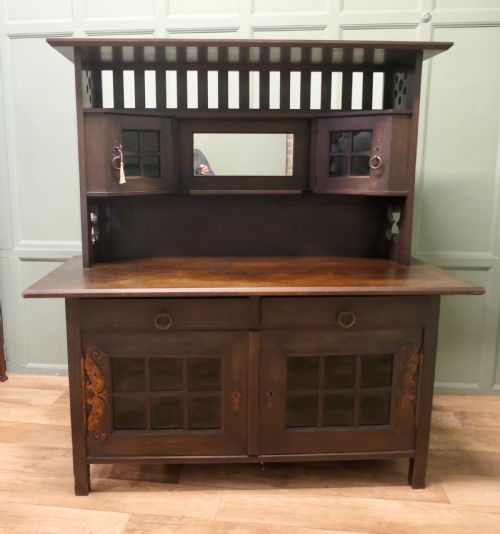
Originating as utilitarian serving tables and food hutches, these pieces evolved through the Georgian and Victorian eras into elaborate status symbols featuring mirror backs, marble tops, and intricate marquetry. Whether selecting a compact dumb waiter or a large breakfront serving console, buyers acquire functional dining furniture with deep historical lineage.
Materials and Construction
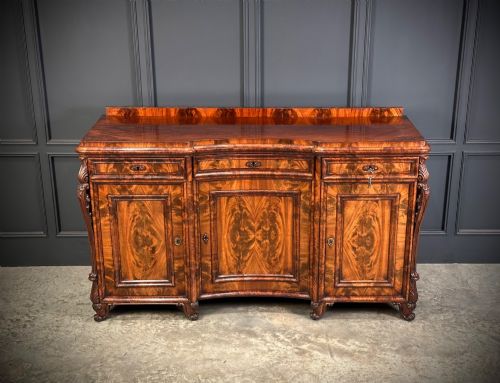
Cabinet makers relied heavily on dense tropical hardwoods like mahogany and padouk, alongside domestic timbers such as oak, elm, and pine. Wealthier commissions employed figured veneers, flame mahogany, burr walnut, and pollard oak to create striking grain patterns across broad cabinet doors and drawer fronts.
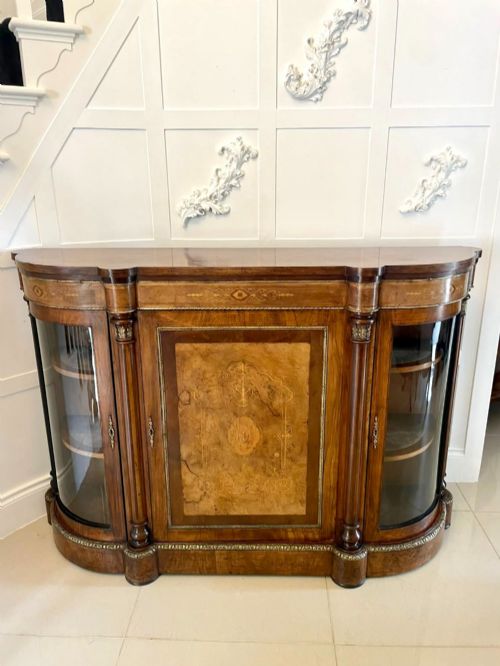
Decorative embellishments required specialist joinery and metalwork, utilising brass inlay,ormolu mounts, and fine marquetry work. Carved details - ranging from barley twist legs and lion paw feet to geometric panels - demonstrate the high level of manual labour invested by period workshops.
The listings span eight distinct periods, stretching from seventeenth-century food hutches through Georgian and Victorian craftsmanship to twentieth-century Art Deco and Swedish Grace pieces.
Distinctions in Quality
Quality rests in the selection of timber and the ambition of the joinery, separating standard utility pieces from master-workshop commissions. Superior examples display continuous grain matching across drawer fronts and doors, alongside deeply carved structural elements rather than applied superficial ornamentation.
Attribution to documented makers and specific stylistic revivals elevates a piece significantly. The integration of high-grade secondary materials, such as heavy brass hardware, flawless marble tops, and intact original mirror plates, distinguishes exceptional output from standard domestic furniture.
François Linke·Leonard Wyburd for Liberty & Co.·Gillows·Hewetsons London·Maurice Adams·Whytock and Reid
The Antique Furniture Buffet Glossary
- Dumb Waiter
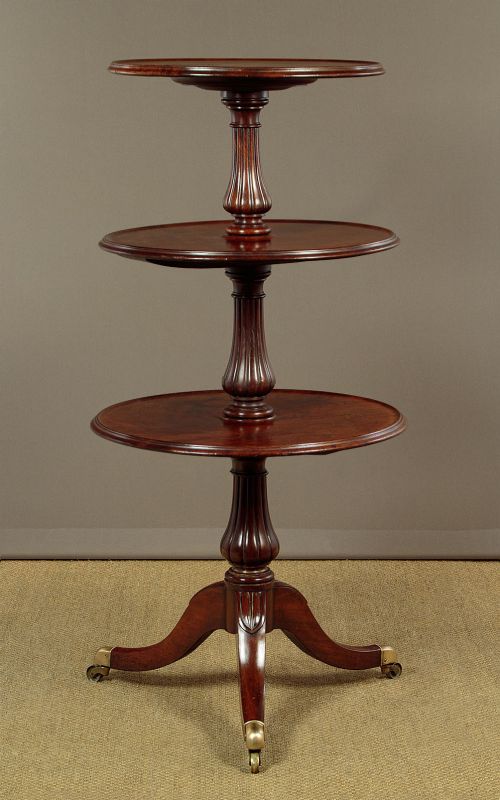
- A tiered serving piece fitted with multiple revolving or stationary trays on a central column, used during meals to hold dishes without requiring servants. These items date across the Georgian and Victorian periods.
- Marquetry
- The art of applying pieces of veneer to a structural structure to form decorative patterns and pictures. Craftsmen utilised various tinted woods to achieve pictorial depth.
- Ormolu
- Gilded bronze mounts applied to furniture for decorative effect, prevalent in French and high-status British pieces. The technique requires dipping metal in gold amalgam.
- Breakfront
- A piece of furniture where the central section projects forward from the flanking wings. This architectural arrangement creates shadow and depth on large sideboards.
Antique Furniture Buffet: Frequently Asked Questions
What is an antique buffet used for?
These pieces served historically for holding food, silverware, and glassware during large dining occasions. They functioned as staging areas for meals before individual service became common.
Today, they operate effectively in dining rooms or living spaces as storage credenzas and display surfaces for lamps and decorative objects.
How do I identify a Victorian sideboard?
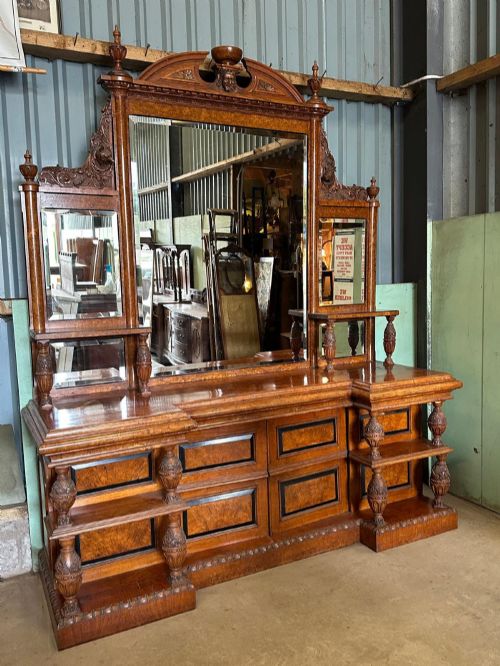
Victorian examples often feature heavy proportions, dark timbers like pollard oak or burr walnut, and elaborate carved decoration. Many incorporate high mirror backs supported by carved brackets.
Look for deep patination in the wood and construction methods typical of nineteenth-century industrial workshops, such as hand-cut dovetails paired with early machine assistance.
What is the difference between a buffet and a dumb waiter?
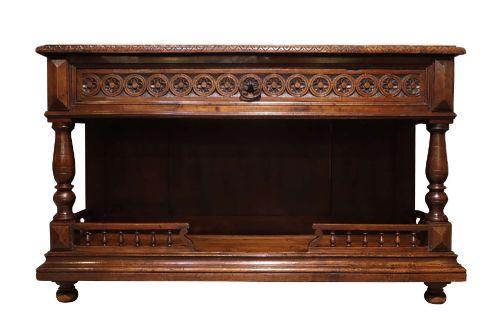
A buffet is a wide, stationary floor cabinet designed for serving food and storing dining accessories against a wall. It offers substantial cupboard and drawer space.
A dumb waiter is a vertical piece featuring two or three circular or oval graduating tiers stacked on a central pillar, designed specifically to hold dishes within reach of a dining table.
Are these pieces suitable for modern homes?
Their deep storage capacities and sturdy wooden construction make them exceptionally practical for contemporary dining rooms and hallways. They easily accommodate modern dinnerware, linens, and electronics.
Placing them requires measuring floor space and ceiling clearance carefully, particularly for tall mirror-back sideboards or multi-tiered serving tables.