

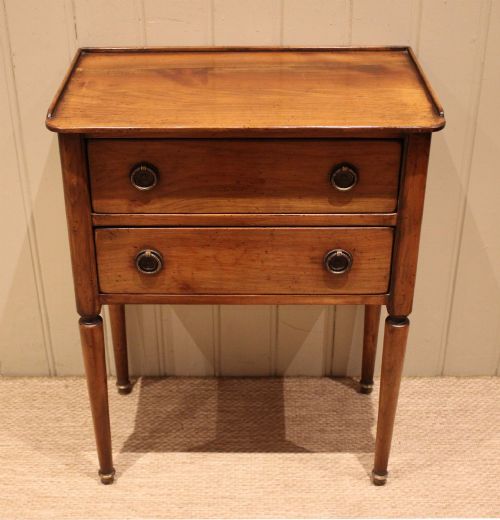
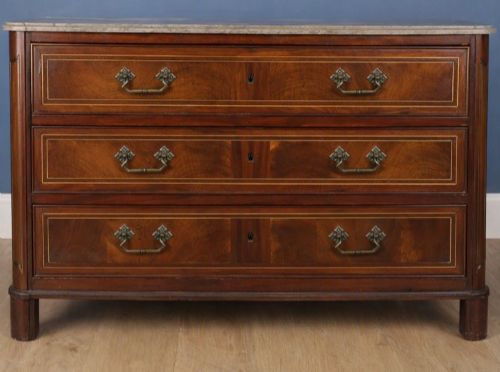
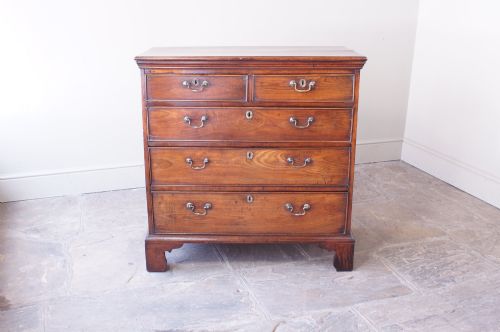

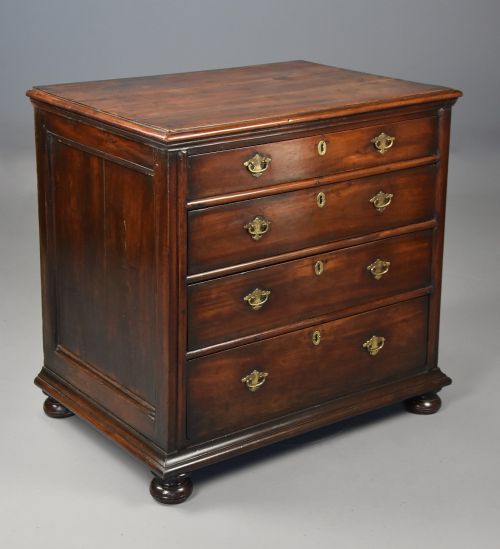
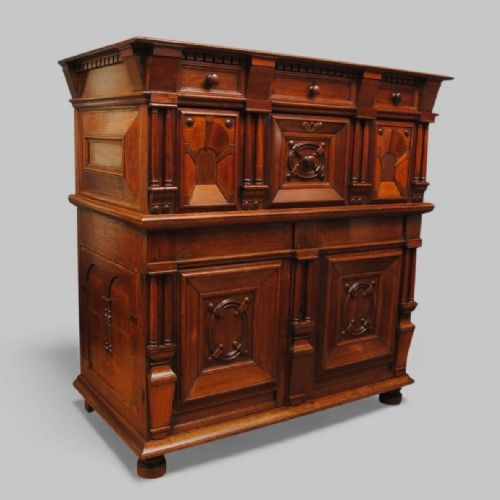


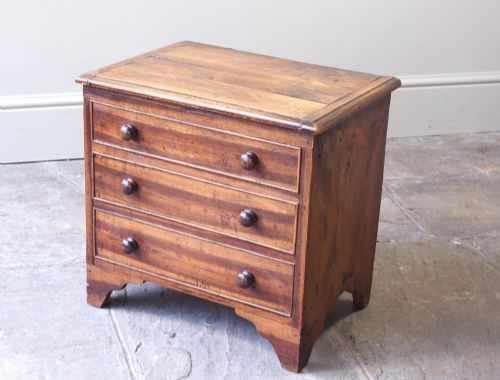
Antique Fruitwood Chest
An antique fruitwood chest brings a warm, tactile timber grain and rich surface warmth to a room.
Antique Fruitwood Chest
The domestic storage forms span from deep-chested case furniture to miniature coffers and table caskets, often combining fruitwood with walnut, oak, or exotic inlay woods. Pieces range from austere seventeenth-century joined fronts to serpentine lines and curved bombe profiles of the eighteenth century.
Originating across England, Wales, France, and Italy, these pieces reflect both rural craftsmanship and refined urban cabinet-making. Buyers select them for their domestic utility as well as the distinct amber and honey tones that develop across centuries of handling.
What varies in quality
Quality rests primarily in the choice and matching of the timber figure, where well-selected fruitwood displays deep, varied grain patterns rather than flat, uniform surfaces. The crispness of hand-cut mouldings and the precision of inlaid wood, bone, or ebony work further separate standard regional pieces from finer workshop productions.
Construction integrity distinguishes better examples, visible in the tightness of dovetail joints, the survival of original brass hardware, and the unwarped movement of drawer runners. The harmonious balance of proportions, such as the sweep of a serpentine front or the curve of French provincial legs, dictates visual success.
Antique Fruitwood Chest Retail Price Guide 2026
Typical asking prices for fruitwood chest among the pieces listed under this phrase on Sellingantiques today, from the lower quarter to the upper quarter. They describe what is for sale here now, not the wider market.
Some seventeenth-century fruitwood chests hide tiny compartments originally intended for secret documents or expensive spices.
The Antique Fruitwood Chest Glossary
- Fruitwood
- Timber sourced from fruit-bearing trees such as pear, apple, cherry, plum, and olive, prized for its fine grain and warm patina. It was widely used in European cabinet-making for both solid construction and decorative veneers.
- Commode
- A low chest of drawers or cabinet developed in France during the seventeenth century and later adopted across Europe. They typically feature multiple drawer tiers and often stand on short legs.
- Bombe
- A swelling, convex furniture profile where the front and sides bulge outward in a curving serpentine shape. This technique required advanced woodworking skill and was popular in eighteenth-century continental pieces.
- Marquetry
- The art of applying small pieces of wood veneer and other materials like bone to a structural carcass to form decorative pictures or geometric patterns. It creates detailed contrasting surfaces across drawer fronts and top panels.
- Close stool
- An enclosed piece of furniture designed to house a chamber pot, often disguised as a small cabinet or chest. Eighteenth-century examples frequently employ high-quality timbers like plumwood and walnut.
Antique Fruitwood Chest: Frequently Asked Questions
How do I date an old chest?
Dating relies on examining construction methods, such as hand-cut dovetails, timber choices like walnut and oak linings, and stylistic markers like serpentine fronts or brass hardware.
Regional differences between English country pieces and continental styles also help narrow down the period of manufacture.
Where were these chests made?
Makers across England, Wales, France, and Italy produced these pieces in both rural provincial workshops and urban cabinet-making centres.
Continental makers often favoured decorative marquetry and marble tops, while Welsh and English makers utilised sturdy native oaks and fruitwood combinations.
How should I care for fruitwood furniture?
Keep wooden pieces away from direct heat sources and dramatic humidity shifts to prevent timber movement and veneer lifting.
Occasional dusting with a dry cloth and sparing application of traditional wax preserves the natural finish and historical patina.