

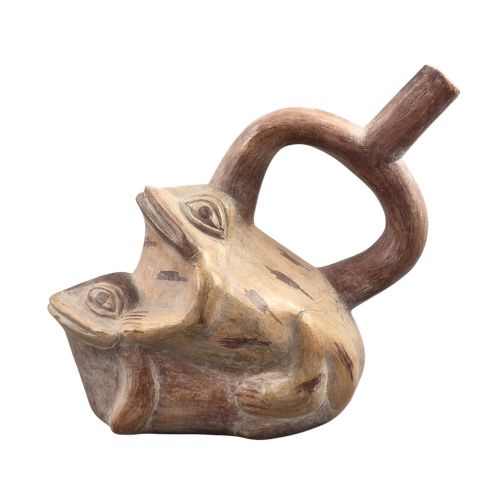


Antique Frog Sculpture
These antique frog sculpture examples bring together small-scale animalier studies and Japanese netsuke crafted from bronze, boxwood, and horn.
Antique Frog Sculpture
When you search for an antique frog sculpture, you encounter small decorative figures spanning the nineteenth century and the early twentieth century. These pieces range from European animalier bronzes to Japanese Edo and Meiji period wood carvings.
You are most likely to meet small bronze desk ornaments, miniature cold-painted figures, and finely carved boxwood netsuke on this page. The forms stretch from realistic anatomical studies to decorative objects like vases and paperweights.
Origins vary between European workshops, notably French and Austrian foundries, and traditional Japanese carvers. Victorian and Edwardian examples sit alongside Asian works created for domestic use and export.
How they were made
Bronze figures are produced using the lost-wax casting method, capturing fine skin textures and musculature before receiving a dark patina, polychrome paint, or cold-painted colours. French and Austrian foundries excelled at this metalwork.
Carved pieces utilise dense boxwood, sometimes inlaid with horn or other organic materials for eyes and details. Japanese netsuke and paperweights rely entirely on hand-carving with small chisels and knives to achieve smooth, tactile surfaces.
Antique Frog Sculpture Retail Price Guide 2026
Typical asking prices for frog sculpture among the pieces listed under this phrase on Sellingantiques today, from the lower quarter to the upper quarter. They describe what is for sale here now, not the wider market.
Several frogs double as heavy paperweights, ready to hold down your tax returns with amphibian dignity.
What varies in quality
In wood carvings, the finesse of the expression and the smoothness of the wear from handling dictate the standard. Master carvers of the Edo and Meiji periods achieved lifelike postures and balanced proportions that lesser workshop pieces miss.
Jean Dunand·C Neuhaus
The Antique Frog Sculpture Glossary
- Animalier
- A nineteenth-century European art movement focused on the realistic portrayal of animals. Sculptors in this tradition concentrated heavily on accurate anatomy and natural behaviour.
- Netsuke
- A small Japanese toggle carved from wood or ivory used to secure a pouch or basket to a traditional kimono sash. These miniature sculptures feature an opening for a cord.
- Cold Painted
- A technique where bronze figures are painted with unfired oil or varnish colours rather than enamel baked in a kiln. This finish is delicate and prone to rubbing over time.
- Patina
- The surface sheen or colour developed on bronze through age and chemical treatment. A rich patina adds depth and character to metal sculptures.
- Edo Period
- A period in Japanese history spanning from sixteen hundred and three to eighteen hundred and sixty-eight. Carvings from this era show high standards of traditional craftsmanship.
Antique Frog Sculpture: Frequently Asked Questions
What materials are used?
These sculptures utilise cast bronze, carved boxwood, and occasionally marble or inlaid horn. Metal pieces often feature applied patination or cold-painted surface colours.
Wooden figures rely on dense, tight-grained hardwoods chosen for their ability to hold minute carving details without splintering.
How were netsuke used?
Netsuke functioned as toggles attached to cords on traditional Japanese garments which lacked pockets. They held hanging containers such as medicine boxes or tobacco pouches.
Owners slipped the toggle behind the silk sash to keep personal belongings secure while walking outdoors.
How do I date bronze pieces?
Dating relies on stylistic markers, casting techniques, and foundry marks stamped into the metal base. Victorian and Art Nouveau pieces often show distinct decorative motifs characteristic of their decade.
Examine the wear patterns and the composition of the metal alloy to help place the work within the nineteenth or early twentieth century.
Where were animalier bronzes made?
Animalier bronzes originated primarily in Parisian workshops during the nineteenth century. Sculptors worked closely with specialised foundries to cast and finish each figure.
Austrian foundries later adopted similar techniques, producing smaller cold-painted desk ornaments and novelty figures.