




Antique Fretwork Shelves
Antique fretwork shelves are open display tiers and hanging brackets shaped by pierced scrolling timber, offering a decorative way to present small possessions.
Antique Fretwork Shelves
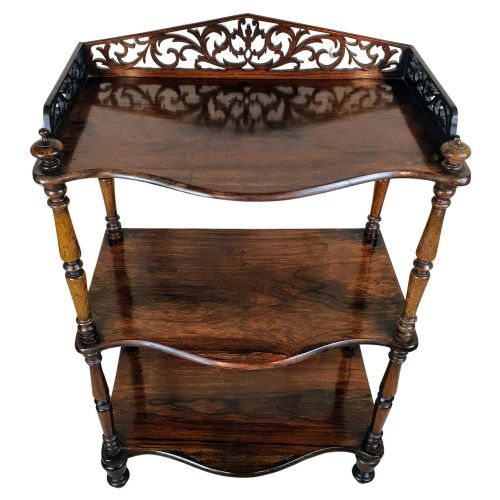
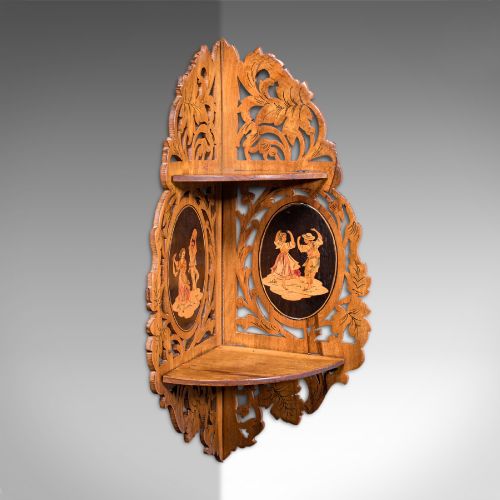
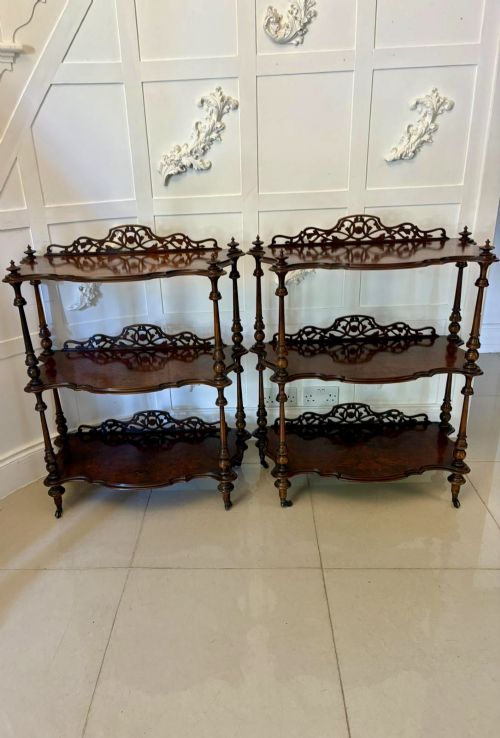
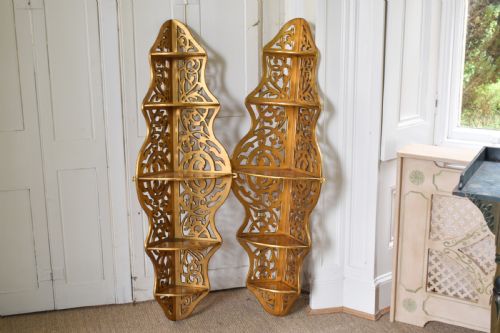
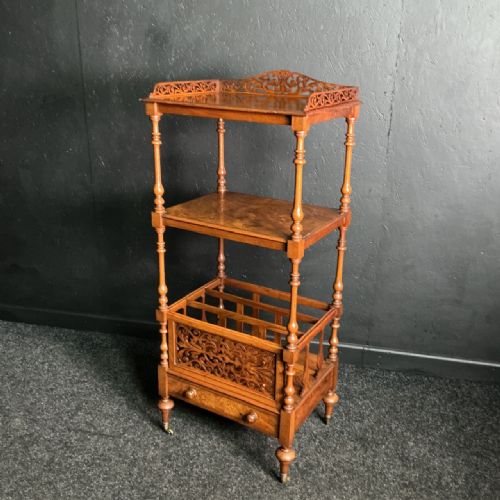
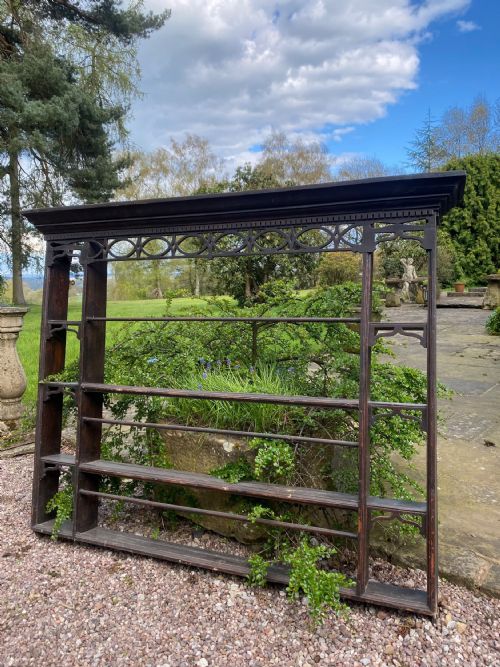
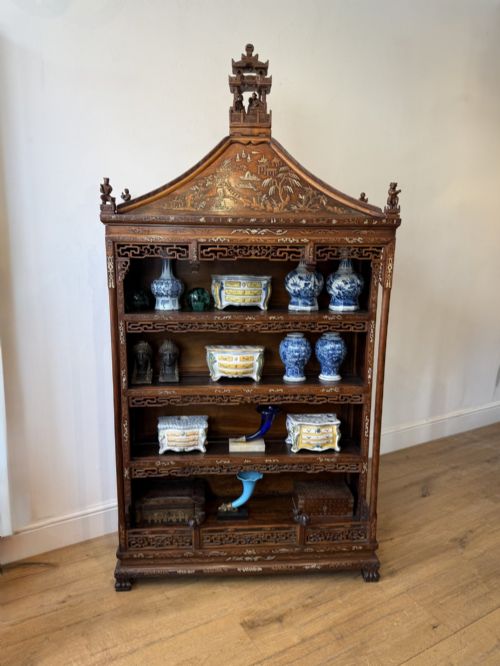
Antique fretwork shelves span several distinct forms designed to hold books, ceramics, and ornaments in Victorian, Edwardian, and earlier interiors. Buyers searching for antique fretwork shelves encounter multi-tiered whatnots, corner brackets, and hanging wall shelves designed to maximise vertical display space in a room.
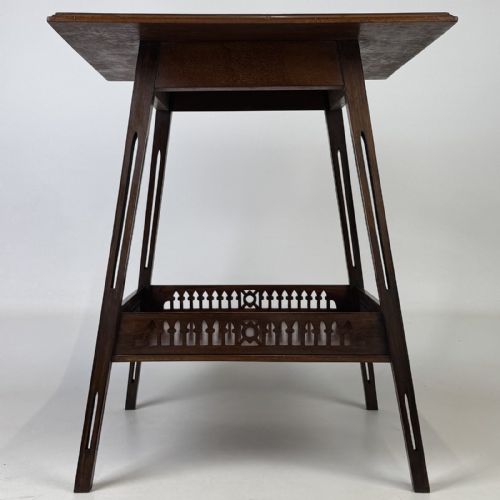
The pieces on this page originate predominantly from the nineteenth century, including Victorian burr walnut examples and Edwardian mahogany pieces. Makers utilised various woods such as walnut, rosewood, oak, and mahogany, often incorporating pierced fret-cut decoration along the galleries and brackets.
What varies in quality
Quality in these pieces rests upon the crispness of the fret-cut detailing and the selection of timber used for the main structure and veneers. Better examples display finely pierced scrolling without splintering, coupled with well-figured burr walnut or rich mahogany grain.
Structural integrity also separates standard items from finer works, particularly in the stability of multi-tiered whatnots and the precision of inlaid marquetry. Pieces retaining their original brass fittings and polish demonstrate superior preservation.
Antique Fretwork Shelves Retail Price Guide 2026
Typical asking prices for fretwork shelves among the pieces listed under this phrase on Sellingantiques today, from the lower quarter to the upper quarter. They describe what is for sale here now, not the wider market.
Some nineteenth-century whatnots feature hollow barley twist columns, offering a delightfully dizzying support for your grandmother's porcelain.
Robert Strahan
The Antique Fretwork Shelves Glossary
- Whatnot
- A moveable set of open shelves used for displaying ornaments or books. These pieces typically feature three or more tiers supported by columns or turned uprights.
- Fretwork
- Ornamental perforated woodwork created by cutting patterns through thin timber. This technique forms the delicate pierced galleries and brackets characteristic of these shelves.
- Burr Walnut
- Timber taken from walnut tree growths, prized for its swirling, mottled grain patterns. Cabinet makers applied it as a veneer to elevate the visual appeal of furniture.
- Marquetry
- Decorative veneer work forming pictures or geometric patterns using various coloured woods. Craftsmen cut and fitted pieces into a background veneer to ornament surfaces.
- Canterbury
- A low stand featuring slatted partitions designed to hold sheet music or books. Some variations incorporate display shelves or drawers within their construction.
Antique Fretwork Shelves: Frequently Asked Questions
Where should I hang wall shelves?
Hanging shelves suit alcoves, hallways, or above side tables where wall space permits vertical display. Ensure fixings match the weight of the timber and the items placed upon the tiers.
Position them at a height that allows safe access to the shelves without obstructing movement through the room.
How do I clean antique walnut?
Dust the timber regularly with a soft, dry cloth to prevent dirt accumulation in the carved fretwork. Avoid modern aerosol polishes, which can build up a residue over the historic finish.
Apply a microcrystalline wax sparingly when the wood appears dry, buffing gently to maintain a soft sheen.
Can corner shelves hold heavy books?
Most antique corner brackets and hanging shelves are intended for lighter decorative objects, ceramics, or small volumes. Heavier books require sturdy floor-standing whatnots with solid upright supports.
Check the wall fixings and the timber joints before placing any substantial weight on antique hanging tiers.
What is a whatnot shelf?
A whatnot is a multi-tiered piece of freestanding furniture designed specifically for displaying ornaments and small possessions. Originating in the nineteenth century, they often feature turned columns and pierced galleries.
Versions range from corner units to demi-lune console tables with secondary display tiers beneath the main surface.