

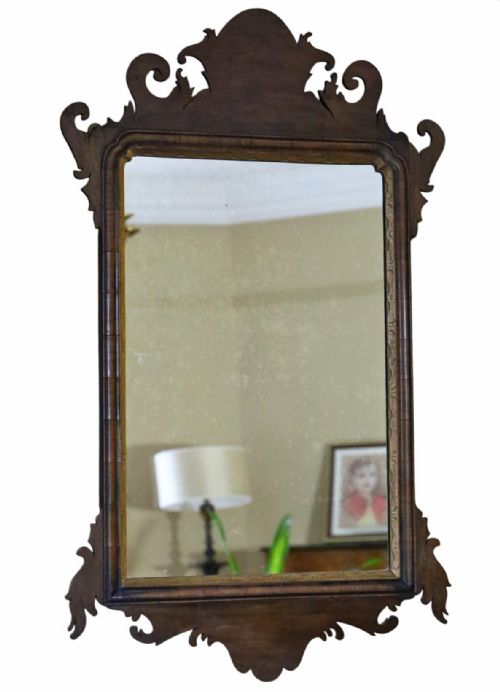


Antique Fret Mirror
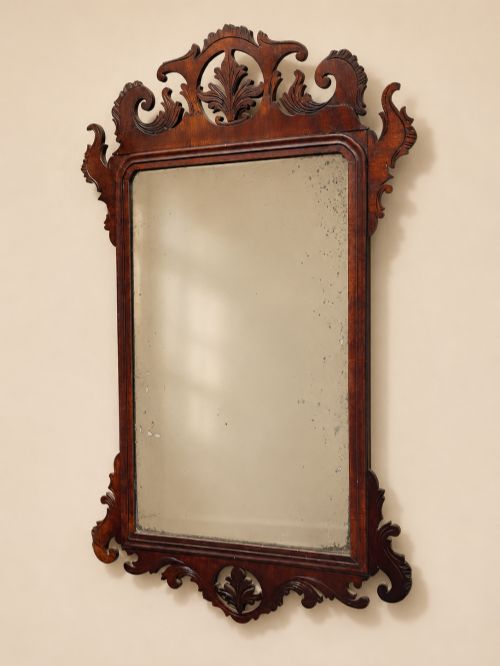
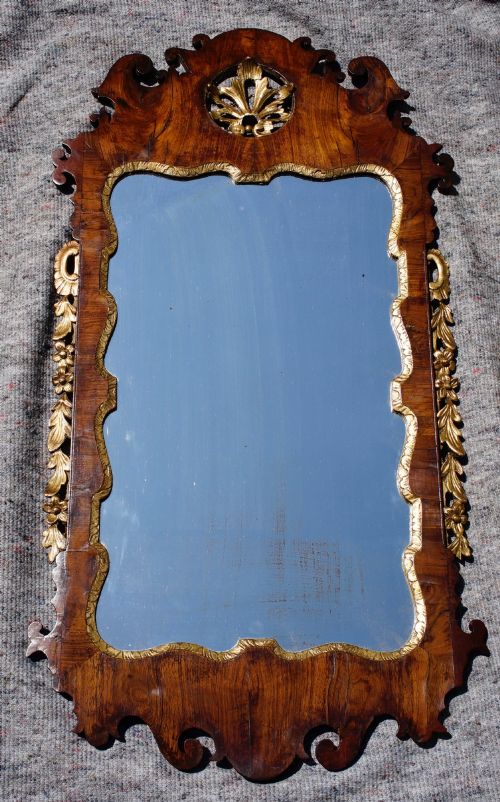
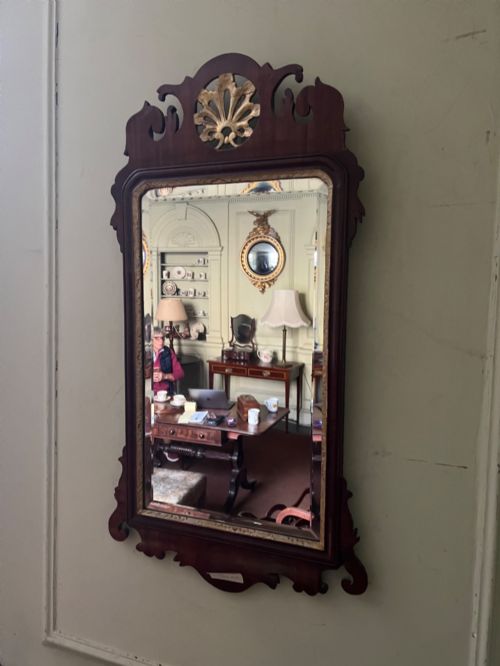
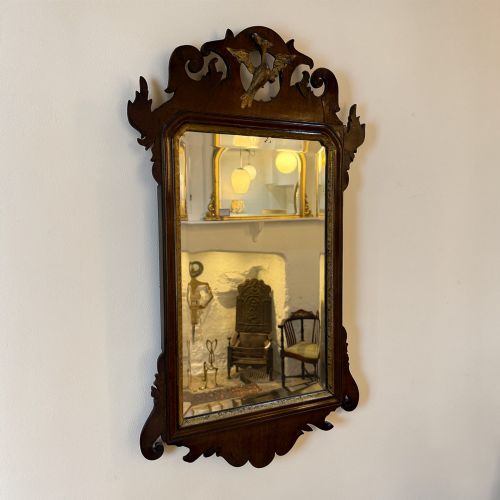
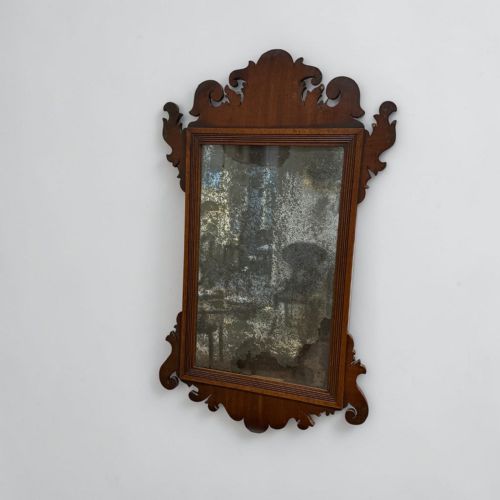
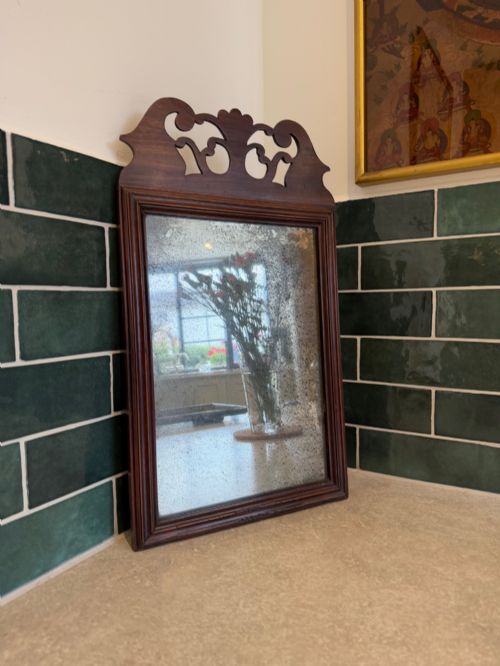
An antique fret mirror brings unmistakable depth to a room through precise fret-cut wooden frames and period character.
Antique Fret Mirror
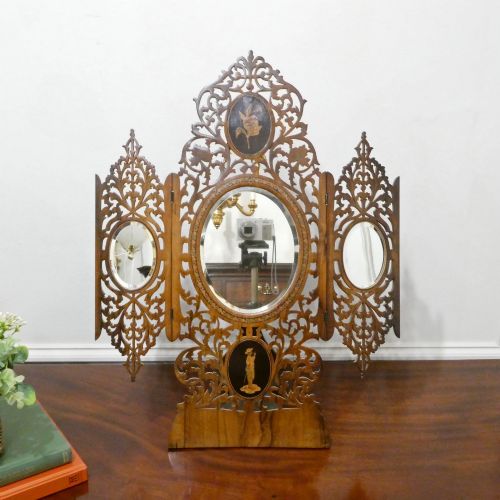
When you search for an antique fret mirror, you encounter wall-hung looking glasses defined by their intricate, pierced wooden frames.
The pieces appearing here span from genuine 18th-century examples to later Georgian Revival interpretations from the Victorian, Edwardian, and 1920s eras.
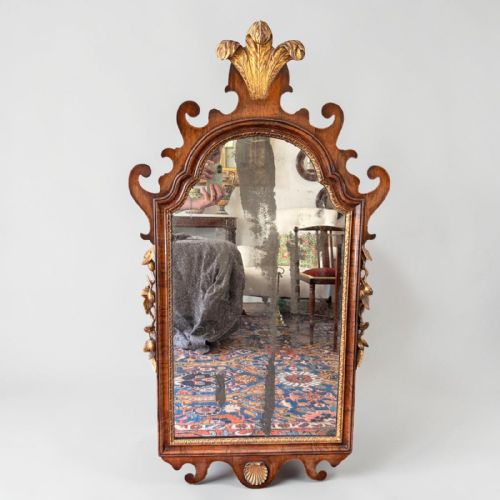
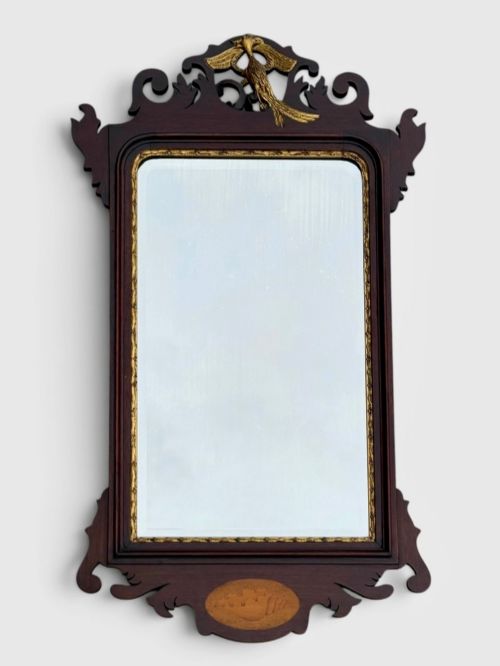
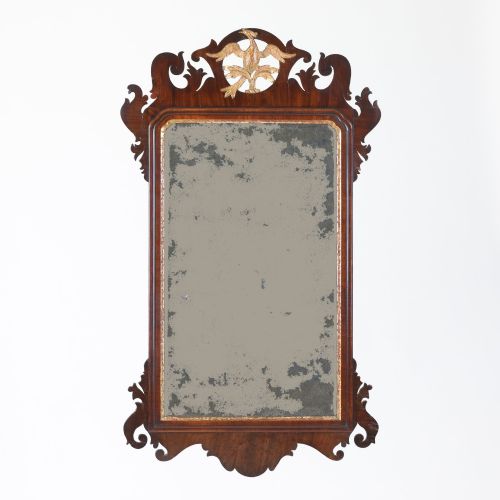
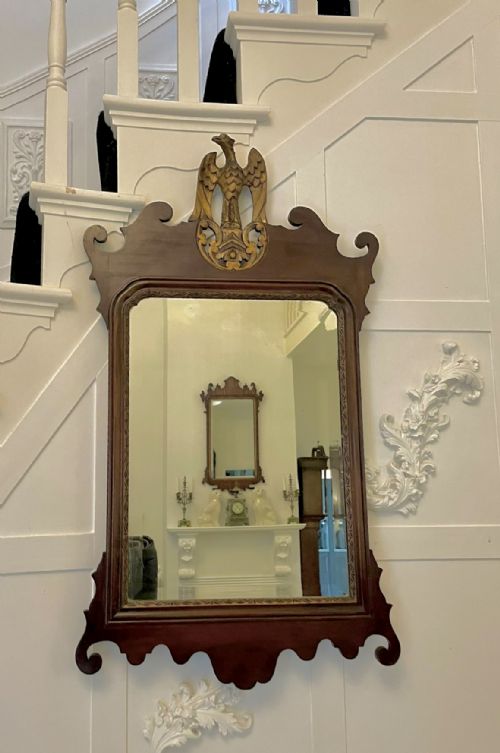
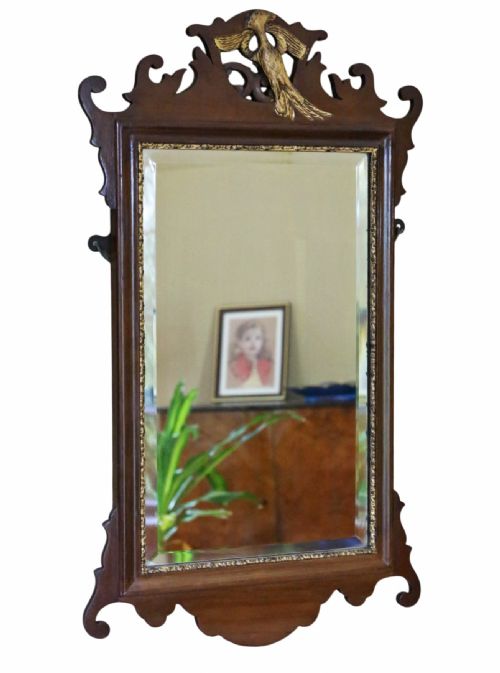
Mahogany and walnut predominate, often featuring architectural silhouettes, gilt accents, and occasionally the distinctive carved form of a Ho-ho bird at the crest.
How they were made
Cabinetmakers constructed these frames using dense hardwoods like mahogany and walnut, frequently applying fine wood inlay or parcel gilding to enrich the surface.
The distinctive pierced outlines were achieved through meticulous fret-cutting, a technique that required steady hand-sawing to produce delicate scrolls and symmetrical brackets.
Mirror plates within these frames range from early Vauxhall glass with subtle bevels to later bevel-edged glass set securely into the wooden rabbet.
Antique Fret Mirror Retail Price Guide 2026
Typical asking prices for fret mirror among the pieces listed under this phrase on Sellingantiques today, from the lower quarter to the upper quarter. They describe what is for sale here now, not the wider market.
Keep an eye out for the occasional mythical bird perched at the very top, watching over your hallway.
What varies in quality
The refinement of the fret-cutting separates standard pieces from the finest examples, where crisp interior angles and balanced proportions demonstrate superior craftsmanship.
Originality of components dictates much of the distinction, particularly whether the mirror plate, backboards, and gilt details remain undisturbed since manufacture.
Timber selection and surface patination also play a vital role, with rich, figuring in the walnut or mahogany elevating the visual presence of the frame.
The Antique Fret Mirror Glossary
- Fret-cut
- A decorative woodworking technique involving pierced designs sawn through thin timber. It creates the intricate scrollwork characteristic of these frames.
- Vauxhall glass
- Early mirror plate distinguished by its thinness and characteristic bevelled edge. It often displays subtle surface imperfections.
- Parcel gilt
- A finishing method where specific carved details or mouldings are partially gilded with gold leaf. This contrasts sharply against the dark mahogany or walnut.
- Ho-ho bird
- A mythical Chinese phoenix motif frequently carved onto the crests of mid-18th-century mirrors. It forms a focal point at the top of the frame.
- Overmantel mirror
- A wide looking glass designed specifically to hang above a fireplace mantel. Some Victorian variants incorporate fretted mahogany frameworks.
Antique Fret Mirror: Frequently Asked Questions
What is an antique fret mirror?
An antique fret mirror is a wall-hanging looking glass set within a thin, pierced wooden frame that is hand-cut into geometric or scroll patterns.
Originating primarily in the 18th century and later revived in the Edwardian period and the 1920s, these mirrors showcase the cabinetmaker's skill in working with hardwoods like mahogany and walnut.
How do I date an antique fret mirror?
Dating relies on examining the timber species, the construction of the backboards, and the style of the fretwork and crest.
Eighteenth-century examples often use walnut with original Vauxhall plates, whilst revival pieces from around 1900 or 1920 frequently feature mahogany and machine-bevelling.
Where should I hang a fret mirror?
These mirrors suit principal reception rooms, hallways, and studies where their vertical proportions draw the eye upward.
They pair well above console tables or sideboards, reflecting light and adding architectural interest to plain walls without dominating the space.
What are Ho-ho birds on mirrors?
Ho-ho birds are stylized, mythical phoenix figures carved onto the crests of certain 18th-century and revival mirrors.
They sit atop the central scrollwork, adding an exotic flourish that reflects the 18th-century enthusiasm for Chinoiserie design.