

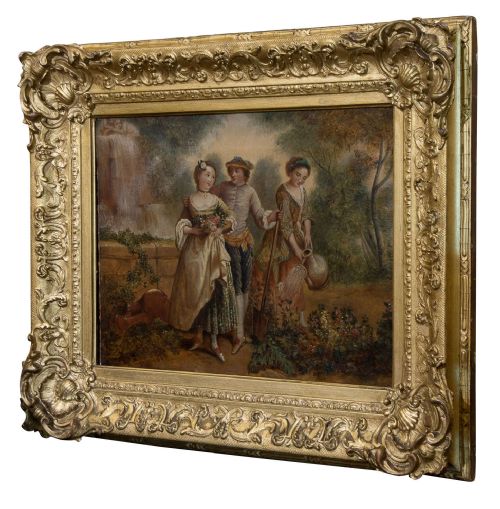


Antique French Pastoral Figures
Antique French pastoral figures capture rustic idylls in porcelain, bronze, and oil paint, offering buyers charming glimpses of shepherdess scenes and rural life.
Antique French Pastoral Figures
Antique French pastoral figures encompass oil paintings, porcelain figurines, and bronze statuettes depicting rustic scenes of shepherdesses, farm girls, and musicians. These works draw heavily upon the romanticised rural imagery popularised by French artists.
Buyers browsing this selection will most frequently encounter nineteenth-century porcelain figures from Paris workshops alongside oil paintings executed in the French Rococo revival or Barbizon styles. The subjects focus on idyllic rural life, often featuring shepherds, sheep, and musicians resting by rivers.
The objects bridge domestic decorative arts and fine art, ranging from small cabinet bronzes to large bisque porcelain sculptures and canvas paintings. Each piece reflects a persistent fascination with French provincial themes across the eighteenth and nineteenth centuries.
What Varies in Quality
Quality in porcelain and bronze figures rests upon the crispness of the moulding and the delicacy of the hand-painted details on faces and garments. Finer examples display superior anatomical proportion, subtle colouration, and carefully finished bases.
For canvas paintings, quality is determined by the handling of light, brushwork finesse, and the depth of the rural landscape composition. Superior works capture atmosphere and movement rather than relying on stiff formulae.
Antique French Pastoral Figures Retail Price Guide 2026
Typical asking prices for french pastoral figures among the pieces listed under this phrase on Sellingantiques today, from the lower quarter to the upper quarter. They describe what is for sale here now, not the wider market.
Sheep appear with surprising frequency, often keeping remarkably clean wool whilst keeping company with idle musicians.
Vion et Baury·Samson
The Antique French Pastoral Figures Glossary
- Bisque porcelain
- Unglazed porcelain that has been fired once, valued for its matte, marble-like surface finish. This material is frequently utilised for large nineteenth-century sculptural figures.
- Rococo revival
- A nineteenth-century design style reviving the ornate, asymmetrical curves and playful motifs of the earlier French eighteenth century. It strongly influences the decorative porcelain and paintings found in this category.
- Barbizon school
- A mid-nineteenth-century French art movement focusing on realisitic, tonal landscape painting often including rural figures. These works prioritise natural light and atmospheric depth over classical academic subjects.
- Gesso
- A plaster-like mixture applied to canvas or wood as a base for painting or gold leaf application. It provides a smooth foundation for oil paint.
Antique French Pastoral Figures: Frequently Asked Questions
What materials are these figures made from?
These decorative items and paintings are primarily created using porcelain, bronze, and oil paint on canvas. Many incorporate secondary materials such as gold leaf and wooden frames.
Porcelain pieces often feature enamel detailing, whilst bronze figures rely on metal casting methods to achieve their sculptural forms.
How do I date an antique porcelain figure?
Dating relies on stylistic clues, paste composition, and studio marks where present. Nineteenth-century French pieces often emulate earlier eighteenth-century models from factories like Chelsea or Derby.
Examination of the underside and the fineness of the hand-painted enamel helps distinguish nineteenth-century revival pieces from earlier originals.
Where were these pastoral paintings produced?
The paintings originate from France, encompassing both academic studio works and Barbizon style rural landscapes. Artists drew inspiration from earlier masters like François Boucher and Jean-Antoine Watteau.
These canvases reflect a broader European appetite for romanticised depictions of country life and pastoral harmony.
How should I display porcelain figures at home?
Porcelain figurines and bronze statuettes benefit from stable display surfaces away from direct sunlight and high foot traffic areas. Placing them within enclosed cabinets protects delicate painted surfaces from dust.
Pairing matching figures together creates a balanced arrangement on mantelpieces or side tables.