

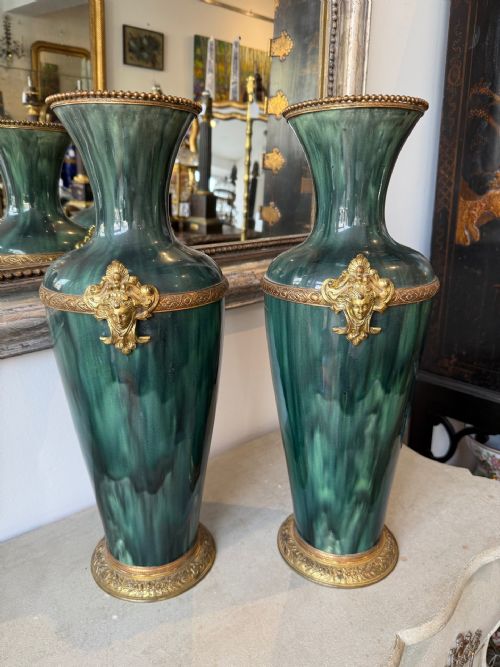


Antique French Mantle Vases
These antique french mantle vases are decorative ceramic and metal vessels designed for display, bringing period character and colour to a room.
Antique French Mantle Vases
When you search for antique french mantle vases, you encounter a range of decorative vessels designed specifically for display on a fireplace shelf or sideboard. The selection spans the nineteenth century, including pieces from eighteen sixty up to nineteen twenty, alongside broader nineteenth century examples.
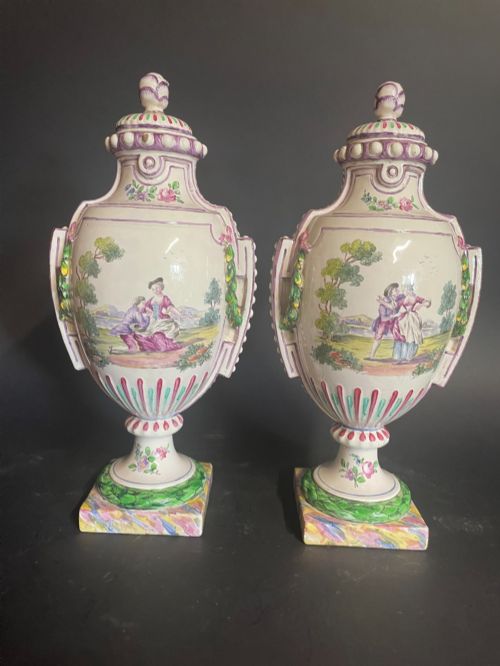
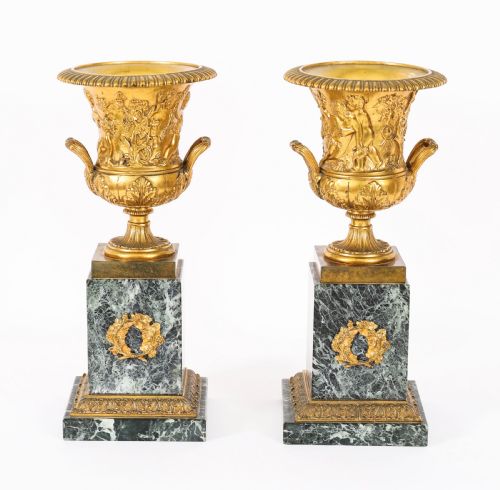
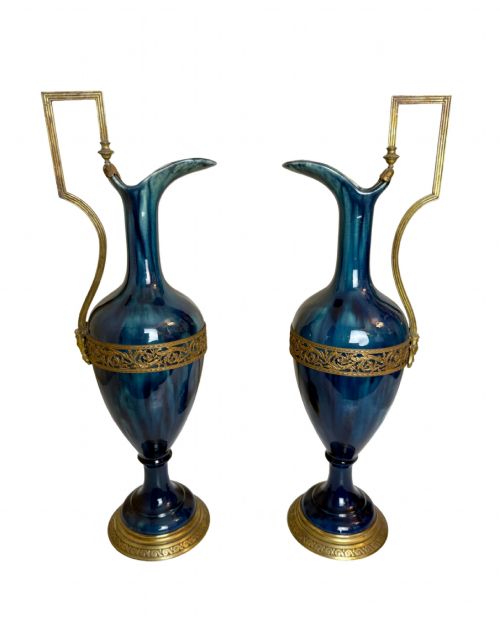
The forms vary from traditional urns and lidded urns to campana shapes, ewers, and matching clock garniture sets. Most pieces appear as pairs, intended to balance each other symmetrically across a mantle or surface.
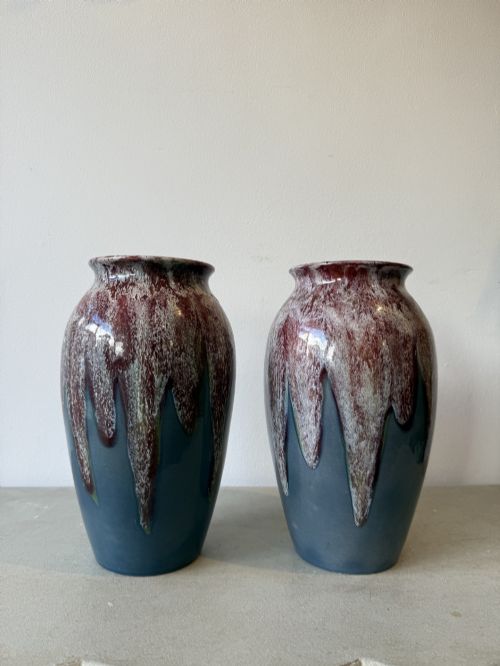
Origins include Paris porcelain productions, faience from Sceaux, and Grand Tour metalwork, reflecting diverse Parisian and regional workshops. Collectors also find blue glass and art pottery variants dating towards the early twentieth century.
What varies in quality
The standard of the metalwork sets the tone for the entire piece, particularly in the crispness of the gilt bronze or ormolu mounts. Finer examples display sharp chasing and secure integration with the ceramic body rather than loose or rudimentary fitting.
Ceramic quality shows in the depth of the glaze, whether in the cobalt of blue porcelain, the delicacy of pink Sevres style decoration, or the hand-painted details on Paris porcelain. Superior vessels maintain a clean balance between the ceramic body and its metal ornamentation.
Antique French Mantle Vases Retail Price Guide 2026
Typical asking prices for french mantle vases among the pieces listed under this phrase on Sellingantiques today, from the lower quarter to the upper quarter. They describe what is for sale here now, not the wider market.
Periods represented span from the early nineteenth century through eighteen sixty, eighteen seventy, eighteen ninety, nineteen hundred, and nineteen twenty.
Sceaux Faience·Vion et Baury·Old Paris·Sevres
The Antique French Mantle Vases Glossary
- Gilt bronze
- Bronze treated with a gold application to create a bright metallic finish. It provides durable ornamentation on nineteenth century mantle pieces.
- Ormolu
- Finely ground high-carat gold applied to a bronze base using mercury amalgamation or modern plating. This technique produces a rich golden lustre on mounts.
- Garniture set
- A matched group of three or more decorative objects, often comprising a clock flanked by two vases or urns. They formed traditional mantle displays.
- Campana
- An inverted bell shape associated with classical pottery and metal urns. The profile widens towards the top with a distinct everted rim.
- Faience
- Tin-glazed earthenware produced across French ceramic centres. It offers an opaque white background for painted decoration.
- Bisque
- Unglazed porcelain fired to a matte, porous finish. It resembles smooth marble and highlights sculptural detail.
Antique French Mantle Vases: Frequently Asked Questions
What is a clock garniture?
A clock garniture is a matching set composed of a central mantle clock and two matching side vases or urns. They were designed to sit together on a fireplace mantle as a unified decorative scheme.
Individual pieces within a set share identical materials, styles, and decorative motifs, such as gilt bronze mounts paired with blue porcelain bodies.
How do I clean gilt bronze mounts?
Gilt bronze and ormolu mounts require gentle dusting with a soft, dry brush to prevent the accumulation of dirt in recessed areas. Avoid abrasive polishes, as they strip the gold surface layer from the bronze underneath.
Water and chemical solvents should be kept away from both the metal and adjacent ceramic or glass surfaces to preserve the original finish.
Were these vases used for flowers?
Many mantle vases and urns served purely decorative purposes rather than holding water and fresh stems. Lidded urns and pieces with delicate ormolu mounts were intended as visual ornaments for the room.
Some wider rimmed vessels and faience pieces could accommodate floral arrangements, though surviving examples often show minimal interior wear.
How do I date nineteenth century porcelain?
Dating relies on stylistic clues, manufacturing techniques, and any factory marks found on the base of the ceramic body. Pieces reflecting French Neoclassical or Louis XVI styles often date from the mid to late nineteenth century.
Variations in glaze colours, such as mottled green or cobalt blue, help narrow the period down alongside the refinement of the accompanying bronze mounts.
Can I mix different styles on a mantle?
Traditional displays favoured symmetry and matching pairs, particularly with garniture sets and campana urns. Mixing contrasting styles like Rococo Revival and Arts & Crafts alters the formal balance of a display.
Matching the period and metal finish, such as pairing ormolu mounted pink porcelain with similar gilt pieces, creates a more cohesive arrangement.