






Antique French Bouillotte Light
An antique french bouillotte light is a traditional adjustable desk or table lamp designed to throw task light across a surface.
Antique French Bouillotte Light
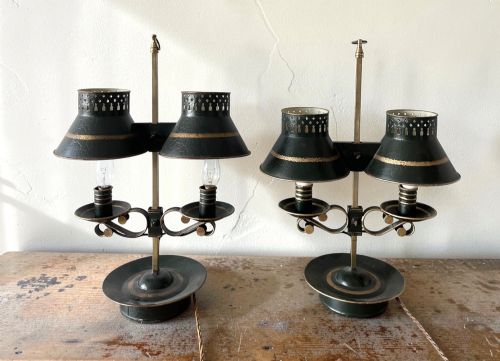
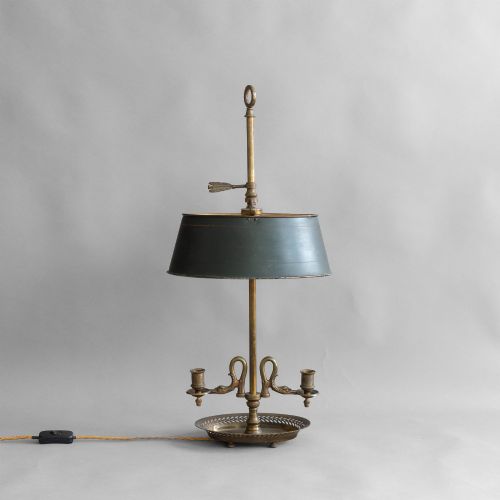
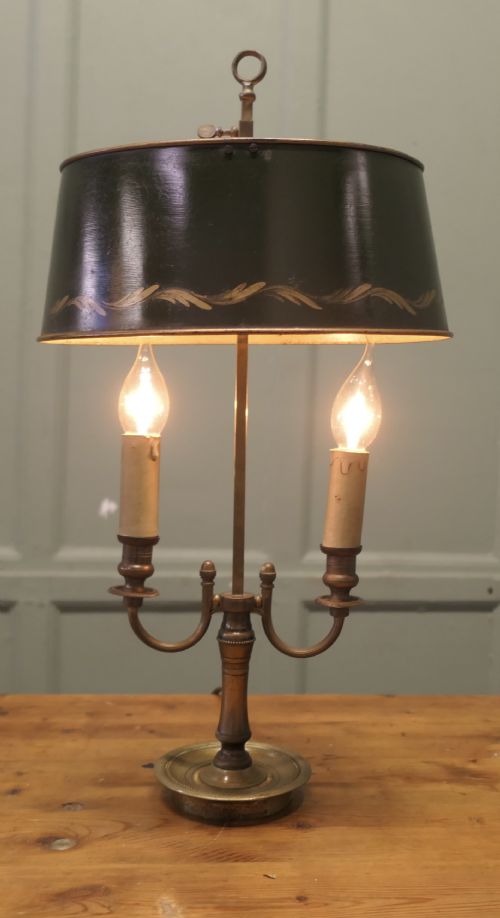
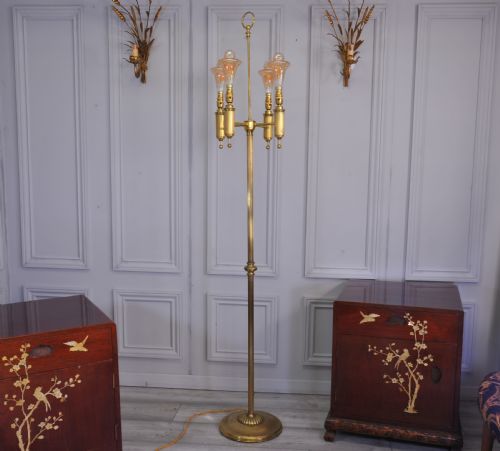
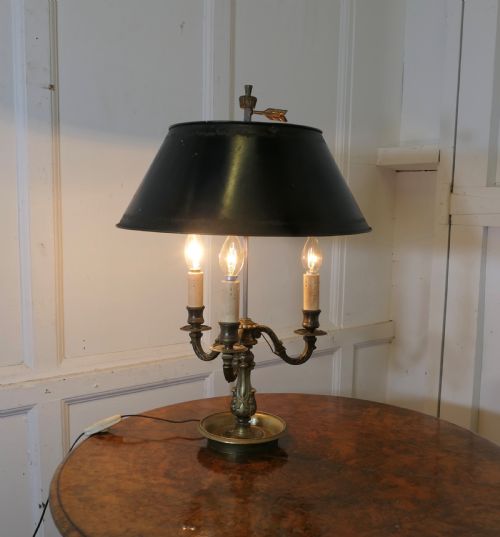
When you search for an antique french bouillotte light, you find adjustable desk, table, and floor lamps originating from France across the nineteenth and twentieth centuries. These pieces typically take the form of twin, triple, or four branch candle and bulb lamps designed for focused task illumination.
The versions you are most likely to meet on this page combine brass, gilt metal, or bronze with painted toleware shades. Examples span periods from the Victorian and Edwardian eras through to the 1940s, reflecting French Empire, Regency, and Neoclassical styles.
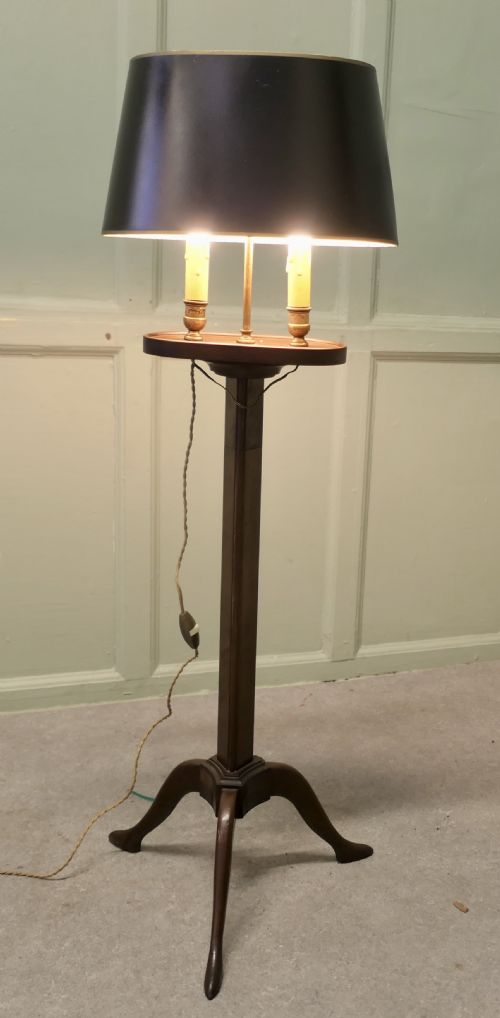
Makers and designers embraced various formats, including dual chamber stick desk lamps and standard lamps. Their primary function remains the provision of adjustable downward light via a sliding shade.
How They Were Made
These lamps rely on the combination of cast or spun brass, gilt metal, bronze, and silver plating for their structural frames and arms. Artisans shaped metal bases and stems to support multiple candle or bulb branches.
Toleware and painted metal form the characteristic adjustable shades that direct the illumination downward. Mahogany components and glass elements occasionally appear alongside the metalwork to complete the desk and table lamp constructions.
Antique French Bouillotte Light Retail Price Guide 2026
Typical asking prices for french bouillotte light among the pieces listed under this phrase on Sellingantiques today, from the lower quarter to the upper quarter. They describe what is for sale here now, not the wider market.
Materials recorded across these pieces include brass, tole, toleware, mahogany, painted metal, gilt metal, and glass.
What Varies in Quality
The distinction between standard examples and finer items lies in the weight of the metalwork and the crispness of the casting. Heavier brass, ormolu, and bronze structures demonstrate greater durability and more refined surface detail.
Painted toleware shades show variation in the depth of colour, particularly in green and gold finishes, and the precision of the adjustable sliding mechanism on the central column.
The Antique French Bouillotte Light Glossary
- Bouillotte
- A type of traditional French lamp featuring an adjustable shade and multiple candle or light branches. It takes its name from the eighteenth-century card game bouillotte.
- Toleware
- Enamelled or painted metalware, commonly tin or steel, used to form the characteristic shades of these desk lamps. The painted surfaces typically appear in green and other traditional tones.
- Ormolu
- Gilded bronze or metal applied to decorative hardware and lamp mounts. This technique provides a bright metallic finish that mimics solid gold.
- Neoclassical
- A style drawing on classical antiquity that influences the symmetrical designs and clean lines of these French lamps. It appears frequently across nineteenth and twentieth-century examples.
Antique French Bouillotte Light: Frequently Asked Questions
What is a bouillotte lamp?
A bouillotte lamp is a traditional French lighting fixture featuring an adjustable shade mounted on a central vertical rod. The design typically incorporates two, three, or four candle-style branches designed for task illumination.
Historically associated with card playing and desk work, these lamps direct light downward onto a surface while shielding the eyes of the user.
How do you adjust the height?
The shade on a bouillotte lamp slides vertically along the central stem or rod. A small key, screw, or friction collar usually holds the shade at the desired position.
This mechanism allows the user to raise or lower the shade to control the spread and intensity of the light cast across a desk or table.
Where were they used?
These lamps were primarily designed as desk lamps for reading, writing, and playing card games such as bouillotte. Their compact footprints made them suitable for writing tables and small workspaces.
Over time, larger floor and standard lamp formats emerged, allowing the design to serve general room illumination in sitting rooms and studies.
How do I date an antique bouillotte light?
Dating relies on examining the materials, wiring, and manufacturing techniques used in the metal frame and shade. Victorian, Edwardian, and twentieth-century pieces each display distinct casting methods and brass finishes.
Styles ranging from French Empire to Belle Epoque provide further stylistic clues to the era of manufacture, alongside any surviving period components.