



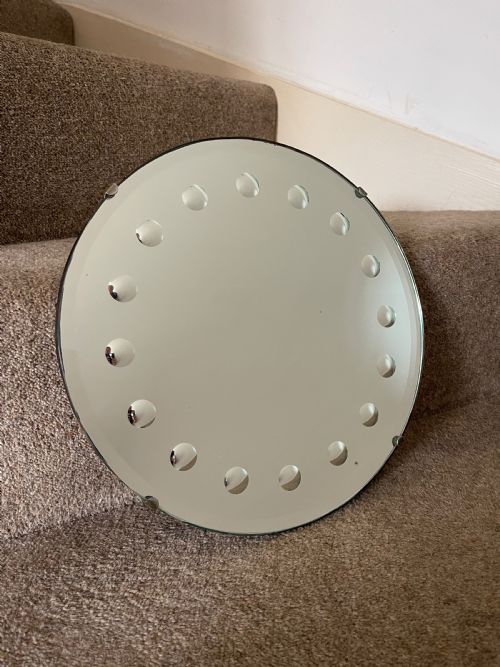


Antique Frameless Mirror
An antique frameless mirror brings clean geometric lines and reflective light into a room, offering the quintessential aesthetic of the interwar years.
Antique Frameless Mirror
An antique frameless mirror relies on the purity of shaped glass rather than a heavy wooden or gilded surround to define its presence on the wall. These pieces primarily emerge from the Art Deco period, spanning the 1920s and 1930s with distinct modernist geometry.
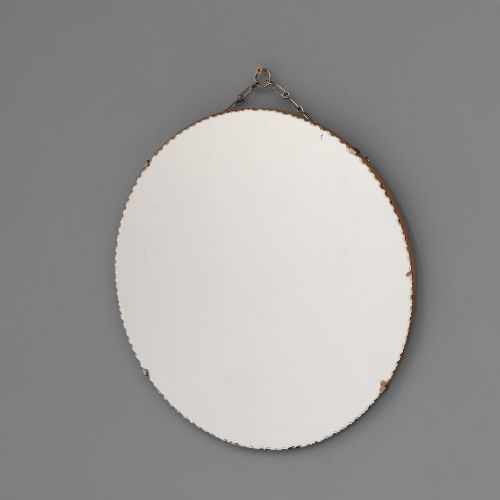
The forms on this page range from circular plates and large diamond wall hangings to substantial overmantel mirrors designed for reception rooms. English and French examples dominate the selection, often employing segmented plates mounted on wooden or metal backing boards.
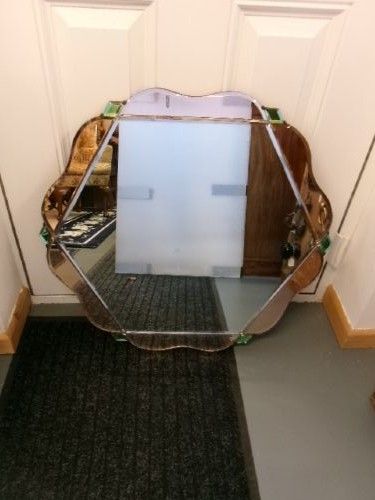
Buyers seeking an antique frameless mirror will frequently encounter multi-tone designs and coloured glass accents that characterise the height of 1930s interior decoration. Pairs and large statement pieces appear alongside smaller round mantle mirrors, offering diverse proportions for domestic spaces.
How they were made
Maker construction combines heavy mirror glass plates attached to concealed wooden or metal backings using decorative metal clips and screws. Craftsmen utilised bevelled edges on the main plates to catch the light and create subtle depth without a traditional frame.
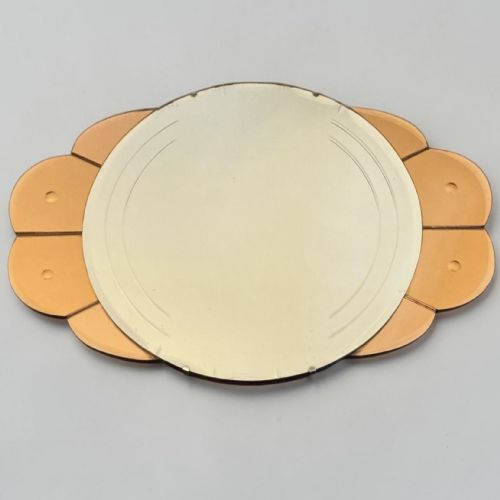
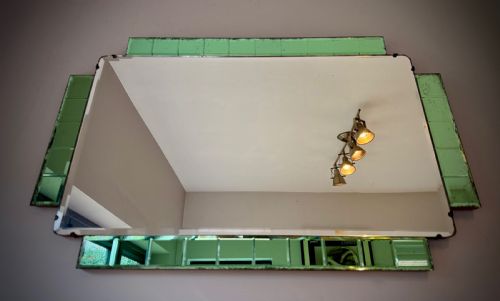
The distinctive palette relies on specialist tinted glass, incorporating peach, emerald green, and multi-tone panels arranged in geometric layers. Embossed details and layered plate construction define the more complex decorative variants from the 1930s.
Antique Frameless Mirror Retail Price Guide 2026
Typical asking prices for frameless mirror among the pieces listed under this phrase on Sellingantiques today, from the lower quarter to the upper quarter. They describe what is for sale here now, not the wider market.
Listings span the 1920s and 1930s, featuring glass, wood, chrome, and tinted peach or emerald panels in Art Deco wall and overmantel forms.
What varies in quality
The sophistication of the glass plate arrangement dictates the visual success of the piece, moving from simple circular forms to intricate multi-tone geometric assemblies. The integration of coloured glass panels, such as peach or emerald tones, demonstrates greater ambition in design.
The condition and clarity of the original silvering across multiple layered plates determine the integrity of the reflection. Superior examples maintain crisp bevelling and secure original metal fixings that hold the heavy glass plates firmly in alignment.
The Antique Frameless Mirror Glossary
- Frameless mirror
- A wall hanging where the reflective glass plate or assembly is exposed to the edge without a traditional perimeter frame. These rely on exposed metal clips and shaped profiles for their visual boundary.
- Overmantel mirror
- A large horizontal looking glass designed specifically to hang above a fireplace mantelpiece. They often feature extended proportions to match the width of the hearth below.
- Bevelling
- The practice of cutting and polishing the outer edges of a glass plate at an angled slope. This technique refracts light and creates a decorative border effect.
- Peach glass
- A warm-toned tinted mirror glass popular during the 1930s for decorative interior schemes. It imparts a soft, flattering glow to reflected light.
- Multi-tone
- A decorative arrangement combining standard silvered glass with tinted panels to create geometric contrast. This style defines many sophisticated Art Deco wall mirrors.
Antique Frameless Mirror: Frequently Asked Questions
How do I hang a heavy frameless mirror?
These pieces require secure fixing directly into wall studs or masonry using appropriate wall plugs and screws. The weight of the glass plates demands robust support behind the original wooden or metal backing.
Professional mirror hangers should assess the concealed mounting points to ensure the weight distributes evenly across the wall surface.
Where should I place an overmantel mirror?
An overmantel mirror sits naturally above a fireplace, anchoring the vertical space of a principal reception room. Its generous proportions reflect natural light from opposite windows back into the interior.
Placement should consider the eye level of occupants to maximise both the reflection of the room and the aesthetic balance with the mantel below.
How do I clean antique mirror glass?
Cleaning requires a soft microfiber cloth and a mild, ammonia-free glass cleaner sprayed onto the cloth rather than directly onto the glass. This prevents moisture from seeping behind the plate and damaging the original silvering.
Special care must be taken around the edges of bevelled plates and coloured glass sections to protect the historical surface.
What defines the Art Deco style in mirrors?
Art Deco mirror design focuses on symmetry, clean geometric shapes, and a rejection of heavy Victorian ornamentation. Circular, diamond, and segmented multi-tone plates dominate the aesthetic.
The inclusion of peach and emerald tinted glass panels further marks the distinct modernity of 1920s and 1930s production.