

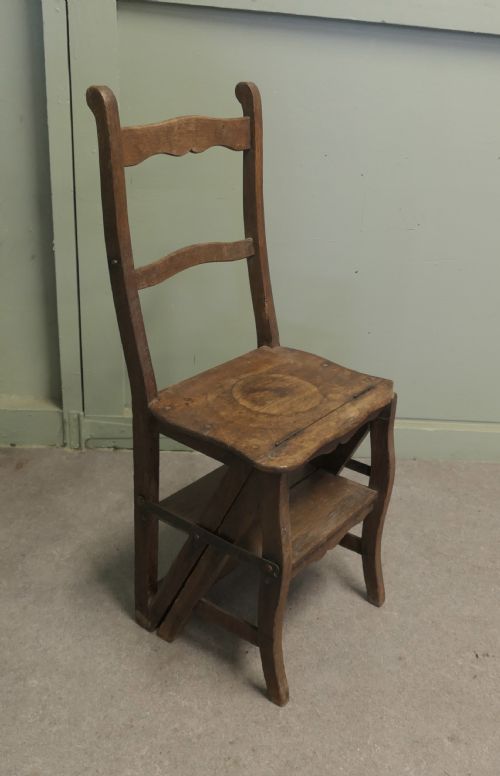


Antique Folding Steps
Antique folding steps solve the timeless problem of reaching high shelves with clever mechanisms that transform chairs into ladders.
Antique Folding Steps
When you search for antique folding steps, you encounter a practical class of furniture designed for domestic libraries and domestic utility. These objects range from sturdy pine step ladders and painted utilitarian ladders to sophisticated metamorphic library chairs that pivot to reveal hidden steps.
The pieces on this page span the Georgian, Regency, and Victorian periods, alongside later Arts and Crafts and industrial iterations. You find designs executed in mahogany, oak, and fruitwood, often featuring fitted leather treads or brass hardware.
Library chairs that convert into steps predominate among the finer forms, alongside A-frame library steps and folding wooden ladders. These domestic accessories served gentlemanly studies and grand libraries before finding a place in modern interiors.
How they were made
Cabinetmakers and joiners constructed these pieces using dense hardwoods like mahogany, oak, and fruitwood, alongside pine for utilitarian ladders. Joints relied on traditional methods such as mortise and tenon to withstand the physical weight and mechanical stress of climbing.
Metamorphic pieces incorporate brass pivots, hinges, and sliding mechanisms that allow seats and backs to unfold smoothly into steps. Many examples integrate leather treads or cane panels into the design to provide grip and visual refinement.
Antique Folding Steps Retail Price Guide 2026
Typical asking prices for folding steps among the pieces listed under this phrase on Sellingantiques today, from the lower quarter to the upper quarter. They describe what is for sale here now, not the wider market.
Listings feature oak, mahogany, pine, and fruitwood, paired with iron, brass, leather, and cane across the nineteenth and early twentieth centuries.
What varies in quality
Quality in these designs depends on the complexity of the metamorphic action and the integrity of the timber used. A sophisticated library armchair that converts seamlessly through concealed brass pivots represents a higher order of craftsmanship than a fixed utility ladder.
The choice of primary wood and secondary timber dictates durability, with dense Georgian and Regency mahogany or oak outlasting softer pine or lesser utilitarian builds. The survival of original leather inserts, brass fittings, and structural joints marks the difference between utilitarian survivals and fine library furniture.
The Antique Folding Steps Glossary
- Metamorphic furniture
- Pieces designed to transform from one form of furniture into another, such as an armchair converting into library steps. This clever dual purpose saved space in period homes.
- A-frame steps
- Free-standing ladders constructed in two hinged sections that support themselves in an inverted V shape. They provide stable elevation without leaning against a wall.
- Library steps
- Purpose-built sets of stairs designed for reaching elevated bookshelves in large domestic rooms. They appear in both fixed and folding formats.
- Tread
- The horizontal surface of a step upon which the foot rests. In finer library steps, these surfaces are frequently lined with tooled leather.
Antique Folding Steps: Frequently Asked Questions
How do metamorphic library chairs work?
These chairs feature concealed hinges, pivots, and sliding tracks built into the frame. The backrest and seat sections unlock and rotate outward to form a descending flight of steps.
When closed, the mechanism locks securely to resemble a conventional armchair or side chair. This ingenious design allowed gentlemen to reach high bookshelves without dragging a bulky ladder through the room.
Are these folding steps sturdy enough for daily use?
Period library steps and folding ladders were constructed from dense hardwoods like oak and mahogany using traditional joinery. They were built for practical domestic and institutional service.
However, the age of the brass pivots, hinges, and timber joints requires careful inspection before heavy weight is applied. Many collectors use them cautiously or primarily for display alongside bookshelves.
How do I distinguish Regency steps from Victorian ones?
Regency pieces often display refined mahogany timbers, classical proportions, and sophisticated brass hardware associated with high-style library furnishings. They frequently take the form of elegant metamorphic armchairs.
Victorian examples span a broader stylistic range, including Gothic Revival pieces with pointed arch motifs and heavy Arts and Crafts oak constructions. Utility steps from the later nineteenth century tend to utilise plain pine or metal without decorative pretensions.
Where were folding steps originally used?
They originated primarily in the private libraries, studies, and drawing rooms of large townhouses and country estates. Tall ceilings necessitated specialised furniture to access upper bookshelves.
Later Victorian and Edwardian examples also served utilitarian roles in railway carriage maintenance, domestic lofts, and general household chores.