



Antique Fob Medal
These antique fob medal pieces are small markers of sporting and civic pride, prized for their intricate engraving and solid metals.
Antique Fob Medal
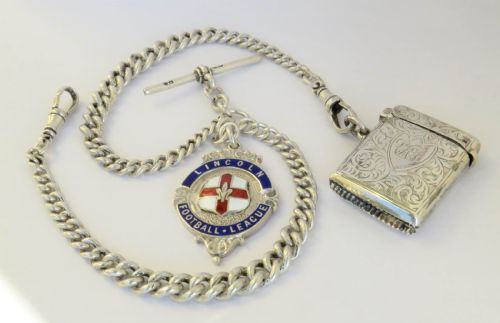
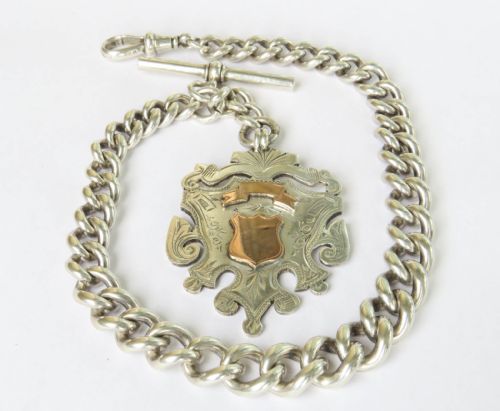
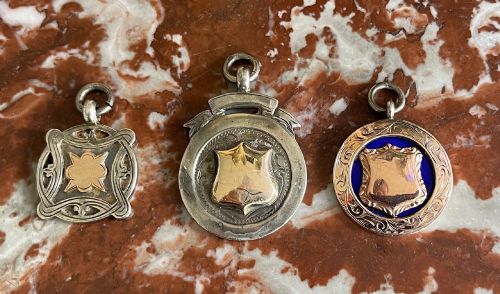
An antique fob medal is a small pendant originally designed to hang from a pocket watch chain, often commemorating a specific sport, club victory, or personal achievement. These pieces span from the Georgian period through the Victorian, Edwardian, and Art Deco eras into the 1940s, capturing decades of changing design tastes.
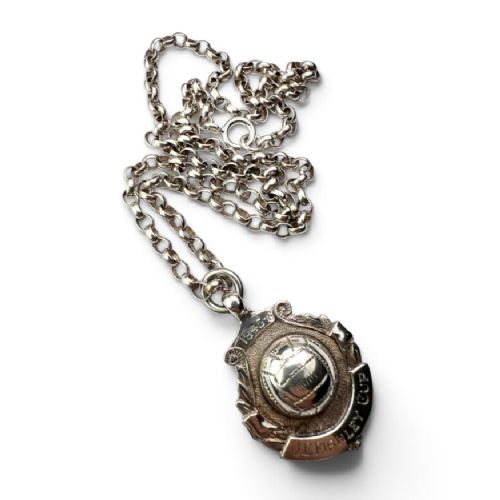
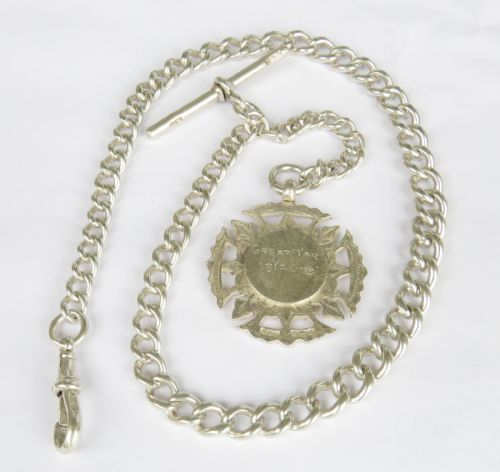
The versions most commonly met on this page include sterling silver and 9ct gold sports medals dedicated to football, cricket, tennis, cycling, and curling. Many carry dates, hallmarks, and engraved inscriptions on the reverse, linking them directly to the individuals and teams who won them.
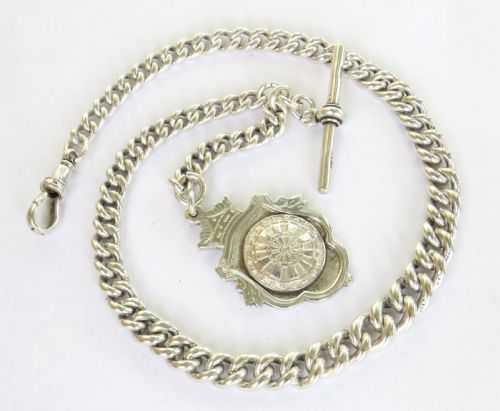
Beyond sports, the selection encompasses novelty shapes such as darts boards and artists' palettes, alongside Masonic medals and floral pendants. They attach easily to watch chains or modern neck chains, functioning today as wearable pendants with a distinct historical narrative.
How they were made
Makers fashioned these pieces primarily from sterling silver and 9ct gold, sometimes incorporating rose gold details or colourful enamel to highlight central motifs. Metals were cast, stamped, or hand-hammered into shields, rounds, and novelty forms before receiving detailed surface decoration.
Engravers utilised hand-cutting techniques to apply floral patterns, lettering, and depictions of athletes, creating depth and texture on the metal surface. Hallmarks stamped directly into the silver or gold record the assay office, metal purity, and year of manufacture.
Antique Fob Medal Retail Price Guide 2026
Typical asking prices for fob medal among the pieces listed under this phrase on Sellingantiques today, from the lower quarter to the upper quarter. They describe what is for sale here now, not the wider market.
Listings span the Georgian, Victorian, Edwardian, and Art Deco periods, alongside the First World War era.
What varies in quality
The crispness of the hand-engraving and the depth of relief work separate standard production pieces from finer examples. Superior medals feature sharp, well-defined figures and crisp lettering that remain legible despite decades of wear.
The weight of the metal and the presence of undamaged enamel or contrasting rose gold details also dictate the calibre of a piece. Medals with fully legible hallmarks and specific named inscriptions carry greater historical weight than unmarked or generic alternatives.
David McGregor
The Antique Fob Medal Glossary
- Fob medal
- A small decorative pendant hung from a pocket watch chain. They were frequently awarded for athletic victories or organizational memberships.
- Hallmark
- An official stamp applied by an assay office indicating the purity of the precious metal and the year of production. British silver and gold pieces often display these small indented marks on the reverse or edge.
- Sovereign case
- A small protective container designed to hold a gold sovereign coin, frequently attached to watch chains alongside medals.
- Enamel
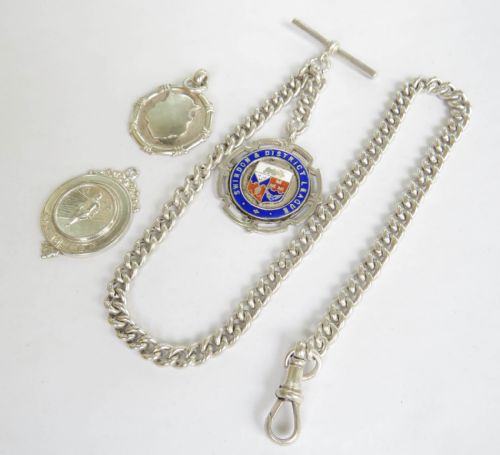
- A glassy substance fused to metal through firing to add vibrant colour. It appears on select medals to accentuate crests or board games.
Antique Fob Medal: Frequently Asked Questions
What is an antique fob medal?
An antique fob medal is a small metal pendant that was traditionally attached to a pocket watch chain. They were often issued as prizes for sports competitions or to mark club memberships.
Over time, these medals transitioned from functional watch accessories into collectible pendants worn on neck chains. Their designs range from simple engraved shields to intricate sporting scenes and novelty shapes.
How were fob medals used?
Original owners wore these medals suspended from a pocket watch chain draped across the front of a waistcoat. The T-bar secured the chain in a buttonhole while the medal hung as a decorative charm.
Today, they are commonly removed from watch chains and worn on modern chains around the neck. This allows the detailed engraving on both sides to be easily viewed.
How do I date an antique fob medal?
Dating relies heavily on the hallmarks stamped into the metal, which indicate the specific assay office and year of production. Stylistic shifts also help, moving from ornate Victorian designs to geometric Art Deco patterns.
Many pieces also feature hand-engraved dates or presentation inscriptions on the reverse. These inscriptions often record the exact year a sporting competition took place.
What materials are fob medals made from?
The listings show pieces constructed primarily from sterling silver and 9ct gold, sometimes accented with rose gold details. Enamel is also utilised on specific designs to add bright colour.
Less common materials include silver plate and nickel, appearing alongside gold and silver tokens. Each material reflects the status of the award and the budget of the commissioning club.