
Antique Fitted Bureau
An antique fitted bureau offers a drop-down writing flap and clever internal compartments, combining workspace and storage in one handsome piece.
Antique Fitted Bureau
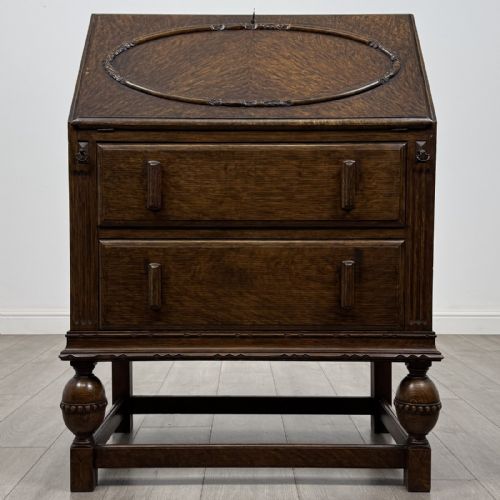
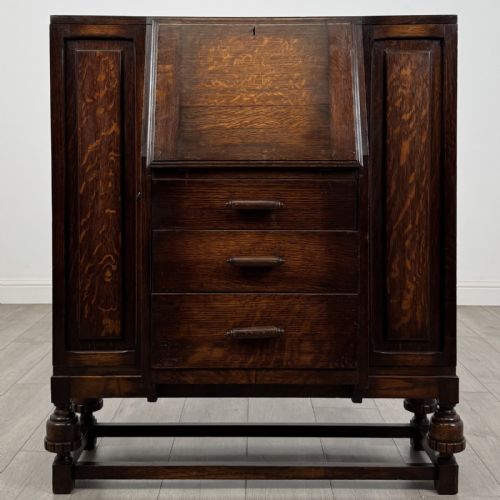
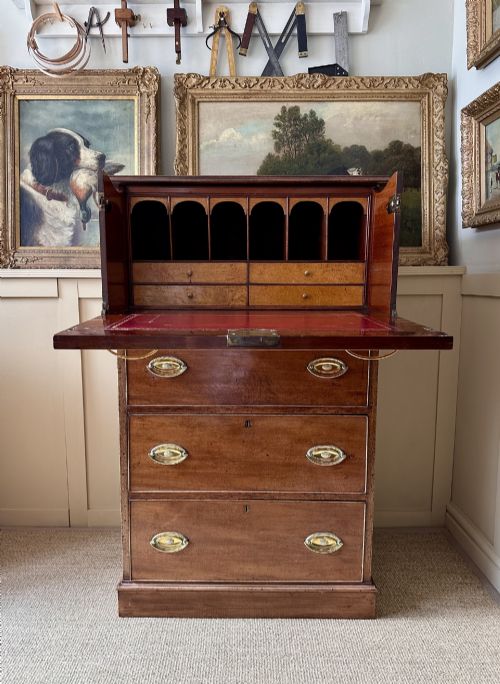
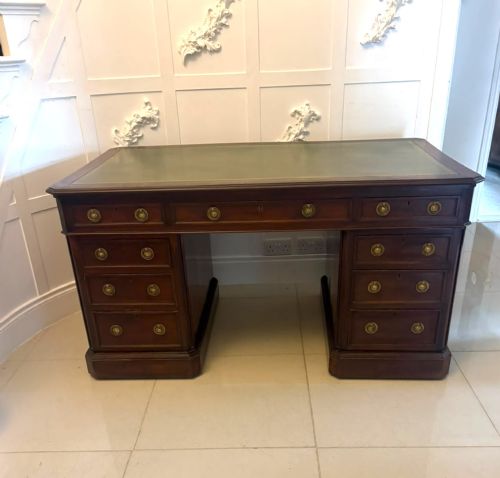
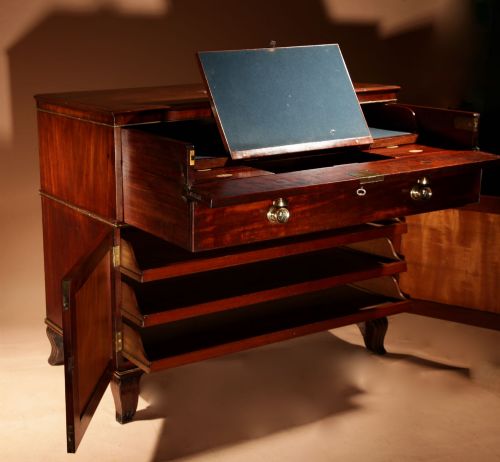
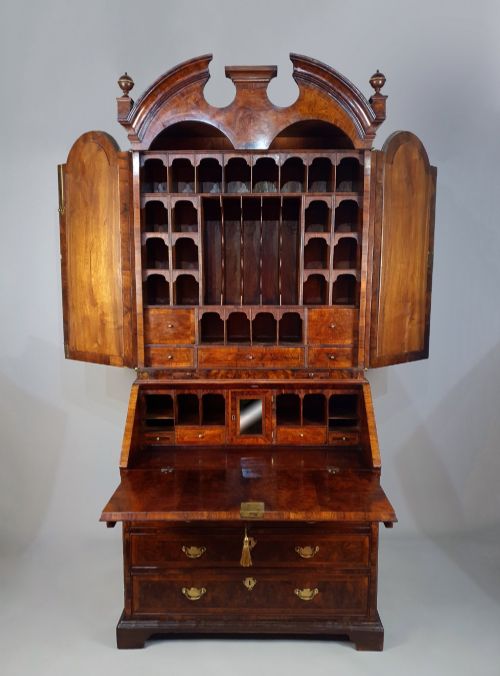
An antique fitted bureau provides a dedicated writing surface that conceals pigeon holes, small drawers, and hidden compartments when the fall-front flap is closed. These pieces range from compact Edwardian oak writing desks to impressive Georgian walnut and mahogany cabinet variants.
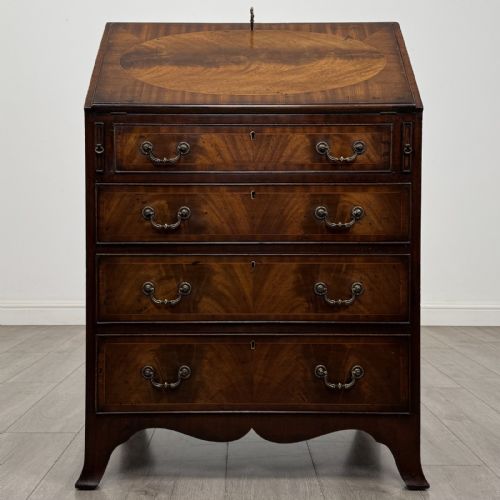
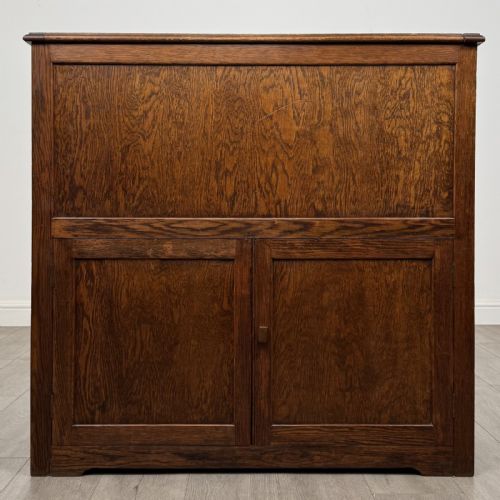
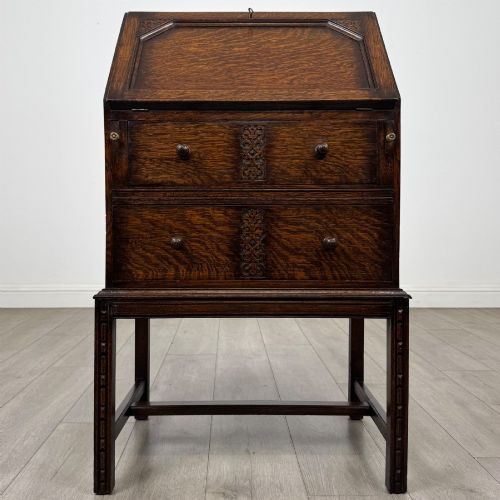
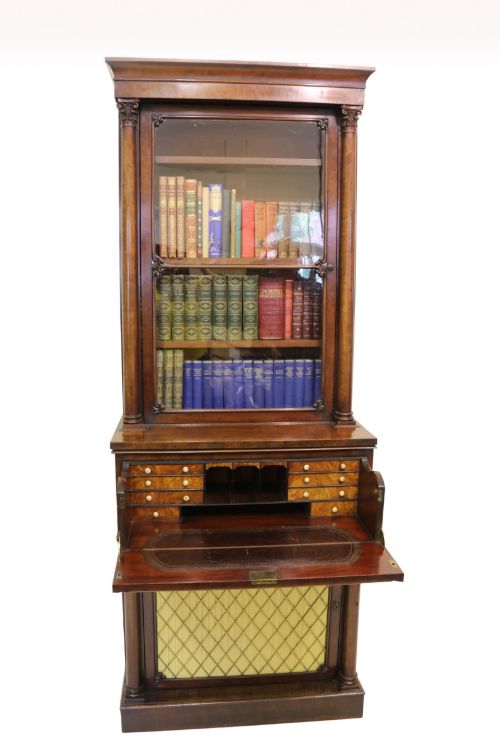
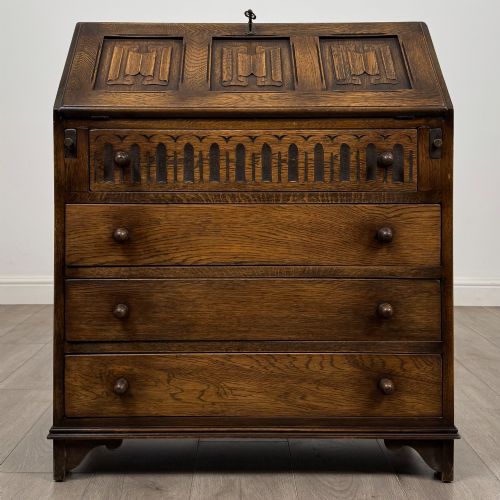
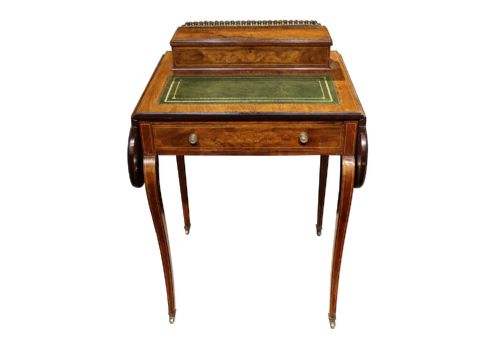
The version most commonly met on this page is the Edwardian oak bureau, alongside notable Georgian and Regency mahogany examples featuring fitted writing interiors. Buyers select these items for daily home use or to anchor a traditional study with period character.
The form adapts across centuries, evolving from early walnut escritoires to oak variants bearing linenfold carving and mid-twentieth-century flame-fronted mahogany designs. Each iteration maintains the core principle of a concealed inner workspace paired with external drawers or cupboards.
How they were made
Cabinet makers utilised dense hardwoods such as mahogany, oak, and walnut, often applying figured veneers and decorative crossbanding to the principal exterior surfaces. Interior compartments frequently incorporated fine secondary timbers like satinwood alongside shaped pigeon holes and miniature stationery drawers.
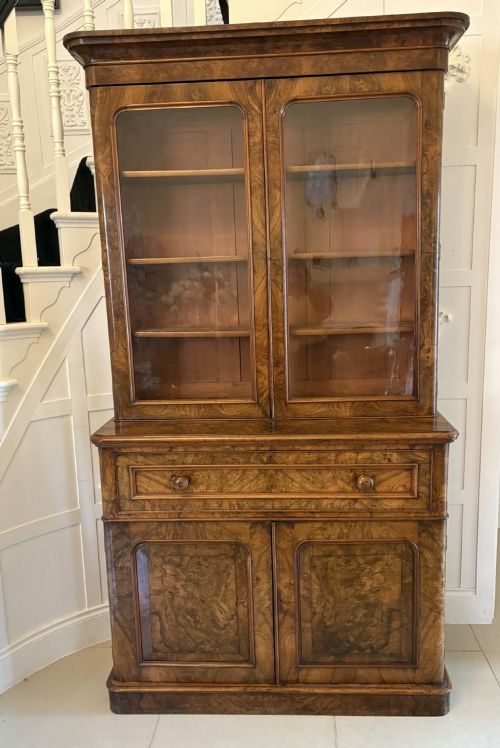
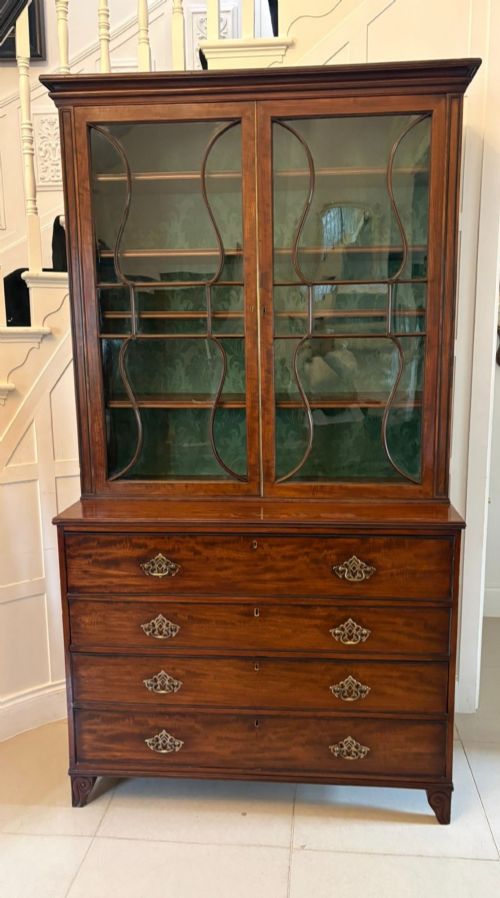
Structural integrity relied on traditional joinery methods, including dovetail joints for drawer construction and inset brass hardware for handles and escutcheons. Glazed upper sections on bookcase variants employed individual wooden glazing bars to hold glass panes securely.
Secret drawers within fitted interiors often require pressing hidden spring catches to release.
What varies in quality
The standard of craftsmanship shows in the intricacy of the internal fittings, such as secret compartments, finely turned small drawer pulls, and serpentine or stepped pigeon hole arrangements. Superior examples demonstrate meticulous timber selection, matching grain patterns across the fall-front flap and drawer fronts.
Hardware quality and secondary wood choices also differentiate pieces, with top-tier items retaining original brasses, locks, and smoothly operating mechanisms. The precision of the dovetailing and the crispness of carved details, such as bracket feet or linenfold panels, set exceptional pieces apart from standard workshop output.
Gillows of Lancaster·Tudor and Burrey Shrewsbury·Heal s
The Antique Fitted Bureau Glossary
- Secretaire
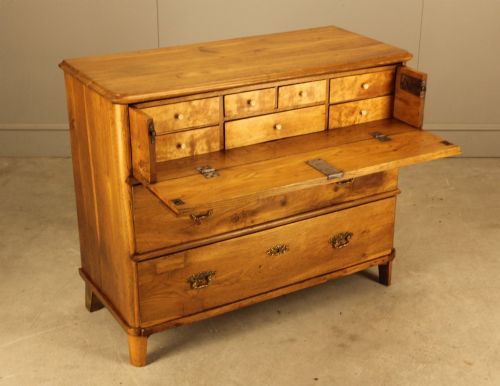
- A piece of furniture containing a drawer or compartment that pulls down or folds out to form a writing desk. This term often appears in descriptions of Regency and Victorian chests and bookcases.
- Pigeon hole
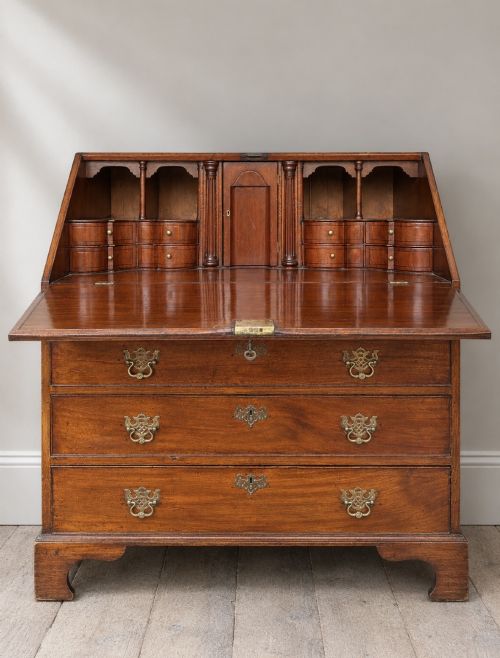
- A small, open compartment within a desk or bureau interior designed for sorting letters and papers. These are frequently arranged in tiered rows behind the fall-front writing flap.
- Linenfold
- A style of carved wooden panelling that imitates folded linen cloth. This motif appears frequently on early twentieth-century oak woodwork and revival furniture.
- Bracket foot
- A simple, corner-supporting foot found on case furniture such as chests and bureaus. It usually forms an L-shape mitred at the corner.
- Flame mahogany
- Mahogany timber cut to reveal a distinctive, flamelike grain pattern. Cabinet makers used these veneers symmetrically on prominent surfaces like drawer fronts and writing flaps.
Antique Fitted Bureau: Frequently Asked Questions
What fits inside the internal compartments?
The internal fittings are designed for letters, small account books, and writing implements. Pigeon holes hold stationery upright, while miniature drawers secure smaller loose items.
Many interiors also include hidden compartments behind sliding panels for sensitive documents. These clever spaces reflect the private nature of historical correspondence.
How do I tell Georgian from Edwardian pieces?
Georgian bureaus typically feature solid proportions, bracket feet, and rich mahogany or walnut timbers dating from the eighteenth century. The internal layouts often showcase stepped pigeon holes and central small cupboards.
Edwardian pieces, built around nineteen hundred, frequently utilise oak with lighter decorative inlays or linenfold carving. Their proportions are often more compact to suit smaller suburban rooms of that era.
Can I use an antique bureau for a laptop?
Many bureaus provide adequate depth and width on the lowered flap for modern laptops and writing tasks. It is wise to measure the working surface dimensions against your specific device before regular use.
Consider placing a protective blotter on the antique wood to prevent scratches. When work concludes, simply close the lid to keep the workspace out of sight.