


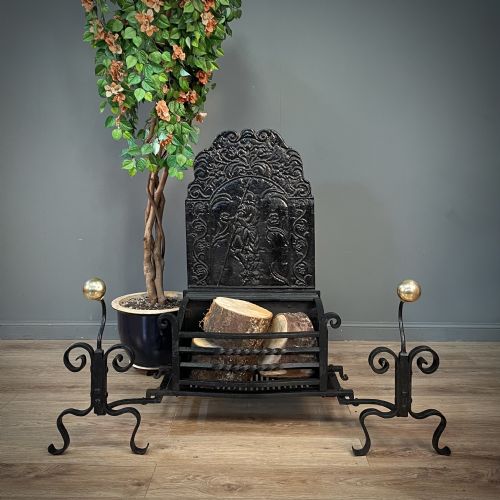
Antique Fire Insert
These antique fire insert options bring heavy cast iron, brass, and copper warmth to a room, offering period character for a working hearth.

Antique Fire Insert
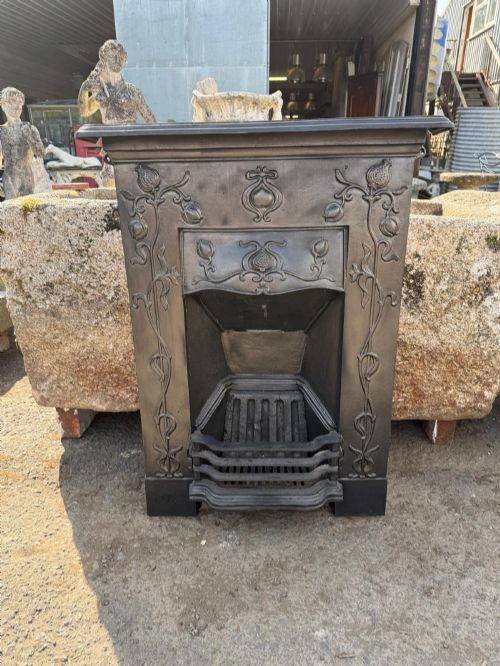
When you search for an antique fire insert, you are looking at metal grates, baskets, and combination fireplaces designed to fit directly into a chimney opening. The pieces you are most likely to meet on this page span Victorian, Edwardian, and Georgian periods, alongside Arts and Crafts and Regency examples.
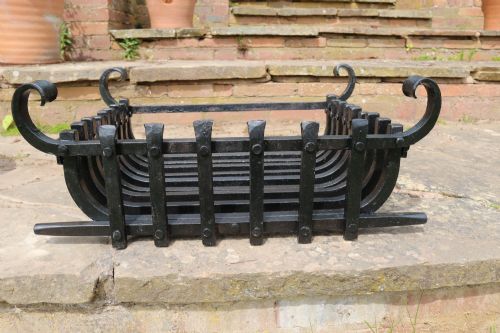
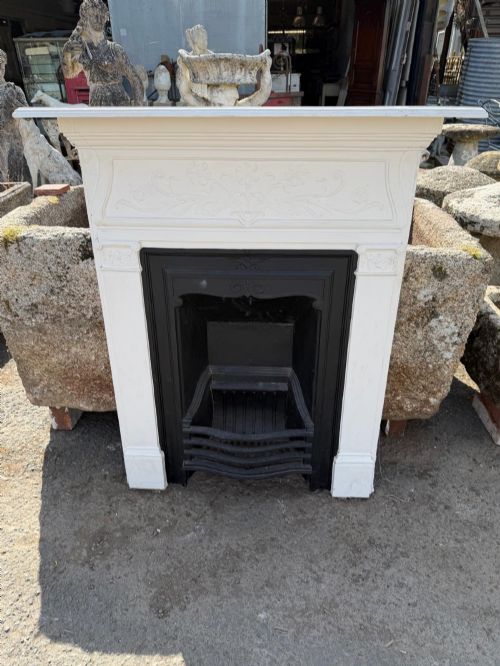
These items include combination fireplaces, register grates, hob grates, and freestanding fire baskets. Materials range from solid cast iron and wrought iron to brass, copper, and timber surrounds with granite tops.
How they were made
Foundry work dominates these pieces, utilising heavy cast iron for structural grates and backs. Wrought iron provides durability for baskets and fire bars.
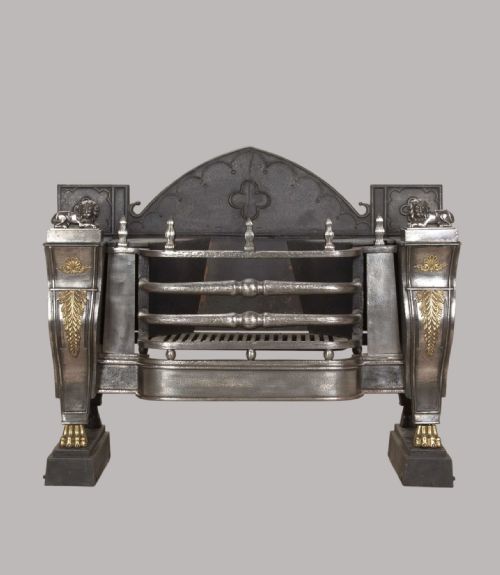
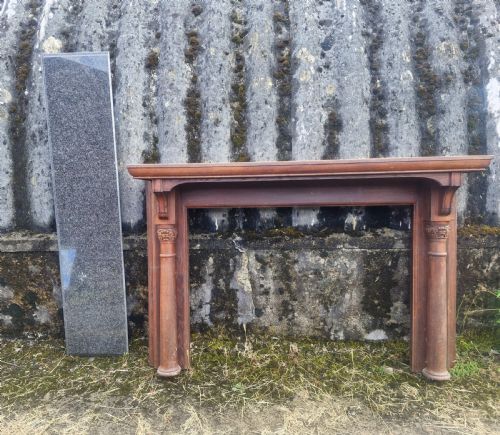
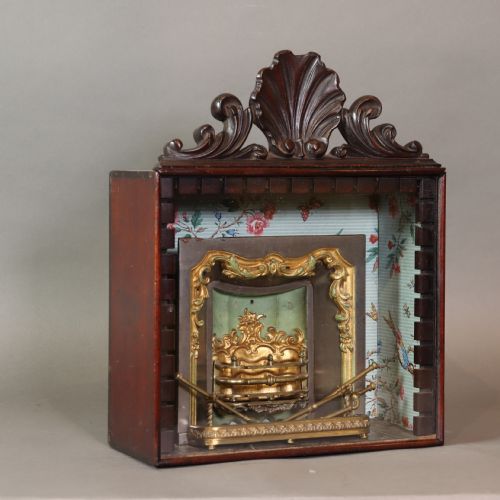
Decorative elements involve beaten or embossed copper, polished brass details, and ormolu. Timber surrounds often accompany these units, paired with granite top surfaces.
Listings feature cast iron, brass, wrought iron, and copper across Victorian, Edwardian, and Georgian periods.
What varies in quality
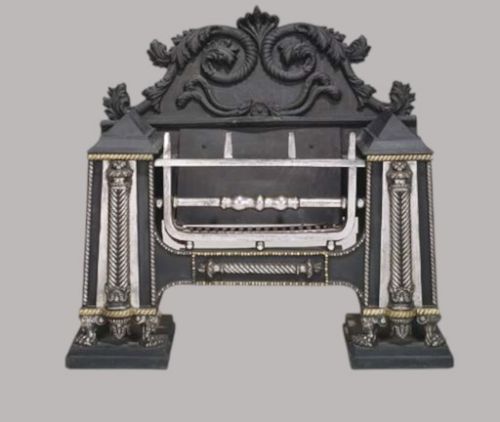
The distinction between standard utility grates and superior examples lies in the crispness of the casting and the integration of classical design motifs. High-quality pieces display refined proportions and detailed metalwork rather than plain industrial casting.
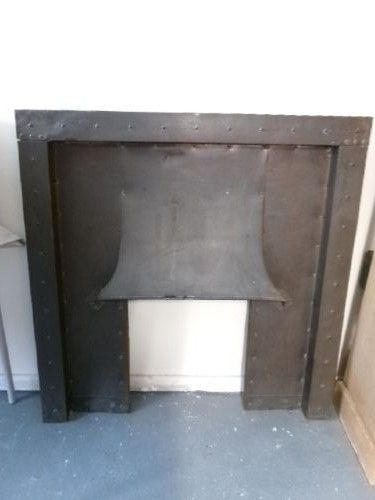
Material combination also elevates a piece, particularly where brass, copper, and wrought iron are assembled with balanced architectural symmetry. The integrity of the back plates and the complexity of the hood canopy or hob design further separate standard items from finer work.
Coalbrookdale
The Antique Fire Insert Glossary
- Hob grate
- A type of fireplace insert featuring raised side shelves, or hobs, used for keeping kettles warm. These units are frequently seen in Georgian and Regency styles.
- Register grate
- An iron fireplace insert equipped with a movable flap or damper plate to regulate the draught up the chimney. They appear commonly in nineteenth-century settings.
- Combination fireplace
- A single-piece cast iron unit that combines the mantel, surround, and grate into one integrated structure. Victorian examples are typical of this form.
- Fire basket
- An open metal basket designed to hold coal or wood logs within a hearth. They are often constructed from wrought and cast iron, sometimes featuring brass and copper components.
Antique Fire Insert: Frequently Asked Questions
What is an antique fire insert?
An antique fire insert is a self-contained metal unit, such as a register grate, hob grate, or fire basket, designed to sit within an existing fireplace opening.
These pieces provide both the functional grate for burning fuel and the decorative ironwork that frames the hearth.
Can I install one in a modern home?
Many of these pieces can be fitted into working chimneys, subject to a professional inspection and appropriate clearance measurements.
Some smaller or decorative examples are utilised purely for aesthetic display within non-working fireplaces.
How do I distinguish Victorian from Georgian grates?
Georgian and Regency grates typically display classical lines, lighter hob structures, and Adam style symmetry. Victorian versions tend to be heavier combination fireplaces with more ornate cast iron ornamentation.
Detailing on the back plates and the presence of brass or ormolu mounts also help indicate the period.
What metals were used to make them?
Cast iron and wrought iron form the primary structure of almost all grates and baskets. Brass, copper, and ormolu appear frequently on hoods, fenders, and decorative mountings.
Surrounds occasionally incorporate timber such as oak alongside granite elements.