



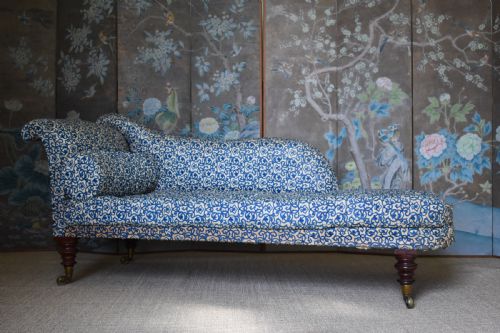

Antique Fainting Chair
An antique fainting chair is a nineteenth-century daybed designed for reclining in comfort, offering elegant nineteenth-century forms for modern interiors.
Antique Fainting Chair
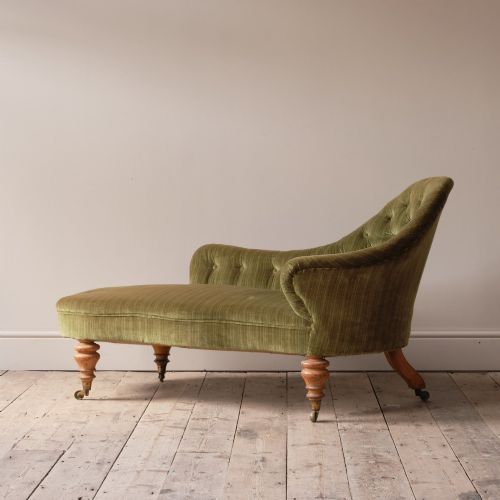
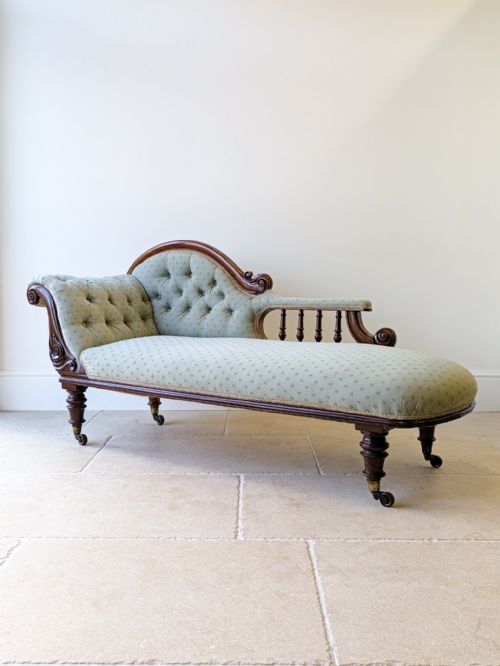
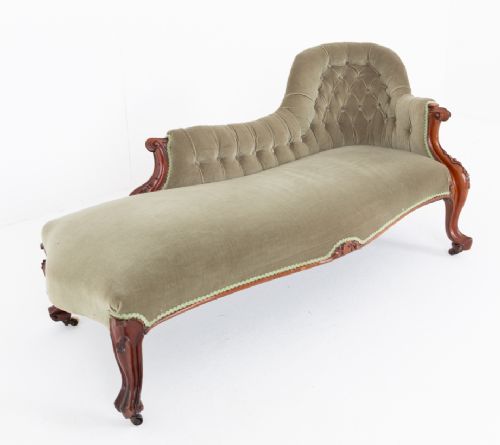
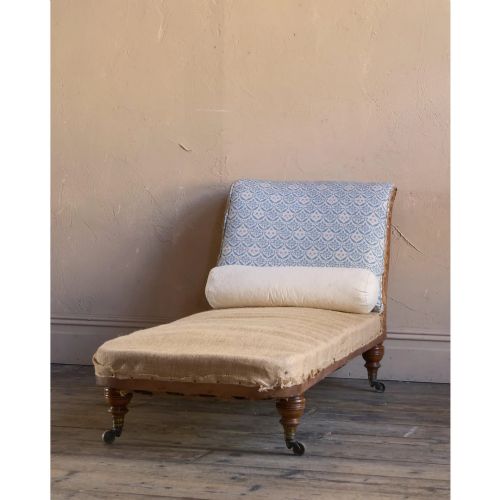
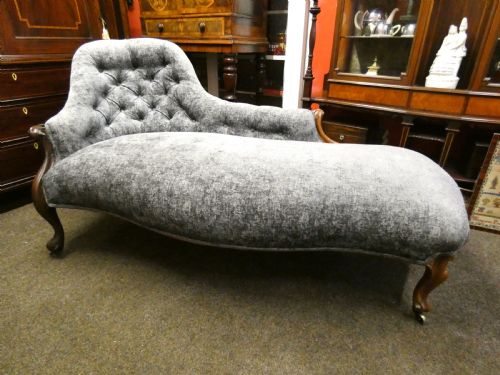
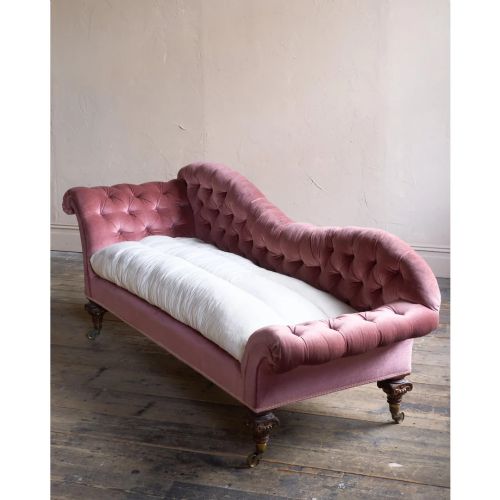
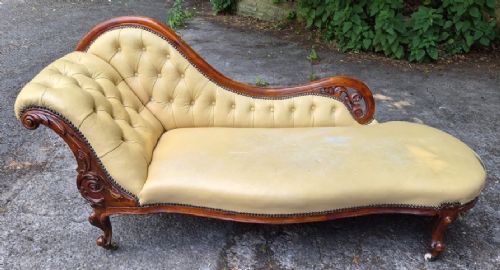
An antique fainting chair, commonly listed as a chaise longue or daybed, provides a single-ended upholstered seat for reclining in nineteenth-century style. Most examples seen here date from the Victorian era, spanning decades such as 1850, 1860, 1870, and 1880.
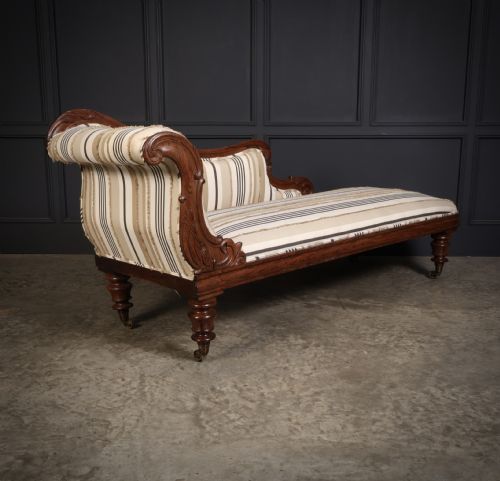
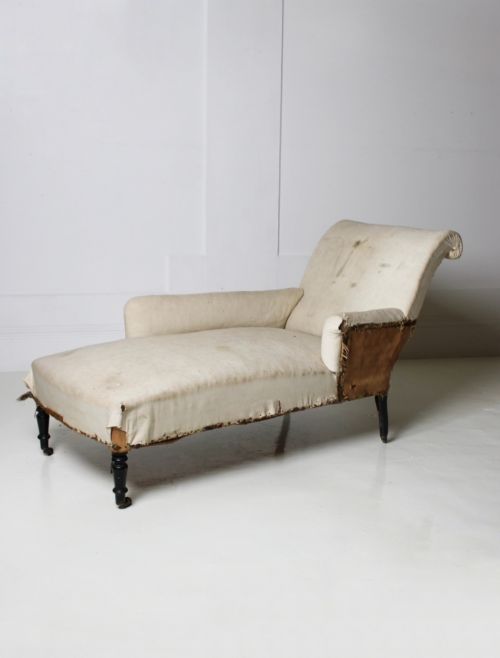
The form developed across several distinct periods, including Regency, William IV, Victorian, and Edwardian. Makers created these daybeds with scrolled backs and asymmetric armrests designed to support a semi-reclining posture.
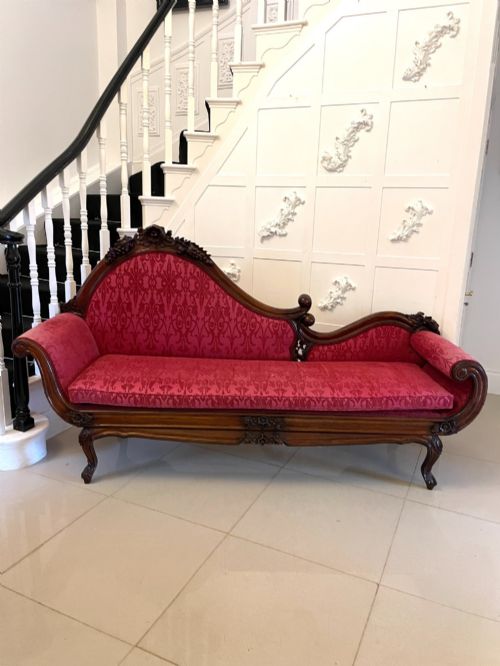
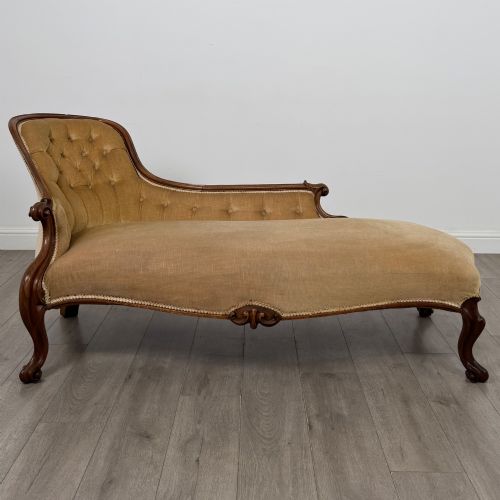
Beyond standard Victorian models, pieces range from grand country house daybeds to refined pieces reflecting Louis XVI Revival and Napoleon III influences. Buyers encounter various formats, from carved mahogany frames to button-backed velvet sofas.
Materials and construction
Timbers form the structural foundation of these daybeds, with mahogany, rosewood, walnut, and general wood used for frames and legs. Carved details, Ionic column legs, and gilt decoration reveal the joinery and cabinet-making skills of the period.
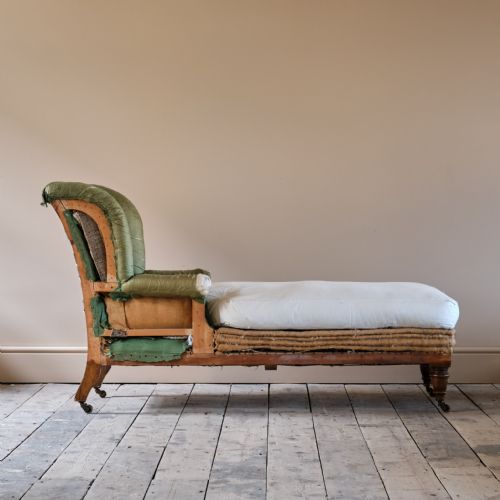
Upholstery defines the character of the piece, utilising fabrics such as velvet, calico, damask, and brown leather. Traditional button backing and concealed storage compartments are integrated into the sprung frames alongside brass castors.
Antique Fainting Chair Retail Price Guide 2026
Typical asking prices for fainting chair among the pieces listed under this phrase on Sellingantiques today, from the lower quarter to the upper quarter. They describe what is for sale here now, not the wider market.
Several Victorian daybeds feature concealed storage compartments, proving that nineteenth-century lounging required hidden practicality.
Evaluating craftsmanship and condition
Quality rests in the sculptural depth of the timber framing and the crispness of carved details on mahogany, walnut, or rosewood. Superior examples exhibit substantial frames with balanced proportions and robust joinery.
Upholstery finish and internal webbing elevate the piece, distinguishing standard workshop production from works associated with notable cabinet makers.
Howard and Sons·Holland and Sons·Jas Shoolbred·William Birch·Miles and Edwards
The Antique Fainting Chair Glossary
- Chaise longue
- An upholstered sofa in the form of a chair with a long seat for reclining. This French term translates literally to long chair.
- Button back
- An upholstery technique where buttons are pulled deep into the padding to form a geometric pattern of tufts. This secures the filling and adds texture.
- Daybed
- A bed that functions as a sofa during the day, often featuring a single raised end for resting the head. They appear frequently in nineteenth-century interiors.
- Ionic column
- A classical architectural column style featuring scroll-shaped ornaments on the capital, occasionally adapted as furniture legs. They appear on select nineteenth-century frames.
- Regency
- A British design period spanning the early nineteenth century, characterised by classical motifs and dark woods like rosewood. Pieces from this era often show clean architectural lines.
Antique Fainting Chair: Frequently Asked Questions
What is an antique fainting chair?
An antique fainting chair is a nineteenth-century daybed or chaise longue designed for semi-reclining. These pieces combine a seated backrest with an extended upholstered seat.
They emerged during the Regency and Victorian periods as fashionable furniture for drawing rooms and boudoirs. The design allowed Victorians to rest comfortably without lying completely flat.
How do I date a chaise longue?
Dating relies on stylistic clues, timber choices, and structural forms associated with specific nineteenth-century decades. Regency pieces often feature rosewood and classical columns, while mid-Victorian examples favour carved mahogany and button backs.
Later nineteenth-century pieces incorporate walnut frames or specific maker signatures. Comparing the woodwork style to documented cabinet-maker periods helps narrow the decade.
Where should I place a daybed?
A daybed works well floating in a spacious living room, placed against a long wall, or positioned in a large bedroom. Because many feature a single raised end, placement depends on which direction the backrest faces.
Ensure there is adequate surrounding floor space to appreciate the carved timber frame and serpentine lines. They function effectively as a reading seat or a visual anchor in a room.
What woods were used in these seats?
Cabinet makers predominantly used mahogany, rosewood, and walnut for the visible wooden frames and legs. Timber selection often reflects the prevailing fashion of the manufacturing decade.
Rosewood dominates earlier Regency pieces, while mahogany and walnut appear frequently across Victorian productions. Secondary timbers were often utilised for internal frame construction.