




Antique Fabric Sewing Well
An antique fabric sewing well offers a neat compartment for threads and textiles, combining domestic utility with the rich timber tones of the nineteenth century.
Antique Fabric Sewing Well
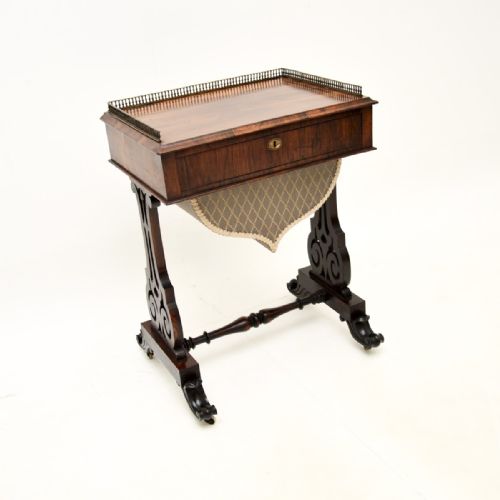
When you search for an antique fabric sewing well, you are looking at nineteenth-century work tables and sewing tables designed to hold needlework and textiles. These versatile pieces served sitting rooms and parlours, functioning equally well as lamp tables or occasional tables when the sewing wells were closed.
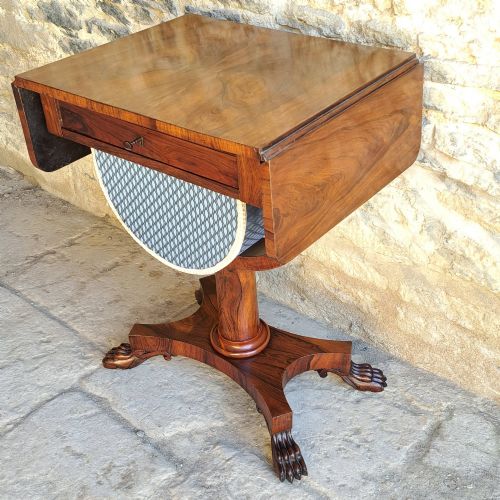
On this page, the pieces you are most likely to meet date from the Regency period through to the Victorian era. Mahogany, rosewood, burr walnut and pollard oak form the primary timbers of these sewing tables, often featuring drop flaps or integrated textile bags.
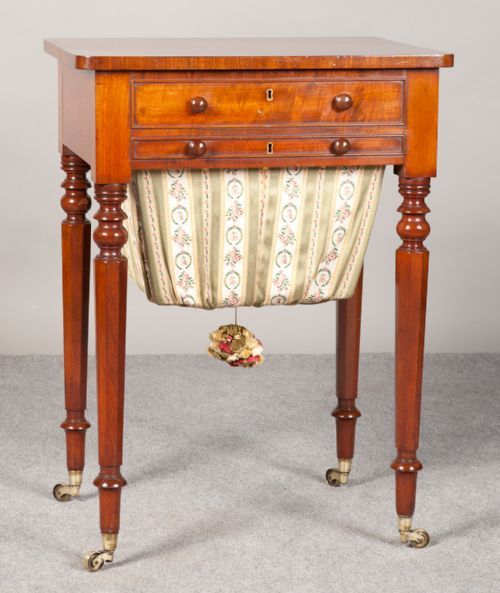
The nineteenth-century makers built these tables to be both decorative and practical, housing silk bags or wooden compartments beneath the main surface. A buyer searching this phrase encounters variations ranging from simple mahogany designs to freestanding burr walnut examples with elaborate fitted interiors.
How they were made
Cabinet makers utilised dense, richly figured hardwoods like rosewood, burr walnut and mahogany to construct the bodies of these sewing tables. Surfaces often display careful veneer work, while drop flaps and occasional table frames rely on traditional joinery to support daily use.
Beneath the main top, fabric sewing wells incorporate gathered textiles, silk or velvet to create deep pouches for holding threads and materials. Brass fittings, castors and hinges appear frequently across the Regency and Victorian examples to assist mobility and function.
Antique Fabric Sewing Well Retail Price Guide 2026
Typical asking prices for fabric sewing well among the pieces listed under this phrase on Sellingantiques today, from the lower quarter to the upper quarter. They describe what is for sale here now, not the wider market.
Period designations across the available sewing tables span the Regency, William IV and Victorian eras.
What varies in quality
The selection of timber sets the baseline for quality, with highly figured burr walnut and richly grained rosewood sitting at the upper end of the range. Simpler mahogany or oak versions offer robust utility but display less decorative grain work.
Interior execution and the preservation of the original fabric sewing well distinguish finer examples from standard production. Tables that retain their original fitted compartments, brass details and intact textile pouches show superior craftsmanship and period integrity.
The Antique Fabric Sewing Well Glossary
- Sewing well
- The suspended fabric bag or wooden compartment beneath the table top designed for storing textiles, wools and needlework. It forms the defining characteristic of these functional pieces.
- Work table
- A nineteenth-century term for a small occasional table equipped with drawers, compartments or fabric bags for sewing and needlecraft. These pieces doubled as writing or lamp tables.
- Burr walnut
- A highly decorative wood veneer taken from the warted growths of walnut trees, prized for its swirling grain patterns. Cabinet makers utilised it on high-end Victorian furniture.
- Regency
- A British design period spanning the early nineteenth century, characterised by classical restraint and dark timbers such as rosewood. Pieces from this era often feature clean lines and brass mounts.
- Drop flap
- A hinged leaf on the side of a table that lifts to extend the surface area when needed. It appears frequently on nineteenth-century work tables to provide flexibility in smaller rooms.
Antique Fabric Sewing Well: Frequently Asked Questions
What is a fabric sewing well?
A fabric sewing well is the suspended textile bag or deep compartment attached beneath the top of a nineteenth-century work table. It provided a dedicated space to keep unfinished needlework, threads and cloth out of sight.
Cabinet makers designed these wells to drop down or pull out, allowing users to access materials easily while sitting in the parlour.
How do I use an antique work table today?
These tables adapt well to modern rooms as bedside tables, lamp tables or side tables in a living room. The top surface holds lighting or books, while the internal compartments store modern sewing kits or small household items.
Placing them away from direct heat sources protects the rosewood, mahogany or burr walnut timbers and any fragile fabric components from drying out.
How do I tell Regency from Victorian tables?
Regency tables generally date from the early nineteenth century and lean towards classical proportions, often using rosewood with restrained brass inlay. Victorian examples from the mid-nineteenth century frequently showcase heavier proportions and highly figured burr walnut.
Examining the construction methods, timber choice and handle styles helps determine whether a piece belongs to the Regency era or the later Victorian period.
Were these tables only used for sewing?
While primarily built to house needlework, nineteenth-century work tables often doubled as writing desks, card tables or general occasional tables. The inclusion of drop flaps and fitted drawers made them adaptable for multiple domestic tasks.
Upper-class households utilised them in drawing rooms where women gathered for handcrafts, letter writing and social conversation.