





Antique Exterior Sconces
Antique exterior sconces bring historical character to outdoor walls through durable metals and glass shaped for carriage houses and streets.
Antique Exterior Sconces
Antique exterior sconces encompass wall-mounted outdoor lighting fixtures designed to illuminate coach-houses, porches, and entrances from the nineteenth and early twentieth centuries. These pieces translate indoor illumination forms into weather-resistant outdoor hardware, serving both practical safety and architectural enhancement.
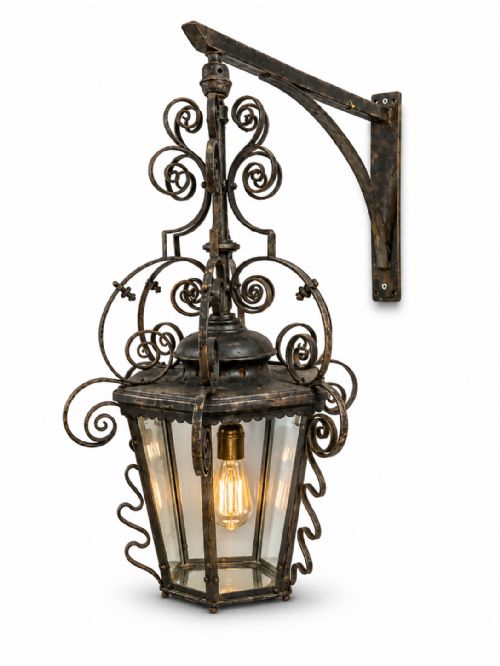
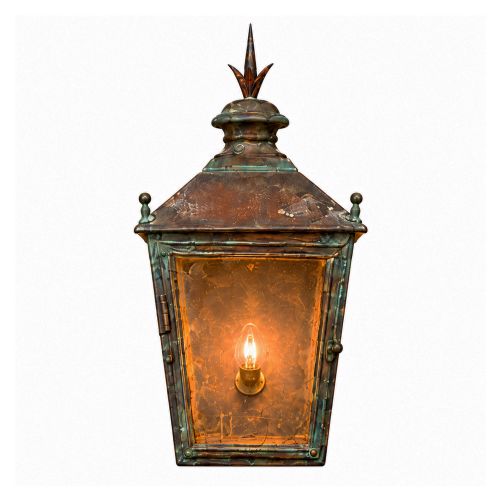
Forms range from octagonal wall lanterns and half-lanterns mounted flat against masonry to large hanging coach lamps supported by elaborate scroll brackets. The survival of original glass panels alongside patinated metal surfaces defines the typical appearance of these surviving exterior fixtures.
Materials and construction
Construction relies on heavy gauge metals designed to withstand outdoor exposure, predominantly utilising beaten copper, cast iron, wrought iron, and brass. These metals are often joined by riveting and soldering to secure the glass panels tightly against weather ingress.
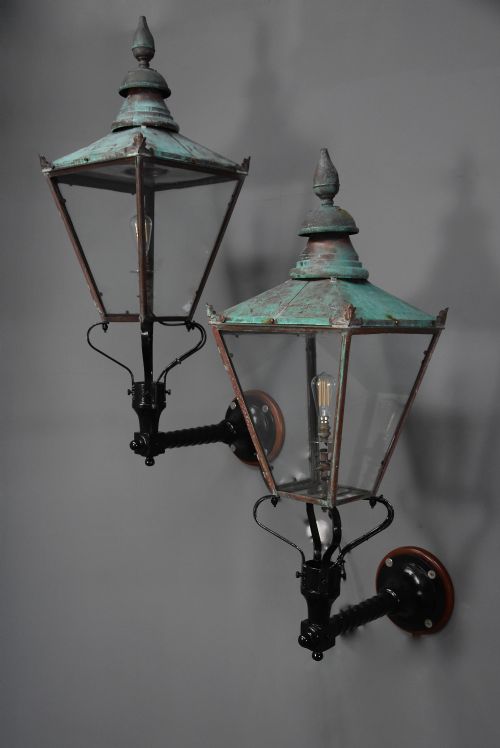
Surfaces frequently display natural verdigris patination resulting from decades of atmospheric oxidation on copper and brass components. Iron elements rely on painted or rusted finishes developed through long exposure to the elements.
Glazing typically incorporates thick clear or frosted glass panes held in place by metal glazing bars or internal clips. Many examples incorporate specialised reflectors behind the burner or bulb space to direct illumination outward.
Antique Exterior Sconces Retail Price Guide 2026
Typical asking prices for exterior sconces among the pieces listed under this phrase on Sellingantiques today, from the lower quarter to the upper quarter. They describe what is for sale here now, not the wider market.
Listings feature exterior wall lights spanning the nineteenth century through the nineteen-forties, constructed predominantly from copper, brass, and iron with glass glazing.
Assessing quality and proportion
Quality shows in the weight of the metalwork and the complexity of the bracket architecture, where heavier gauge copper and substantial cast brass elements indicate superior original manufacture. Simpler utilitarian carriage lamps contrast with elaborately styled Neo-Classical or French Empire pieces featuring decorative cast mounts and finials.
The integrity of the original framing and the survival of matching pairs substantially elevate the desirability of these installations. Mismatched components or heavily distorted metal frames indicate intensive weathering or structural compromise over time.
The Antique Exterior Sconces Glossary
- Carriage lamp
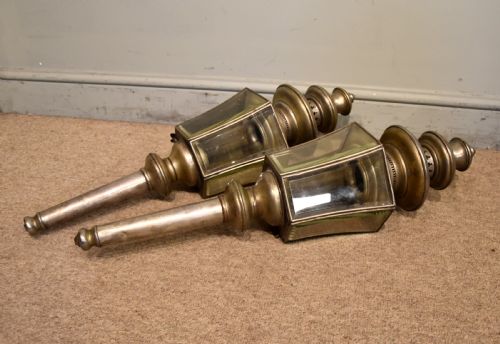
- A specialised wall-mounted lantern originally designed to illuminate the sides of horse-drawn vehicles or carriage house entrances. These typically feature elongated box forms with glass panels on multiple sides.
- Coach-house style
- An architectural lighting design emulating the large, robust lanterns hung beside nineteenth-century stable and carriage house doors. They often incorporate sweeping brackets or substantial top cowls.
- Verdigris patination
- The greenish blue crust or patina formed on copper, brass, or bronze surfaces through atmospheric oxidation. This chemical change occurs naturally over long periods of exterior exposure.
- Half lantern
- A wall light configuration split vertically down the middle so that the flat back mounts directly against a wall surface. This design projects outward while occupying minimal depth.
- Neo-Classical
- A decorative style drawing inspiration from the classical art and architecture of ancient Greece and Rome. Elements include symmetry, classical orders, and restrained geometric ornamentation.
Antique Exterior Sconces: Frequently Asked Questions
How do I install antique exterior sconces?
Installation requires professional electrical retrofitting to accommodate modern wiring safely within the historical metal housing. Electricians must secure the heavy brackets firmly to exterior masonry while preserving the original weatherproofing seals.
Mounting height depends on doorway proportions, but these fixtures generally sit at eye level to ensure proper illumination and balanced architectural framing.
Can these outdoor lights withstand modern weather?
Most surviving pieces have already endured decades of outdoor exposure thanks to robust copper, brass, and iron construction. However, sealing vulnerable joints and protecting internal sockets from moisture remains essential for long-term exterior use.
Regular application of suitable metal wax helps stabilise existing patination and prevents accelerated corrosion from heavy rain or coastal salt air.
How do I identify Victorian carriage lamps?
Victorian examples typically display heavy cast iron or brass frames with riveted construction designed to hold thick bevelled glass panes. They often show evidence of early oil or gas burner configurations inside the housing.
Stylistic cues include boxy proportions, pierced ventilation caps at the top, and robust wall brackets suited for nineteenth-century coaching inns and residences.
What is the difference between brass and copper lanterns?
Brass components generally offer a brighter golden metallic tone when polished, though historical examples often tone down to a warm brown or verdigris finish. Copper constructions tend to be slightly softer to work with, allowing for intricate hand-beaten shapes and seamless domed cowls.
Both metals resist red rust entirely, making them preferred choices for enduring outdoor installation compared to standard iron.