

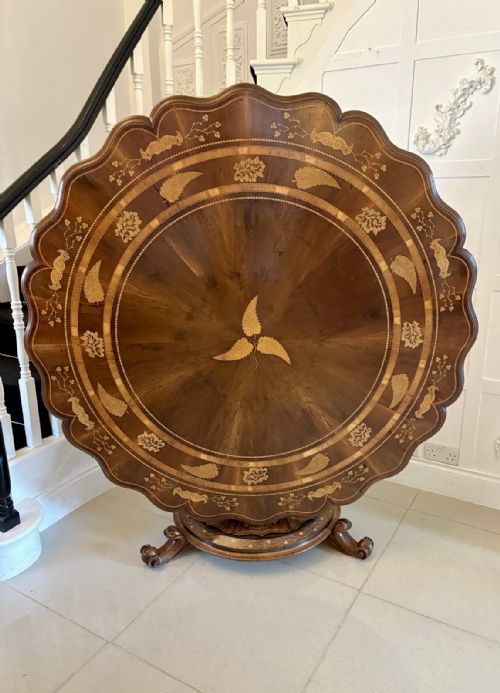


Antique Exhibition Table
An antique exhibition table brings master craftsmanship into a room, offering refined timbers and intricate marquetry designed to showcase the pinnacle of nineteenth-century skill.
Antique Exhibition Table
An antique exhibition table represents the finest output of period cabinet makers, often produced for trade displays or bespoke commissions. These pieces span the nineteenth and early twentieth centuries, encompassing Victorian, Edwardian, and specific revival styles.
The selections on this page appear in various forms, most commonly as centre tables, library tables, and card or games tables. They utilise sophisticated timbers and decorative techniques that set them apart from standard domestic furniture.
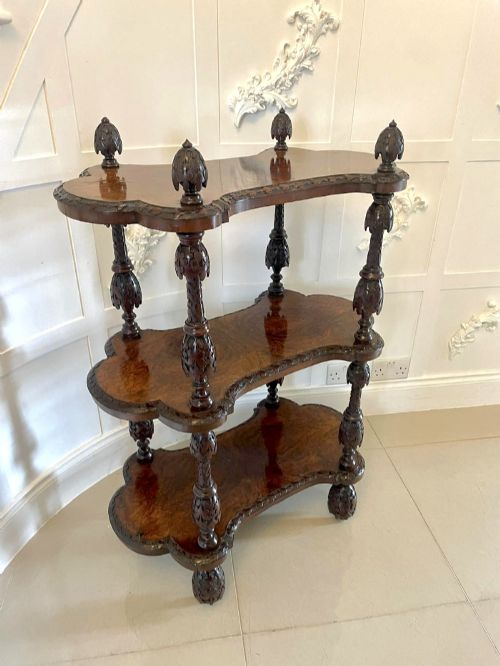
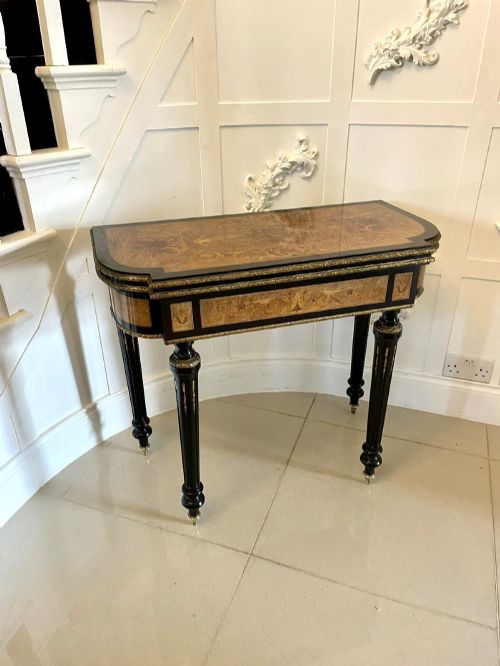
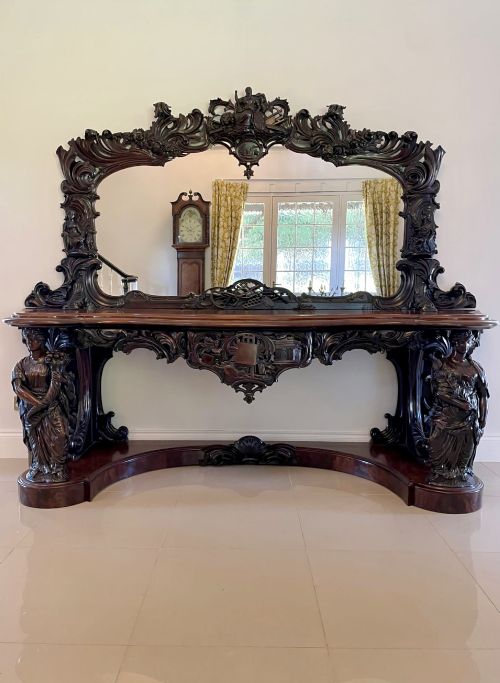
Makers utilised rich materials such as burr walnut, mahogany, satinwood, and rosewood, frequently enhanced with brass, ormolu, and detailed marquetry. Buyers encounter both English craftsmanship and French influence, particularly through Louis XV revival and marquetry console designs.
How they were made
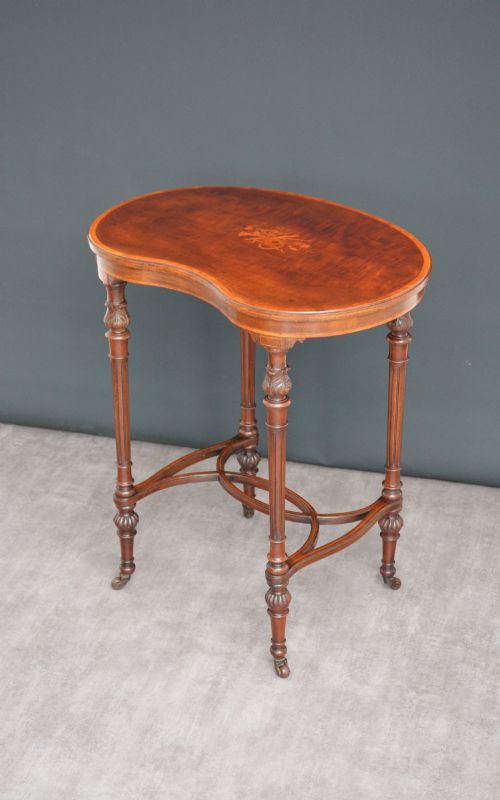
Cabinet makers constructed these tables using dense primary hardwoods such as mahogany and walnut, applying delicate veneers of satinwood, rosewood, and burr walnut over stable carcases. Marquetry panels incorporated contrasting timbers to form elaborate floral or geometric pictorial designs.
Metal mounts in cast brass and ormolu were chased and applied to protect and ornament edges, aprons, and cabriole legs. Joinery relied on traditional mortise and tenon methods alongside intricate hand-cut dovetails for internal drawer construction.
Antique Exhibition Table Retail Price Guide 2026
Typical asking prices for exhibition table among the pieces listed under this phrase on Sellingantiques today, from the lower quarter to the upper quarter. They describe what is for sale here now, not the wider market.
Materials appearing across current pieces include mahogany, walnut, burr walnut, satinwood, rosewood, brass, ormolu, and glass.
What varies in quality
Quality in an exhibition piece rests upon the ambition of the design and the precision of the execution. Finer examples display meticulous control in their marquetry, where individual veneer cuts fit seamlessly without excessive filler.
The selection of timbers also dictates standing, with highly figured burr walnut and exhibition-grade satinwood commanding attention through natural grain movement. Secondary woods and the crispness of carved details further separate standard Victorian production from pieces made for public showcase.
Collingson & Lock·George Faulkner Armitage·Marsh, Jones & Cribb·Pietro Ferrario·Henry Dasson·Gillows of Lancaster
The Antique Exhibition Table Glossary
- Marquetry
- A decorative technique where small pieces of veneer are assembled to form pictorial or geometric patterns on a wooden surface. This method demands immense precision from the artisan.
- Ormolu
- Gilded bronze mounts applied to furniture edges and legs for decorative effect. The process involves treating the metal with an amalgam of gold.
- Burr Walnut
- A timber harvested from the abnormal growth of a walnut tree, yielding swirling, highly decorative grain patterns. It was favoured for high-status Victorian table tops and cabinet doors.
- Satinwood
- A luminous hardwood with a golden sheen, often used for detailed inlay work and contrasting borders on mahogany and rosewood tables.
Antique Exhibition Table: Frequently Asked Questions
What is an exhibition table?
An exhibition table is a high-status piece of furniture created to demonstrate the exceptional skill of a workshop or manufacturer, often for public display or international trade fairs.
These tables frequently feature superior timbers, complex marquetry, and fine brass or ormolu mounts that distinguish them from everyday household items.
Where should I place a centre table?
A centre table stands freely in the middle of a room rather than against a wall, making it suitable for entrance halls, libraries, or spacious reception areas.
Because they are finished on all sides, they allow light and circulation around them while serving as a visual anchor for the space.
How do I identify Victorian styles?
Victorian furniture encompasses a wide range of revivals, from robust carved mahogany pieces of the mid-nineteenth century to lighter Edwardian satinwood designs.
Examining the secondary woods, dovetail joints, and specific decorative motifs helps determine whether a piece belongs to the early Victorian era or later stylistic revivals.
Can I use a games table daily?
Games tables with folding or swivel tops were originally designed for card playing and social gatherings, incorporating hidden wells for counters and chips.
While robustly constructed, modern daily use requires care to protect delicate hinges, pivoting mechanisms, and inlaid veneers from excessive wear.