





Antique Etruscan Jewellery
Antique etruscan jewellery brings nineteenth-century revivalism to life through intricate goldwork and classic motifs.
Antique Etruscan Jewellery
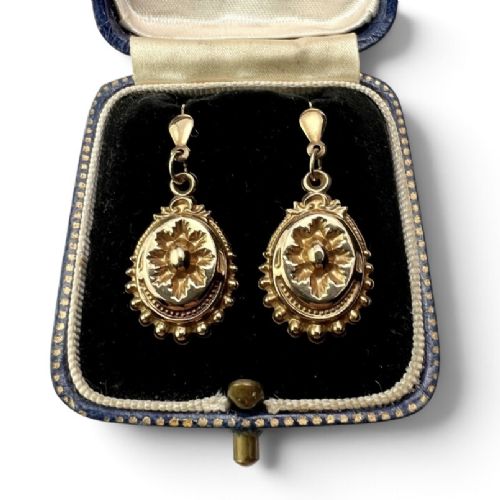
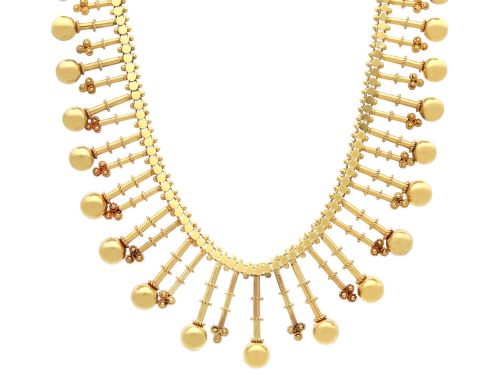
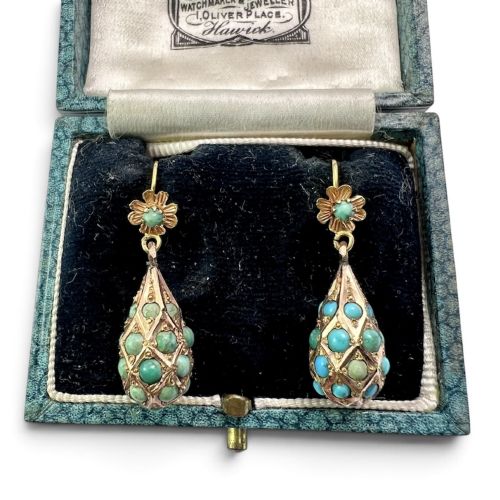
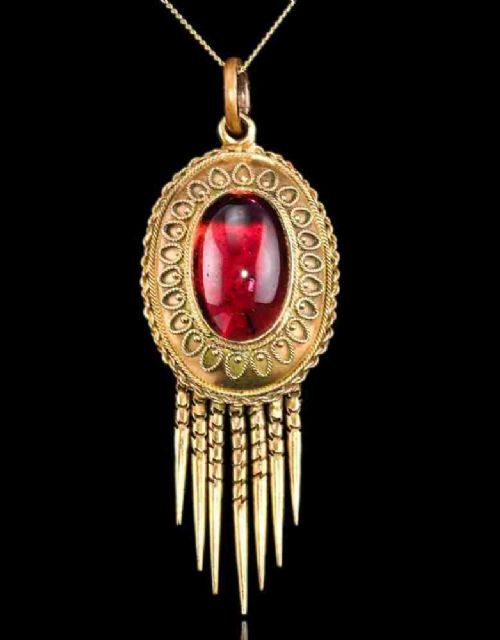
When you search for antique etruscan jewellery, you encounter pieces that draw heavily on archaeological discoveries from ancient Italian tombs during the nineteenth century. The selection centres on Victorian interpretations of classical forms, ranging from drop earrings and fringe necklaces to bold bangles.
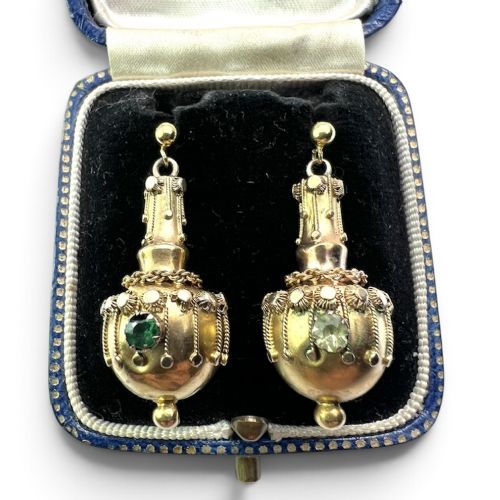
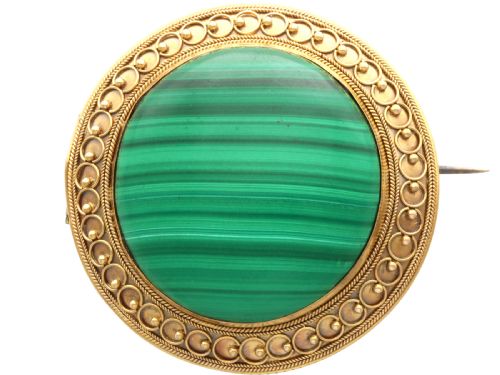
Most items you meet on this page belong to the Victorian era, spanning the late nineteenth century and occasionally touching the Edwardian period. Forms include amphora earrings, locket brooches, and fob pendants that integrate granulation and filigree with gemstones like garnets, turquoise, and pearls.
How they were made
Goldsmiths utilised high-carat gold, predominantly in yellow hues, alongside 15ct and 9ct variations to shape these revival pieces. Techniques relied on painstaking granulation, soldering tiny gold spheres onto surfaces to create geometric patterns and textured borders.
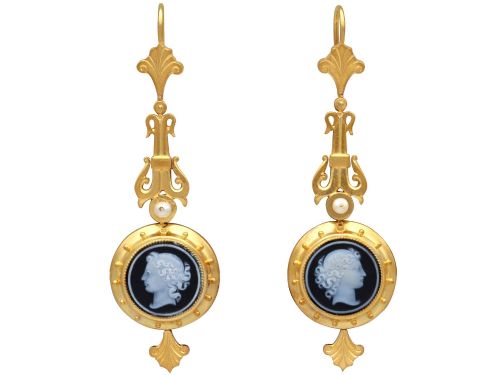
Makers incorporated hardstones, cameos, and varied gemstones including rubies, malachite, and bloodstone into the gold settings. Foxtail chains, silver gilt, and intricate wirework further defined the construction methods of the period.
Antique Etruscan Jewellery Retail Price Guide 2026
Typical asking prices for etruscan jewellery among the pieces listed under this phrase on Sellingantiques today, from the lower quarter to the upper quarter. They describe what is for sale here now, not the wider market.
Listings feature Victorian and Edwardian pieces, incorporating materials from 22ct yellow gold and pearls to malachite, bloodstone, and turquoise.
What varies in quality
The sophistication of the goldwork dictates the standard of these pieces, particularly the precision and uniformity of the applied granulation. Finer examples display meticulous wire application and secure gemstone settings that integrate seamlessly with the classical design.
Material selection also separates standard items from exceptional ones, with heavier gold weights and superior natural stones elevating the piece. The preservation of delicate elements like tassels and fringe drops indicates the care taken in both original manufacture and subsequent survival.
Ilias Lalaounis
The Antique Etruscan Jewellery Glossary
- Granulation
- A decorative technique involving the application of tiny spheres of gold to a metal surface in geometric patterns. This method mimics ancient etruscan metalwork rediscovered during archaeological excavations in the nineteenth century.
- Fringe necklace
- A necklace featuring hanging drops or tassels suspended closely together along a central chain. This style gained prominence during the Victorian period.
- Amphora
- A two-handled ancient jar shape frequently adopted as a motif for earrings and pendants in revivalist designs. Goldsmiths rendered these miniature vessels in solid gold.
- Silver gilt
- Silver metal coated with a thin layer of gold on the surface. This material allowed makers to achieve a gold appearance while employing alternative base metals.
Antique Etruscan Jewellery: Frequently Asked Questions
What is antique etruscan jewellery?
Antique etruscan jewellery comprises nineteenth-century decorative pieces inspired by ancient archaeological finds in Italy. Goldsmiths of the Victorian era revived ancient techniques like granulation to produce distinctive gold earrings, brooches, and necklaces.
These items reflect a deep nineteenth-century fascination with classical antiquity. They combine historical motifs with contemporary Victorian tastes, often incorporating gemstones such as garnets, turquoise, and pearls.
How do I care for gold etruscan pieces?
Care requires gentle handling due to the delicate surface granulation and applied wirework. Cleaning should involve soft cloths without abrasive chemicals that might damage the historical gold construction.
Store pieces individually to prevent friction from wearing down the raised decorative elements. Professional cleaning is advisable for items set with soft organic gems like pearls or turquoise.
How can I date these items?
Dating relies on stylistic markers, hallmarking conventions, and the types of stones and clasps utilised. Most examples originate from the Victorian period, though some extend into the Edwardian era.
Revival styles often align with specific archaeological excavations of the nineteenth century. Examining the construction of the pin stems, ear wires, and backings helps establish the manufacturing period.
What materials were commonly used?
Makers relied heavily on yellow gold, often in 15ct or higher purities, alongside silver gilt and 9ct variations. Gemstones such as garnets, malachite, bloodstone, and turquoise frequently accent the metalwork.
Pearls and hardstone cameos also appear regularly within the decorative schemes. The primary focus remained on the rich colour and texture of the gold itself.