

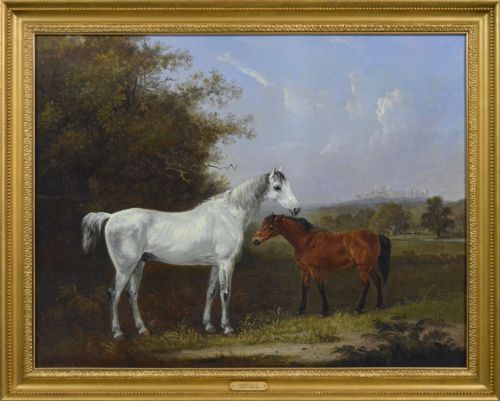
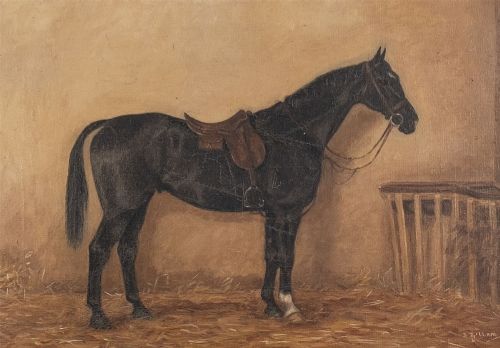
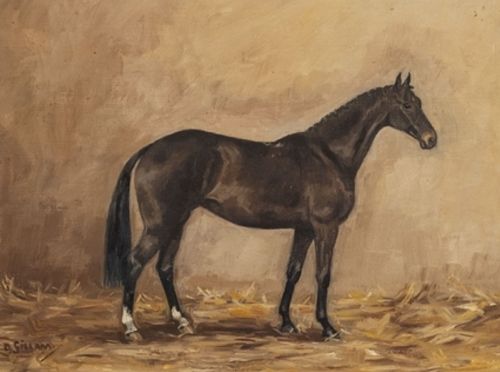
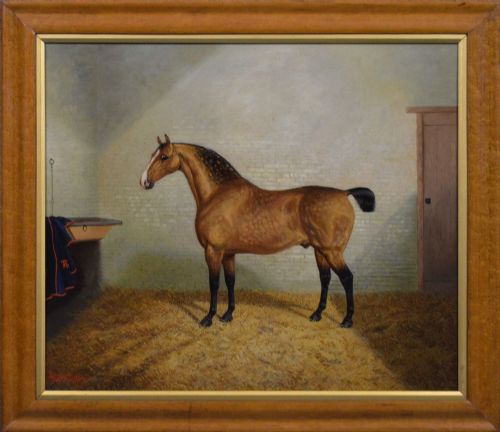
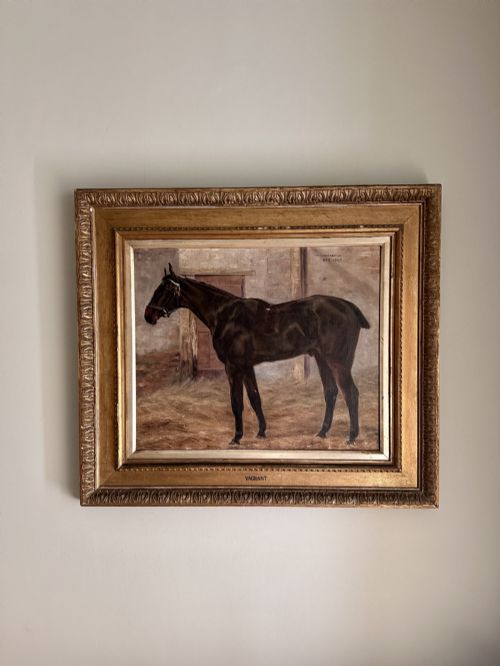


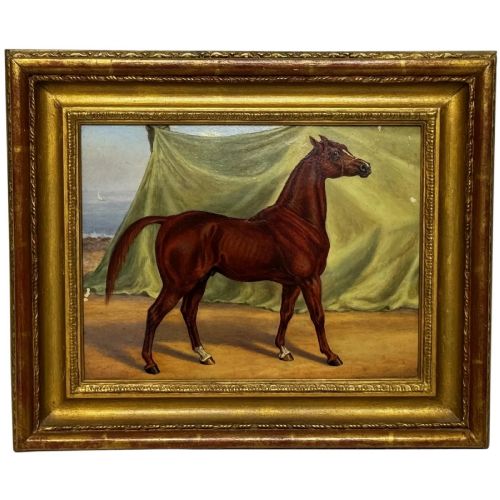
Antique Equine Painting
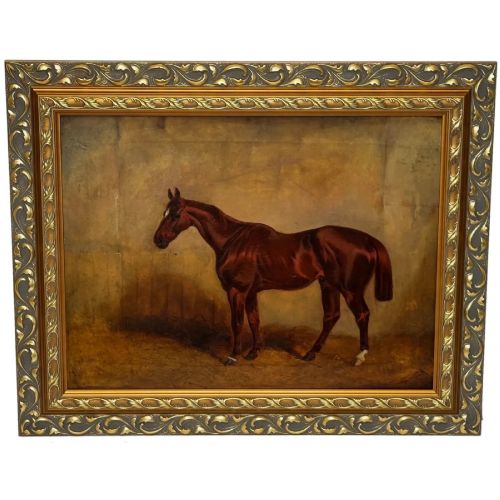
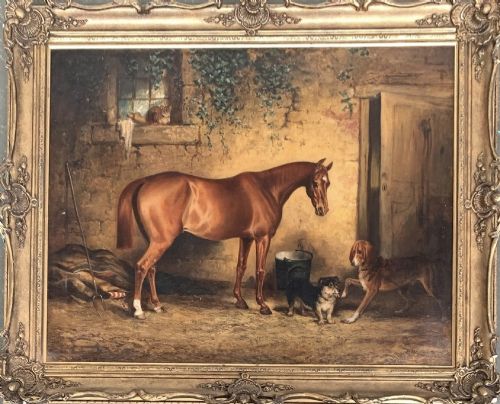
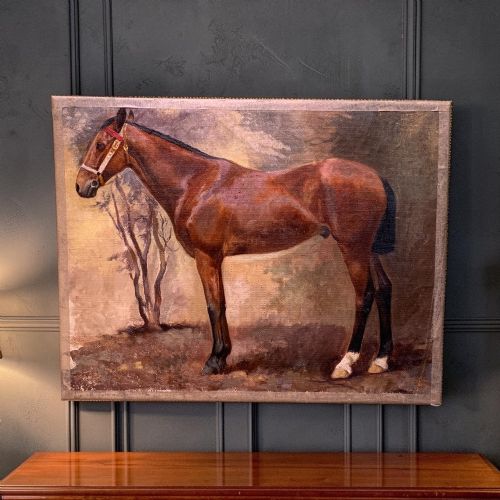
An antique equine painting captures the individual character and muscular form of prized horses, bringing historic sporting heritage directly onto the wall.
Antique Equine Painting
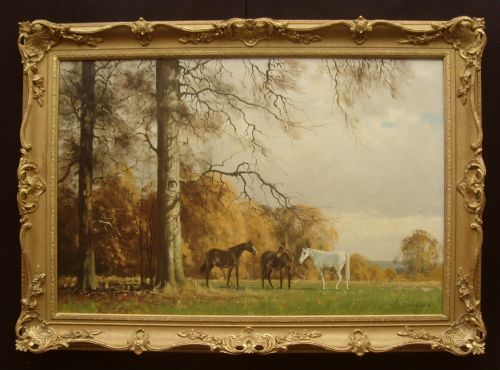
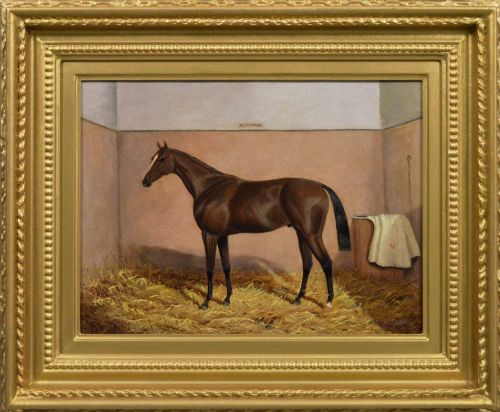
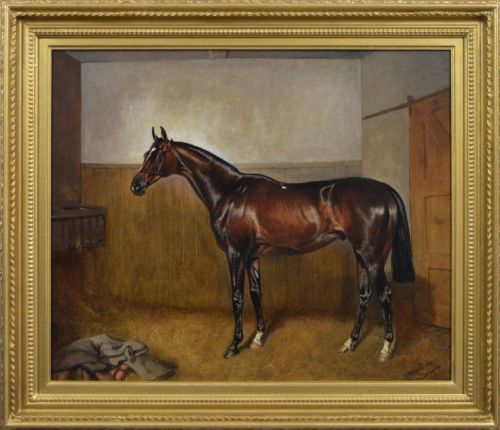
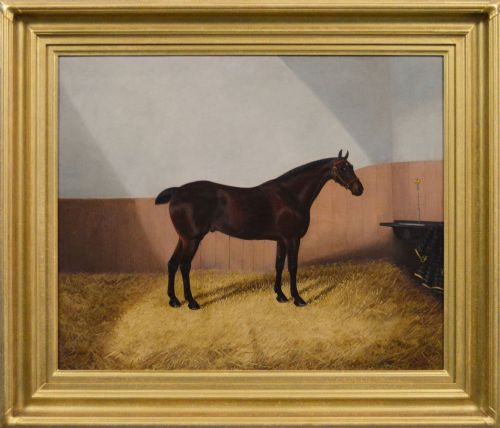
When searching for an antique equine painting, collectors encounter detailed portraits of named racehorses, hunters, and stable scenes spanning the Georgian and Victorian eras. These works range from intimate studies of a single bay or chestnut horse to expansive landscapes featuring rural life and racing triumphs.
The most common examples on this page are oil paintings on canvas executed by British and European artists during the nineteenth century. These pieces document specific animals, often recording the names of celebrated thoroughbreds and their owners alongside the brushwork of regional painters.
Materials and Techniques
Painters of these subjects utilised oil paint applied to stretched canvas or wooden panels, building up layers of pigment to render the sheen of a horse coat and the textures of leather harness work. Gilding on frames often incorporated gold leaf to highlight ornamental mouldings surrounding the central canvas.
Watercolour on paper also appears among these works, offering a lighter medium for intimate studies of foals and rural scenes. Supporting structures generally consist of wood stretchers and pine panels housed within period giltwood frames.
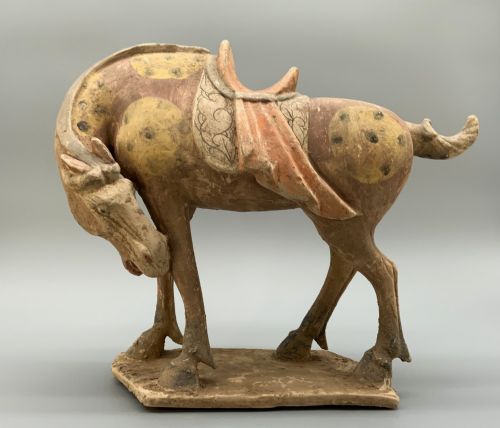
Listings feature works spanning the eighteenth century through the early twentieth century, utilising oil paint, watercolour, and terracotta.
Factors That Separate the Finest Works
Quality in these works rests upon the artist ability to render equine anatomy correctly, capturing the precise musculature, posture, and alert expression of the animal. Weaker examples display stiff proportions and flat backgrounds, whereas superior pieces place the horse within a convincing landscape with atmospheric depth.
Provenance and documentation elevate certain works above standard portraits, particularly when a painting identifies a famous racecourse, owner, or breeder in contemporary inscriptions. The skill of the brushwork in handling difficult details like gleaming coats and bridle hardware distinguishes the master hand from the provincial copyist.
Charles Bilger Spalding·Henry Barraud·Edmund Bristow·Albert Clark·Fred Fitzpatrick·John Alfred Wheeler·Thomas Walker Bretland·John Frederick Herring Snr·Franz Bergman·William Williams·George E Sharpe·Eugene Joseph Verboeckhoven·Benjamin Cam Norton·Clifton Tomson·Alfred Moginie Bryant·Arthur Winter Shaw·Helena Maguire
The Antique Equine Painting Glossary
- Canvas
- A heavy woven fabric stretched across a wooden frame to serve as a foundation for oil painting. It provides the primary support surface for the majority of nineteenth-century animal portraits.
- Giltwood
- Wood carved and coated with a thin layer of gold leaf or metallic powder. This material forms the decorative frames typical of Victorian and Georgian fine art.
- Panel
- A flat piece of wood used as a rigid painting surface instead of canvas. Pine and oak panels frequently appear in earlier works.
- Provenance
- The documented history of ownership belonging to an artwork. This paper trail establishes authenticity and traces the lineage of a piece through previous collections.
- Portrait
- A visual representation of a specific subject intended to capture likeness and character. In this context, it refers to individual studies of named horses rather than generic animals.
Antique Equine Painting: Frequently Asked Questions
What is an antique equine painting?
An antique equine painting is an artwork depicting horses, created during the Georgian, Victorian, or early twentieth-century periods. These works serve as historical records of prized animals, racing events, and rural life.
Most examples employ oil on canvas, though watercolours and panel paintings also appear. They range from intimate head studies to large-scale portraits commissioned by owners and breeders.
How were these horse portraits used?
Owners commissioned these portraits to celebrate successful racehorses, favoured hunters, and valued breeding stock. They hung primarily in country houses, estate offices, and stable blocks.
Over time, these paintings transitioned into domestic drawing rooms and galleries as appreciation for sporting art grew among collectors and enthusiasts.
How do you date an antique equine painting?
Dating relies upon a combination of artist signatures, inscribed dates on the canvas or stretcher, and stylistic clues within the painting. Fashion in human attire and tack provides additional chronological markers.
The framing materials and construction techniques of the stretcher also help verify the period during which the work was produced.
How should you care for an oil painting?
Preserving these paintings requires keeping them away from direct sunlight and maintaining stable indoor humidity levels. Sudden temperature fluctuations can cause canvas to slacken and paint layers to crack.
Dusting should be done gently with a soft, dry brush, avoiding any moisture or chemical cleaning agents that might damage the historical varnish.