



Antique Envelope Desk
These antique envelope desk pieces combine utility and craftsmanship, offering collectors refined accessories for the writing table from various historic periods.
Antique Envelope Desk
When you search for an antique envelope desk, you encounter a selection of writing table accessories and occasional tables reflecting diverse periods. The inventory spans from Georgian and Victorian eras through the Edwardian period and the interwar years of the twentieth century.
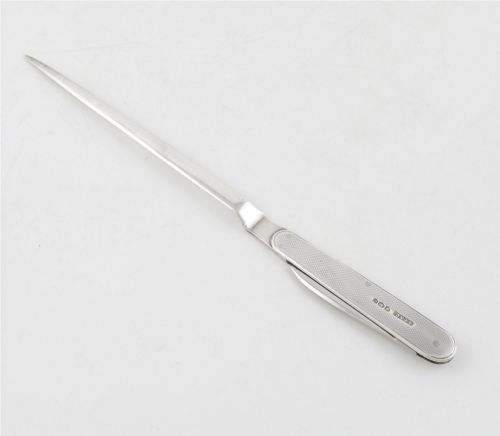
Card tables featuring envelope forms sit alongside smaller desk accessories such as letter openers, stamp cases, and stationery boxes. These items serve both practical writing functions and decorative roles within a traditional study.
The materials utilised range from rich timbers like satinwood and rosewood to metals including sterling silver, silver plate, brass, and copper. Decorative elements incorporate mother-of-pearl, guilloche enamel, and agate.
Materials and construction methods
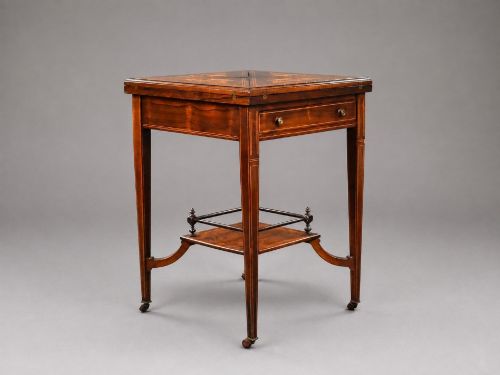
Cabinetmakers constructed wooden furniture and small boxes using traditional joinery, incorporating satinwood and rosewood veneers with delicate inlay work. Timber surfaces received polished finishes that highlighted natural grain patterns.
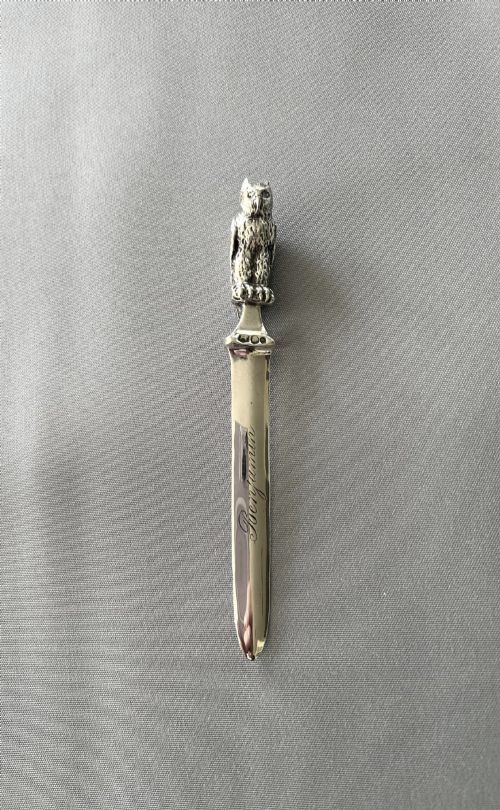
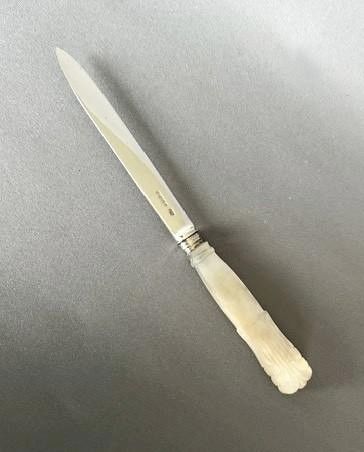
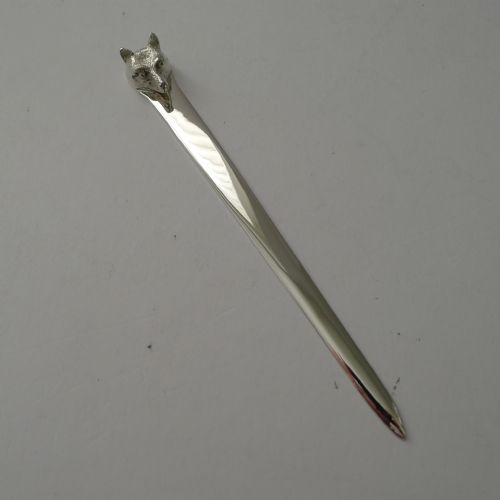
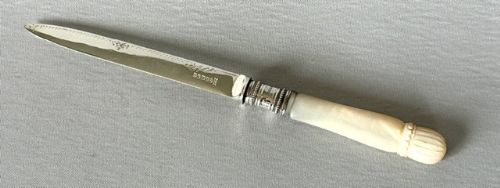
Metal items, including letter openers and stamp cases, relied on silversmithing techniques such as casting, engraving, and stamping. Makers also combined materials, mounting silver blades or heads onto mother-of-pearl handles, ebonised bases, or agate stones.
Antique Envelope Desk Retail Price Guide 2026
Typical asking prices for envelope desk among the pieces listed under this phrase on Sellingantiques today, from the lower quarter to the upper quarter. They describe what is for sale here now, not the wider market.
Keep an eye out for a lizard serving as a letter opener handle.
Distinguishing quality in desk accessories
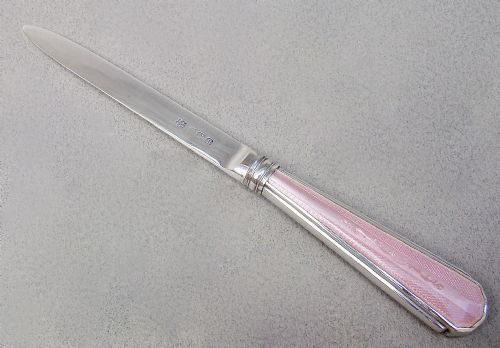
Quality reveals itself in the precision of the metalwork and the crispness of hand-engraving on silver items. Finer pieces display well-defined hallmarks, balanced proportions, and careful integration of decorative elements like enamel or carved mother-of-pearl.
In wooden pieces, the standard of timber selection, the accuracy of inlaid marquetry, and the durability of moving mechanisms distinguish standard production from superior craftsmanship. The integrity of original finishes remains a key indicator of preservation.
Luc Lanel For Christofle·The Barker Brothers·Asprey·Albert Ernest Jenkins·Moses Brent·Tiffany and Co
The Antique Envelope Desk Glossary
- Guilloche enamel
- A decorative technique involving precise mechanical patterns engraved beneath translucent layers of coloured enamel. This method creates a luminous, geometric background often seen on twentieth-century desk items.
- Hallmark
- An official stamp applied to precious metals indicating the standard of purity, the assay office, and the date of testing. These marks provide reliable evidence for dating silver items.
- Stationery box
- A desk accessory designed to hold writing paper and envelopes upright in dedicated compartments. These boxes often feature hinged lids and sloping fronts.
- Letter opener
- A flat, knife-like implement used to slice open the sealed edges of envelopes. Examples frequently incorporate precious metals, carved bone, or mother-of-pearl.
Antique Envelope Desk: Frequently Asked Questions
What periods do these desk accessories cover?
The selection encompasses pieces ranging from the Georgian and Victorian eras through Edwardian times and into the mid-twentieth century. Items reflect the distinct design movements of their respective decades.
Craftsmanship styles shift from ornate nineteenth-century decoration to cleaner Art Deco and Arts and Crafts aesthetics in later decades.
How were envelope card tables used?
Envelope card tables functioned as multi-use furniture in reception rooms and studies, folding down to serve as console tables when not in use. The hinged leaves opened to reveal a baize-lined surface suited for card games.
Their compact design allowed them to occupy minimal space while providing a stable writing or gaming surface.
What materials are common in these items?
Cabinet pieces and small boxes frequently utilise fine hardwoods like satinwood and rosewood, sometimes enhanced with ebonisation or delicate inlay. Metal accessories rely heavily on sterling silver, silver plate, brass, and copper.
Decorative accents often incorporate mother-of-pearl, agate, and coloured guilloche enamel to add visual texture.
How do stamp cases differ from letter openers?
Stamp cases are small, specialised containers built to house postage stamps securely, often featuring sliding mechanisms or hinged lids for easy access. Letter openers are elongated, flat instruments designed specifically for slicing paper envelopes cleanly.
Both items served as essential desktop accessories in homes and offices during periods of heavy correspondence.