





Antique English Tea Canister
An antique English tea canister is a domestic vessel for dry leaf tea, valued for its period form and material presence in a room.
Antique English Tea Canister
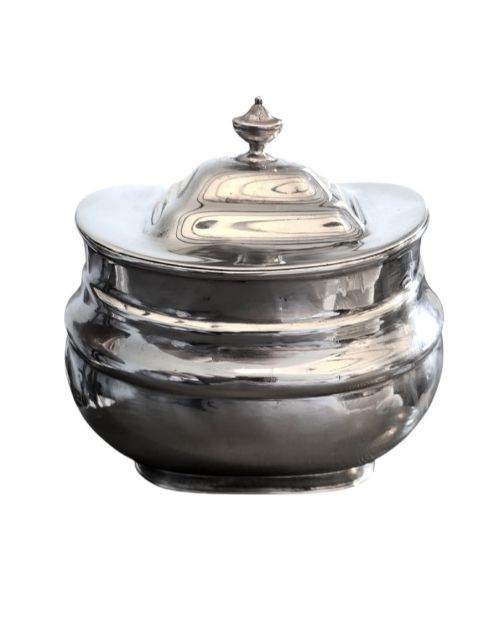
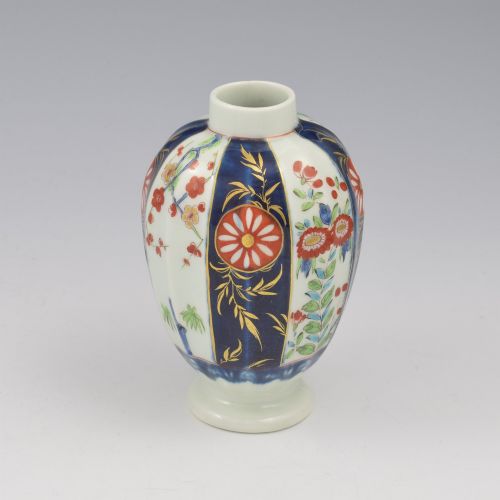
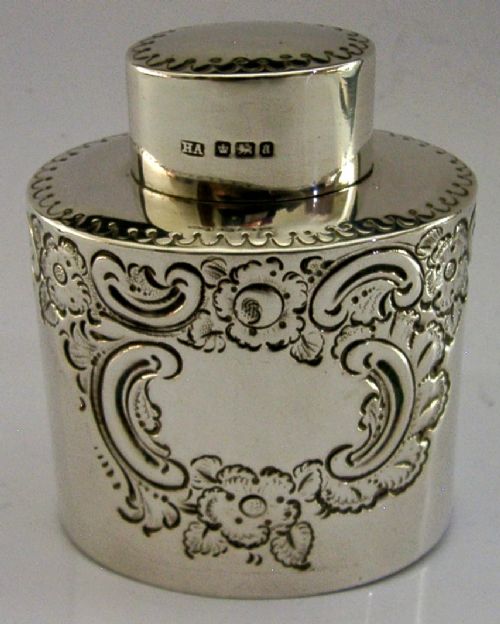
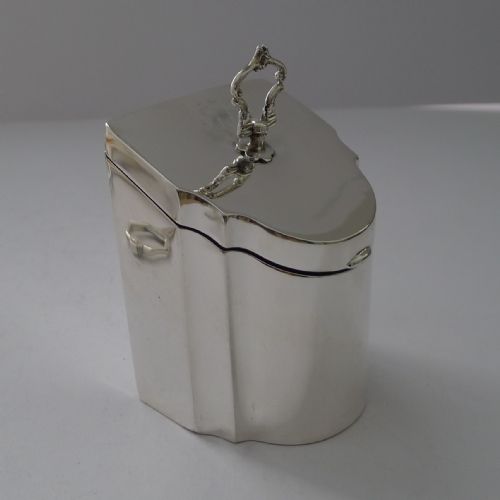
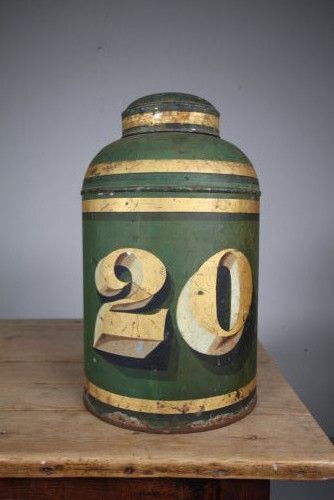
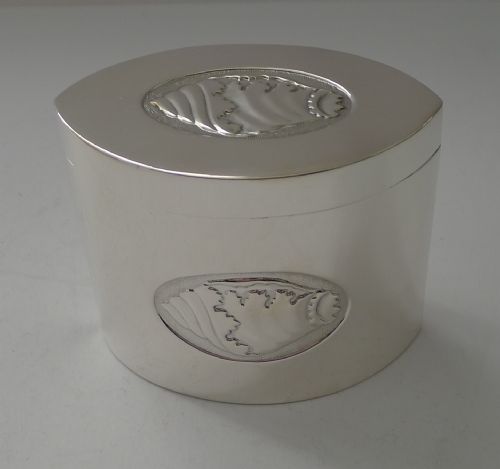
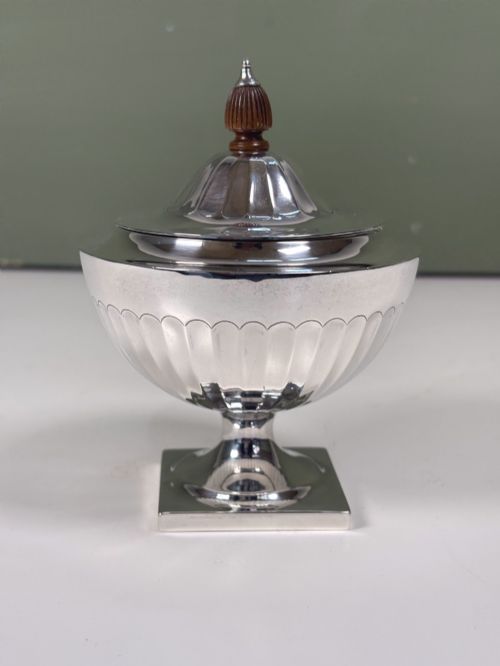
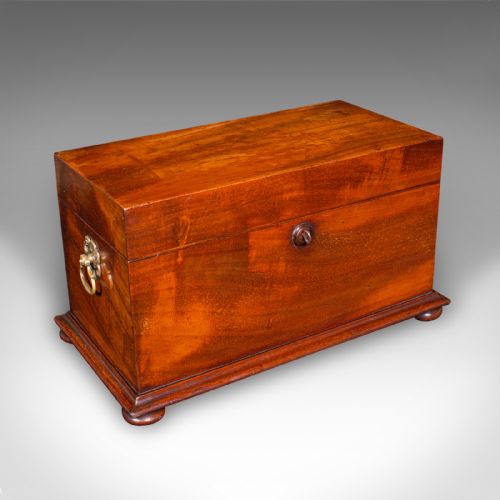
The antique English tea canister spans several centuries of domestic tea storage, appearing in forms from simple canisters to partitioned boxes and caddies. Buyers encounter sterling silver examples alongside toleware tins, soft-paste porcelain, brass, and mahogany timber.
The objects date across the eighteenth, nineteenth, and early twentieth centuries, reflecting changing tastes under Georgian, Regency, Victorian, and Edwardian makers. Wood varieties include mahogany, padouk, and rosewood, sometimes decorated with Tunbridge ware mosaic.
Porcelain examples from the eighteenth century show early ceramic traditions, while later silver pieces demonstrate the work of Birmingham and Sheffield silversmiths. Toleware items bring painted and decorated tin surfaces into domestic interiors.
Substance and Execution
Quality rests in the weight of the metal, the precision of the cabinetmaking, and the crispness of the hand-painted decoration or hallmarks. Pieces shaped from heavy sterling silver or dense mahogany reveal superior initial manufacture.
The preservation of original painted surfaces on toleware and soft-paste porcelain defines the tier of the piece. Intact lids, original compartments, and clear maker marks elevate an example above standard domestic production.
Antique English Tea Canister Retail Price Guide 2026
Typical asking prices for english tea canister among the pieces listed under this phrase on Sellingantiques today, from the lower quarter to the upper quarter. They describe what is for sale here now, not the wider market.
One exceptional novelty canister mimics an ordinary paint tin, proving that historical tea drinkers appreciated a quiet joke.
Mappin and Webb·Ernest Druiff and Co·Goldsmiths and Silversmiths Co·Atkin Brothers·Asprey and Co·Parnall and Sons
The Antique English Tea Canister Glossary
- Soft-paste porcelain
- An early ceramic composition fired at lower temperatures than hard-paste porcelain. It is characteristic of eighteenth-century English factories such as Worcester.
- Tunbridge ware
- A form of woodworking utilising minute mosaic tile techniques to create geometric or pictorial surface patterns. It decorates nineteenth-century wooden boxes.
- Sterling silver
- An alloy of silver containing substantial pure silver by mass, stamped with assay office hallmarks. It forms the body of numerous Victorian and Edwardian caddies.
- Chinoiserie
- European artistic interpretations of Chinese decorative motifs. This style appears frequently on painted toleware tea tins.
Antique English Tea Canister: Frequently Asked Questions
What is an antique English tea canister?
An antique English tea canister is a historical container made to store loose tea leaves securely before modern packaging existed. These vessels protected expensive dry leaves from moisture and air in domestic settings.
They appear in materials ranging from sterling silver and mahogany to painted toleware and porcelain. Their forms reflect the changing social rituals of tea drinking across centuries.
How were tea canisters used historically?
Tea was a valuable commodity in past centuries, kept locked away by the head of the household until serving time. Canisters served as secure storage vessels within larger tea caddies or as standalone counter tins.
Servants or hosts measured out loose leaves using spoons or built-in compartments before brewing. Some examples included mixing glasses or dual compartments for blending different teas.
How do I date a silver tea caddy?
Silver tea caddies carry hallmarks stamped by official assay offices such as London, Birmingham, or Sheffield. These marks include date letters that identify the exact year of manufacture.
Stylistic cues such as Georgian box shapes, Regency curves, or Edwardian proportions also help place the piece within a specific period.
How do I live with antique tea canisters?
Antique tea canisters suit placement on sideboards, mantelpieces, or open shelving as decorative display objects. Their varied materials bring texture and historical character into modern rooms.
Wooden, metal, and ceramic examples require simple dusting and stable humidity away from direct heat sources to preserve their surfaces.