

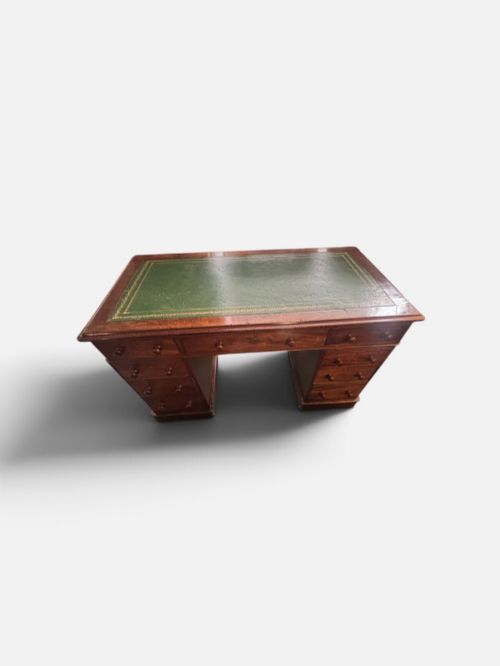
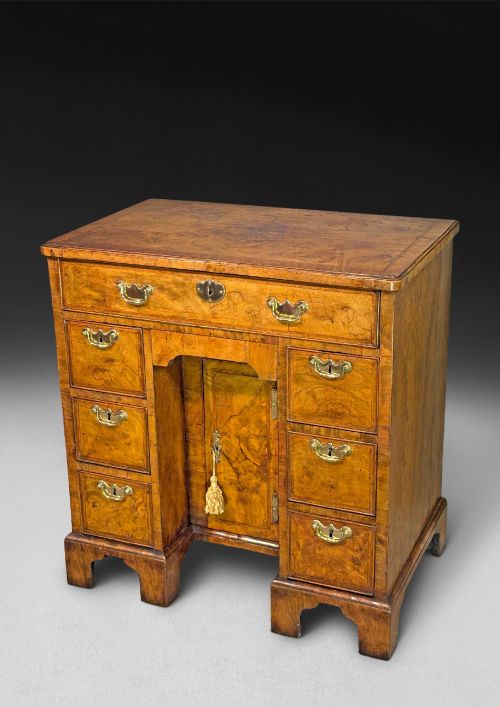
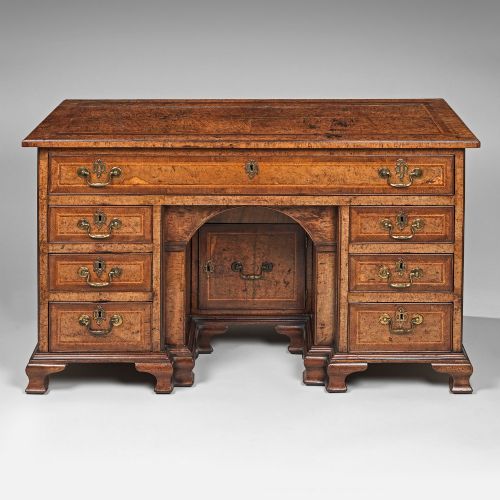
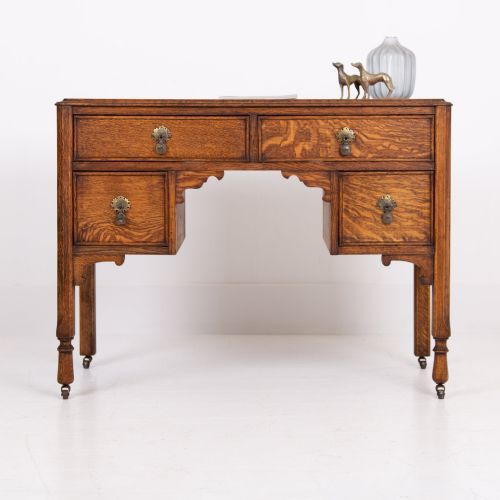


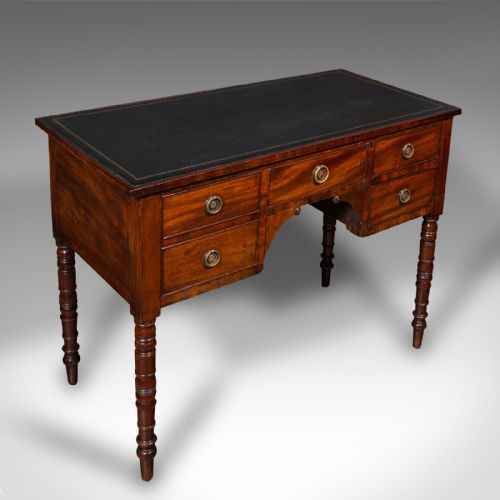


Antique English Kneehole Desk
An antique English kneehole desk is a timber writing piece offering tidy drawers flanking a central recessed space, prized for period character and proportion.
Antique English Kneehole Desk
An antique English kneehole desk typically presents as a compact writing table with banks of small drawers set beneath the main surface, leaving a recessed cupboard or open aperture in the centre. The search phrase covers forms ranging from early walnut examples to later mahogany and oak iterations.
The pieces appearing on this page span the eighteenth and nineteenth centuries, through to the Art Deco period, incorporating Georgian, Victorian, and Regency styles. Alongside standard kneehole desks, buyers encounter related vanity tables, dressing tables, and miniature furniture sharing the characteristic pedestal arrangement.
Construction origins lean heavily towards English workshops, utilising native timbers such as oak, elm, and yew alongside imported hardwoods. Smaller formats often double as dressing tables or ladies writing desks, reflecting the versatile domestic uses of these pieces over successive eras.
How they were made
Cabinetmakers constructed these desks using durable timber framing, employing solid walnut, mahogany, oak, and burr walnut veneers applied to secondary woods. Decorative surfaces often relied on figured grain patterns or contrasting crossbanding to frame drawer fronts and tops.
Hardware played an integral structural and decorative role, with brass handles, drop pulls, and escutcheons secured to drawer faces. Writing surfaces frequently incorporated inset leather panels, while internal drawer construction utilised hand-cut dovetail joints.
Antique English Kneehole Desk Retail Price Guide 2026
Typical asking prices for english kneehole desk among the pieces listed under this phrase on Sellingantiques today, from the lower quarter to the upper quarter. They describe what is for sale here now, not the wider market.
Makers occasionally squeezed miniature kneehole desks into production as master craftsman samples or opulent toys for children.
What varies in quality
The standard of a kneehole desk rests primarily on the selection of timber veneers and the crispness of the cabinetwork. Pieces featuring highly figured walnut, burr elm, or Cuban mahogany demonstrate superior material choice by the original maker.
Originality of hardware and surface finish significantly dictates the standing of a desk. Retaining period brasses and undisturbed patina elevates an example above one with replaced fittings or heavy modern restoration.
John Gregory London·Druce & Co·Jewell's of Holborn
The Antique English Kneehole Desk Glossary
- Kneehole desk
- A writing desk featuring two pedestals of drawers separated by a central kneehole recess, often containing a concealed drawer or small cupboard door.
- Burr walnut
- A highly prized timber harvested from the gnarled growth of a walnut tree, yielding intricate, swirling grain patterns used for decorative veneer.
- Dovetail
- A traditional interlocking woodworking joint used in drawer construction, known for high tensile strength and resistance to being pulled apart.
- Serpentine
- A curved shape featuring a convex centre flanked by concave ends, frequently seen on the fronts of eighteenth-century desks and sideboards.
- Crossbanding
- A decorative border technique where thin strips of veneer are laid perpendicular to the surrounding grain to frame a panel or drawer.
Antique English Kneehole Desk: Frequently Asked Questions
What is a kneehole desk?
A kneehole desk is a compact form of writing furniture featuring a central recessed space for the user's legs, flanked by two vertical tiers of drawers.
This layout provides substantial drawer storage without the massive footprint of traditional twin-pedestal partners desks.
How do I date an antique desk?
Dating relies on observing construction methods, timber choices, and hardware styles characteristic of specific eras like the Georgian or Victorian periods.
Examination of secondary woods, drawer dovetails, and locking mechanisms often reveals the approximate decade of manufacture.
Were these desks used for writing?
These desks served primarily as private correspondence tables and writing surfaces for letters and household accounts.
Many smaller variants also functioned as dressing tables in bedrooms and morning rooms, combining writing and grooming purposes.
How should I care for walnut veneer?
Walnut veneer requires protection from direct sunlight and extreme humidity fluctuations to prevent drying and lifting.
Regular dusting with a dry cloth and occasional application of appropriate furniture wax maintains the finish safely.