




Antique English Fire Dogs
Antique english fire dogs anchor an open hearth with functional strength, holding logs aloft for a better burn while adding historic character to a room.
Antique English Fire Dogs
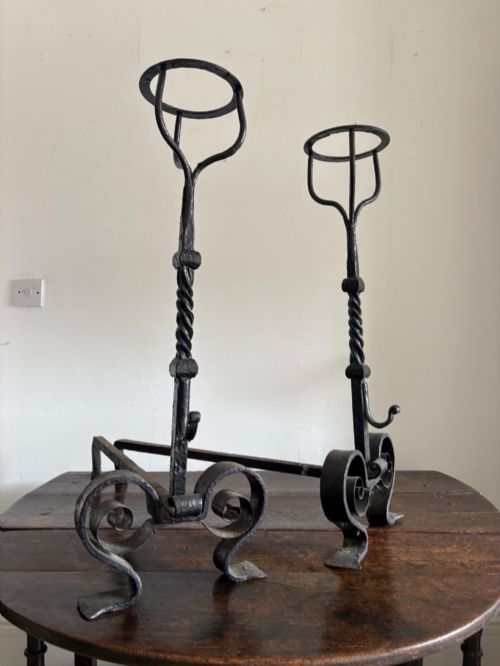
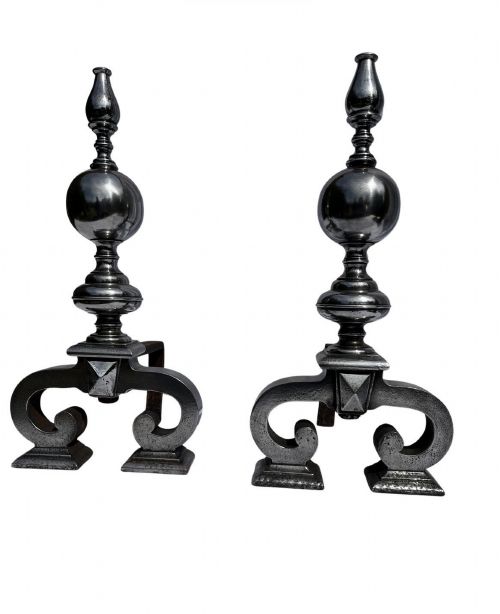
When you search for antique english fire dogs, you encounter heavy iron and polished brass supports designed to lift firewood off the hearth floor. These fireplace accessories date across multiple periods, including the Georgian, Regency, and Victorian eras.
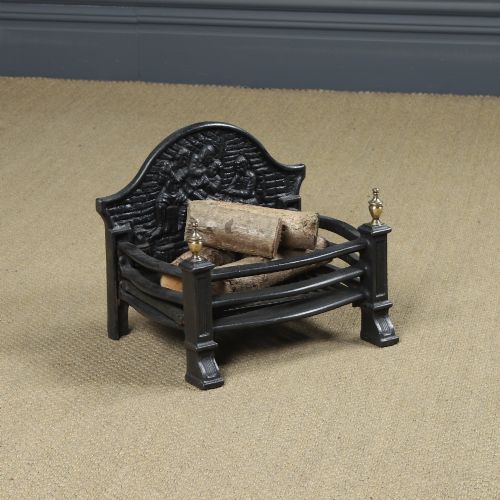
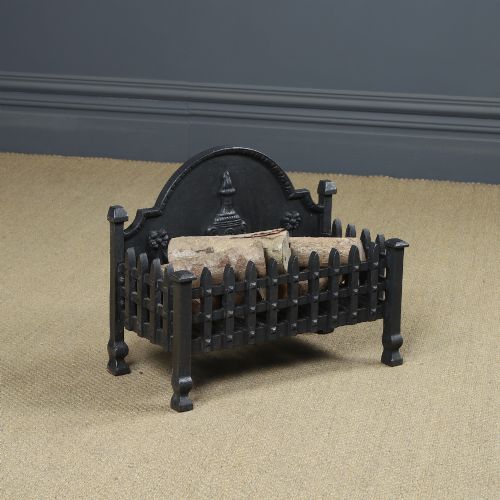
The inventory on this page most commonly shows paired items meant to flank an open fire basket or support logs directly. They appear in forms ranging from simple wrought iron uprights to monumental brass andirons and elaborate Gothic revival designs.
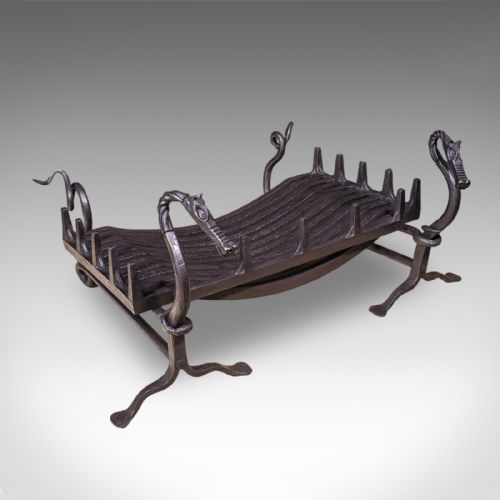
Makers and smiths produced these functional objects in various styles, incorporating motifs like dragon figures and neoclassical lines. Buyers often find them integrated into complete fireplace sets alongside fire grates and hearth stands.
How they were made
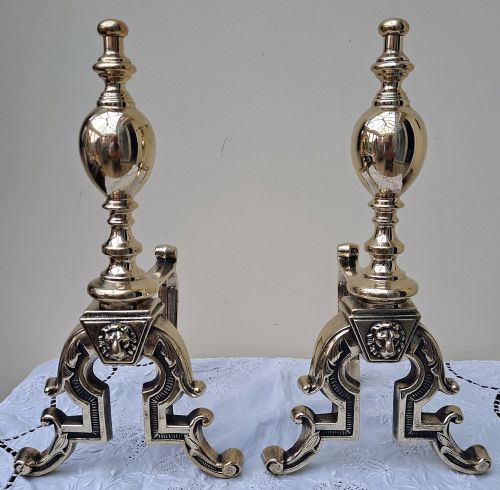
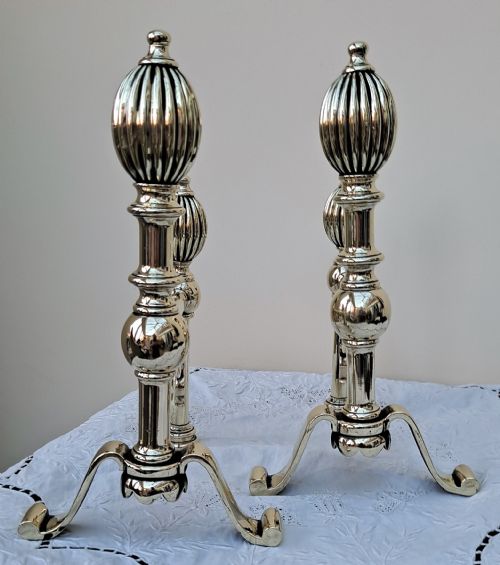
Smiths and founders utilised cast iron, wrought iron, and steel to forge the sturdy frames required to bear heavy logs and intense heat. Many examples combine these heavy iron elements with decorative brass components to balance utility with visual warmth.
Workshop methods involved casting molten metal into moulds for ornamental fronts or hand-forging iron bars into resilient uprights and feet. Polished steel and firebrick further supplemented the construction of more complex fire baskets and hearth accessories.
Some Victorian sets come equipped with integrated tool rests so your poker and tongs have somewhere sensible to sleep.
What varies in quality
The standard of a pair depends heavily on the crispness of the metal casting and the integrity of the forged joints. Heavier gauge iron and substantial brass thickness distinguish sturdier examples from lighter, purely decorative items.
Design complexity also sets pieces apart, as seen in the hand-chiselled detailing of brass finials or the sculptural ambition of dragon motifs and Gothic tracery. Preservation of the original surface finish, whether polished steel or patinated bronze-hued brass, influences the overall character.
The Antique English Fire Dogs Glossary
- Andiron
- A horizontal metal support raised on feet, used to hold logs in an open fireplace. They typically feature a decorative vertical front pillar.
- Fire Basket
- An iron grate container designed to hold coal or wood within a fireplace opening. These often incorporate dogs or andirons as part of the assembly.
- Cup Dog
- A specific variant of fire dog featuring a cup-shaped receptacle at the top. These historically supported spits for roasting meat over the hearth.
- Mulling Andiron
- A specialised hearth support equipped with attachments to heat liquids. They represent a more versatile domestic ironwork form from the Georgian period.
- Gothic Revival
- An architectural and decorative style drawing inspiration from medieval forms. Pieces in this mode display pointed arches, tracery, and robust iron construction.
Antique English Fire Dogs: Frequently Asked Questions
How do I choose the right size fire dogs?
Measure the width and depth of your fireplace opening to ensure the dogs fit comfortably without crowding the hearth space. Proportion matters visually, so larger inglenook settings require taller and heavier pairs.
Consider the scale of the fire basket or logs you plan to burn alongside them. Taller pairs suit deeper hearths where substantial fuel is required.
Can antique fire dogs be used in a working fireplace?
Most iron and brass examples were built precisely for active hearth use and handle high heat well. Solid cast iron and wrought iron versions endure regular burning seasons effectively.
Check for structural integrity and metal fatigue before lighting fires in older pairs. Brass pieces generally require gentle treatment to preserve their polished surfaces.
What is the difference between fire dogs and andirons?
The terms are largely interchangeable and refer to the same foundational hearth furniture. Regional terminology historically favoured one over the other in British households.
Both descriptions point to paired metal supports that hold logs above the hearth floor to improve airflow.
How do I care for cast iron and brass fire dogs?
Clean cast iron surfaces gently with a dry brush to remove soot and ash accumulation. Light applications of appropriate oil help protect unpolished iron from moisture.
Polish brass components sparingly using suitable metal cleaners to maintain their brightness without stripping historical patina. Avoid harsh chemical abrasives on older decorative finishes.