
Antique English Cabinet
Selecting an antique English cabinet brings centuries of regional joinery and domestic history directly into a modern interior.
Antique English Cabinet
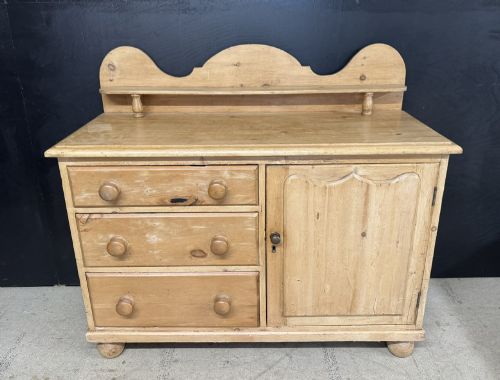
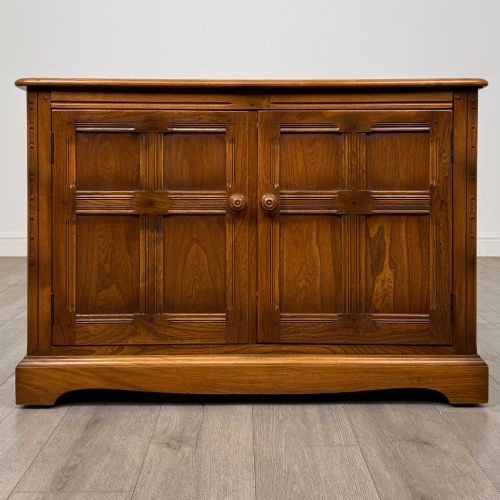
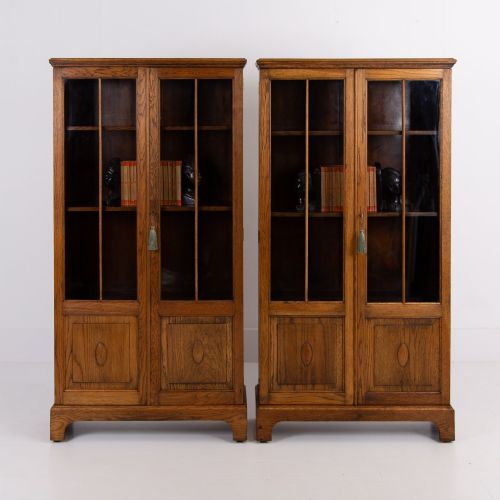
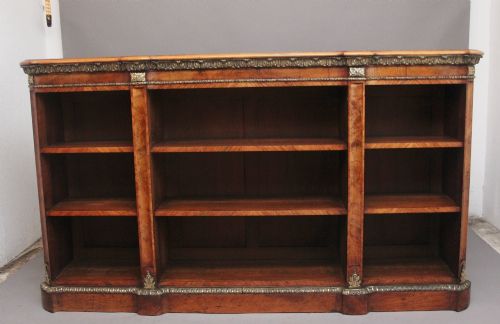
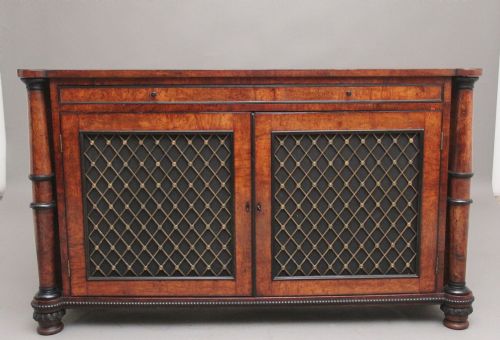
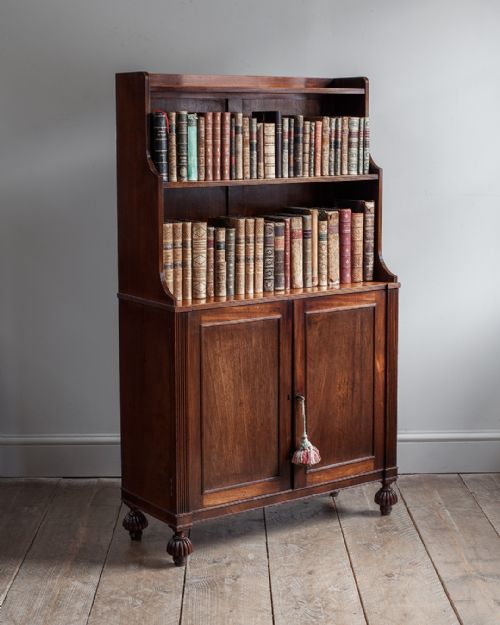
When searching for an antique English cabinet, buyers encounter a diverse range of forms spanning from the seventeenth century through to the early twentieth century. The selection encompasses sturdy oak court cupboards, refined walnut pieces from the William and Mary period, and grand mahogany bookcases.
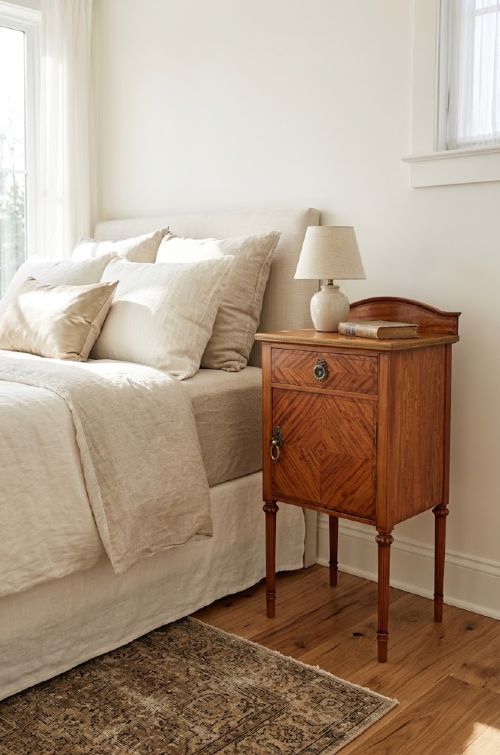
Smaller variations include bedside cupboards, corner units for wall mounting or floor placement, and specialised display pieces. Earlier examples often present heavier timber construction with panelled doors, while later nineteenth-century iterations lean toward glazed library bookcases and satinwood smoker cabinets.
Regional workshops and metropolitan cabinet makers produced these items for domestic storage and display, employing native hardwoods alongside imported mahogany. The architectural proportions reflect the prevailing taste of each successive era, from Georgian symmetry to Edwardian revivalism.
How They Were Made
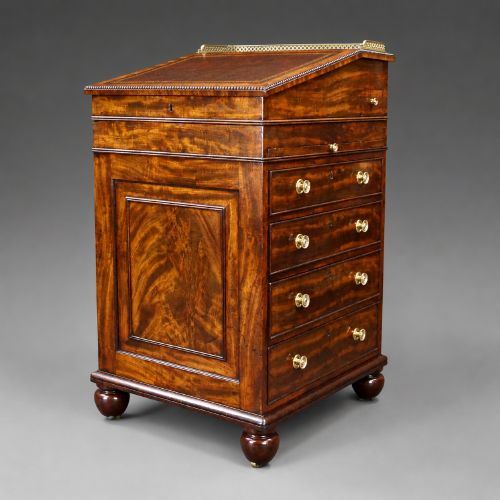
Master craftsmen relied heavily on solid oak, walnut, and mahogany, frequently enhanced by decorative veneers such as flame mahogany, burr walnut, and harewood. Timber selection dictated both the structural integrity and the visual depth of the finished piece, with heartwood chosen for its durability.
Construction techniques evolved from traditional pegged mortise and tenon joints in early oak furniture to sophisticated dovetailing in drawer construction during the Georgian and Victorian eras. Secondary timbers like pine often appeared in hidden structural elements or interior shelving.
Surface ornamentation involved brass hardware, ormolu mounts, and intricate marquetry or inlay work utilising boxwood and ebony. Hand-applied wax polishes and shellac finishes built up a deep patina over generations of use.
Listings feature oak, mahogany, walnut, and satinwood pieces spanning from the seventeenth century to the 1930s.
What Varies in Quality
The standard of an antique English cabinet depends heavily on the precision of its joinery and the selection of its primary timbers. Higher-tier examples display continuous grain matching across drawer fronts and doors, whereas lesser pieces utilise lower-grade veneers to cover inferior secondary woods.
Originality of hardware, glass, and surface finish significantly influences the standing of a piece. Replacements or extensive modern restorations alter the integrity of the object, distinguishing utilitarian workshop output from high-status commissions.
Structural balance and the crispness of carved or inlaid details separate master cabinet work from standard commercial production. Subtle elements such as hand-cut dovetails and well-fitted internal shelving demonstrate superior workshop practices.
Gillows·Johnstone And Jeanes·Maple And Co·Minty And Co·Albert Barker
The Antique English Cabinet Glossary
- Astragal glazed
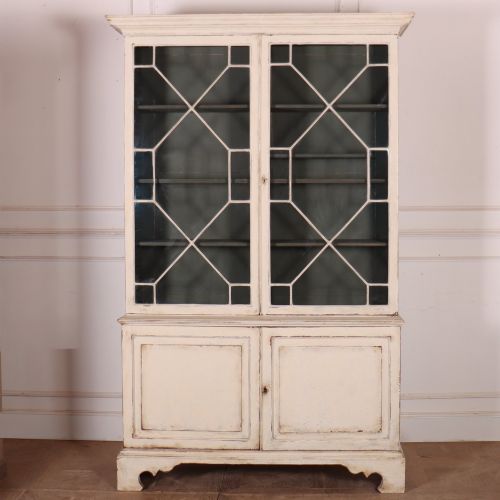
- A method of framing glass doors with narrow wooden bars arranged in geometric or arched patterns. This technique became popular during the Georgian period for library bookcases.
- Breakfront
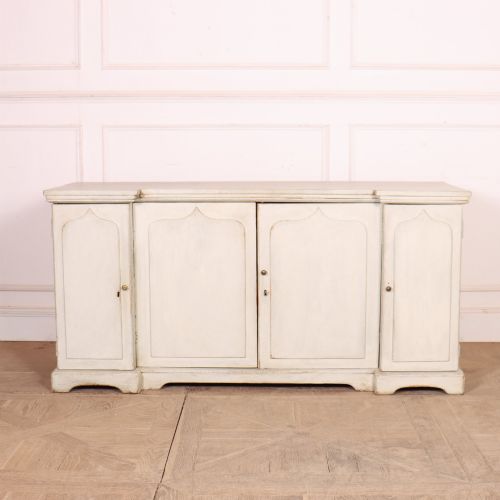
- A piece of furniture where the central section projects forward from the flanking wings. This architectural arrangement creates depth and visual interest in larger cabinets.
- Dovetail
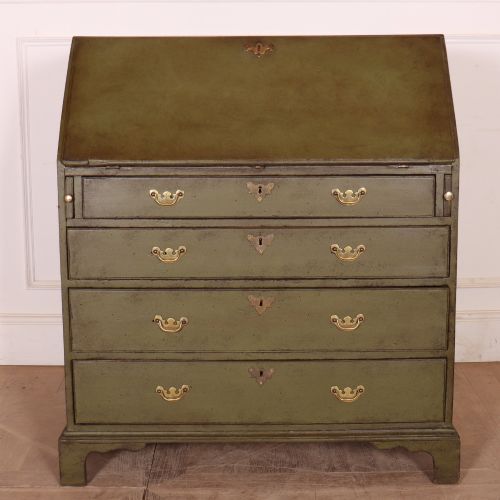
- A traditional interlocking joint utilised in drawer construction to ensure tensile strength without relying on metal fasteners. Hand-cut variations indicate earlier or more meticulous craftsmanship.
- Ormolu
- Gilded bronze mounts applied to furniture for decorative enrichment, particularly prominent on high-status pieces from the nineteenth century. The technique involves applying a mercury and gold amalgam to shaped bronze.
- Quarter-sawn
- A method of cutting logs radially to produce timber with enhanced dimensional stability and distinctive grain patterns. This cut frequently exposes striking medullary rays in oak.
Antique English Cabinet: Frequently Asked Questions
How do I date an antique English cabinet?
Dating relies upon observing construction methods, timber choices, and hardware styles characteristic of specific centuries and reigns. Secondary woods and tool marks inside drawers offer reliable clues regarding the period of manufacture.
Stylistic motifs also provide a timeline, shifting from heavy carved oak in the seventeenth century to lighter mahogany veneers and satinwood in the Georgian and Edwardian eras.
Where were these cabinets placed in historical homes?
Larger bookcases and display cabinets typically stood in formal drawing rooms, libraries, or parlours to store valuable literature and porcelain collections. Corner cupboards utilised otherwise neglected domestic angles in dining spaces and hallways.
Smaller bedside cupboards and music cabinets served private chambers and sitting rooms, housing personal items and document folios close to hand.
How should I care for a polished wood surface?
Maintaining an antique finish requires minimal intervention, primarily relying on occasional applications of traditional beeswax to nourish the timber. Avoid modern silicone-based polishes that can degrade historical shellac finishes over time.
Keeping pieces away from direct sunlight and steady humidity fluctuations prevents the timber from warping and protects delicate veneers from lifting.
What is the difference between a bookcase and a display cabinet?
Bookcases generally feature open shelving or wooden-framed glazed doors designed to house bound volumes. Display cabinets often incorporate glass on multiple sides, sometimes with mirrored backs, intended to showcase decorative objects and ceramics.
Interior configurations also differ, with display units frequently offering adjustable shelving or velvet-lined surfaces for delicate porcelain.