
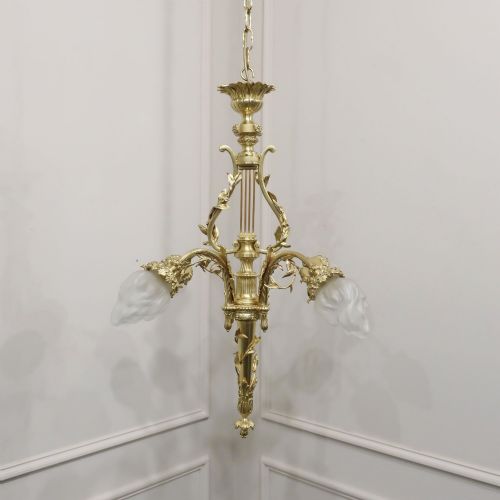
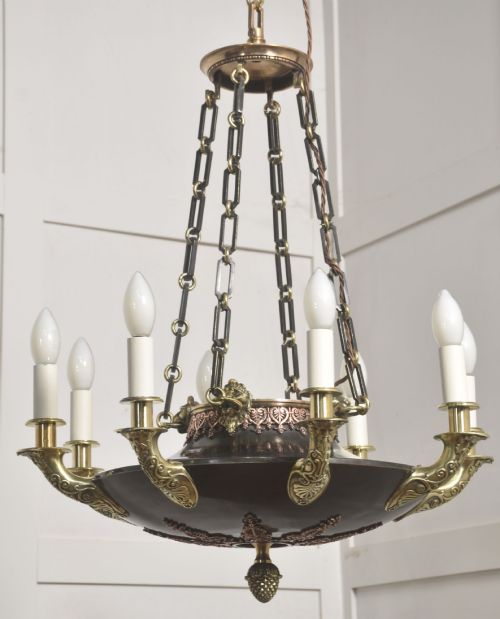
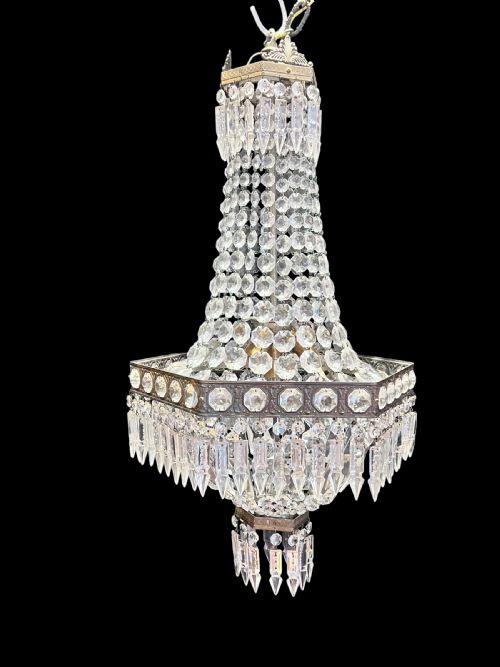
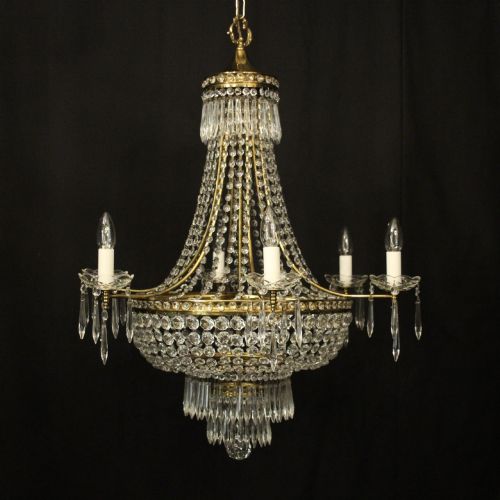

Antique Empire Pendant Light
An antique empire pendant light brings classical French grandeur to a room, using suspended tiers of crystal and metal to catch and scatter the light.
Antique Empire Pendant Light
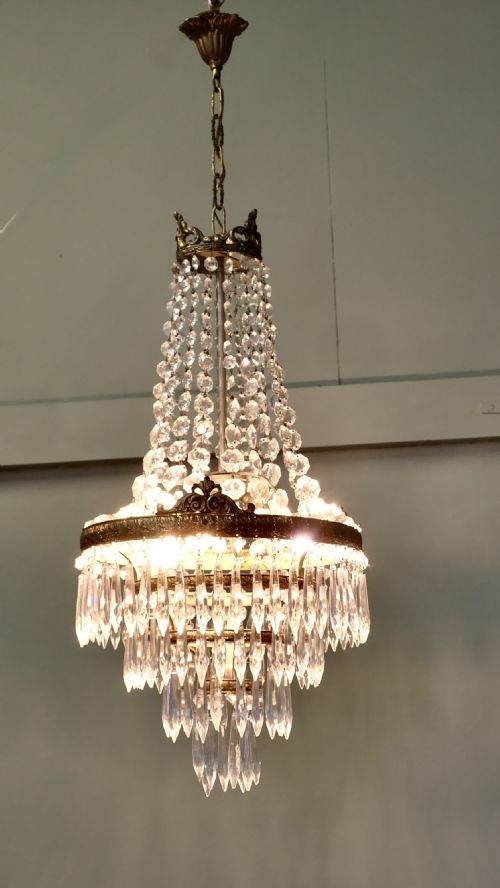
An antique empire pendant light draws on neoclassical design, featuring restrained symmetry and classical motifs rooted in French taste. These fixtures appear across several decades from the late nineteenth century into the interwar period, alongside revival iterations.
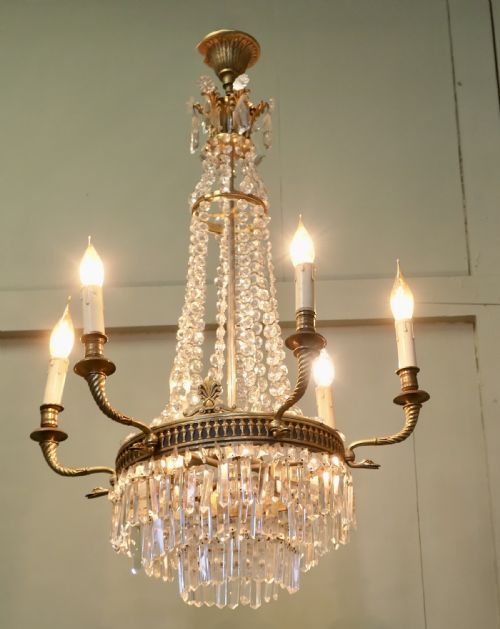
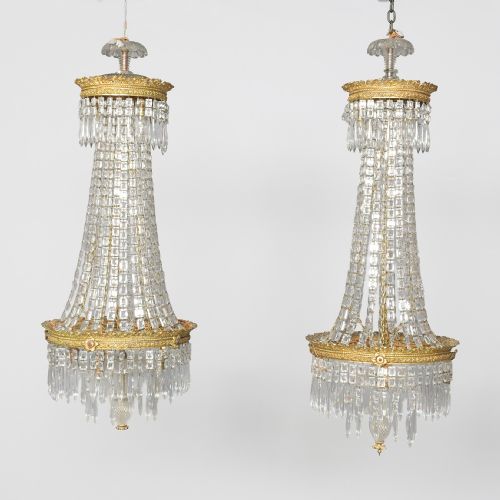
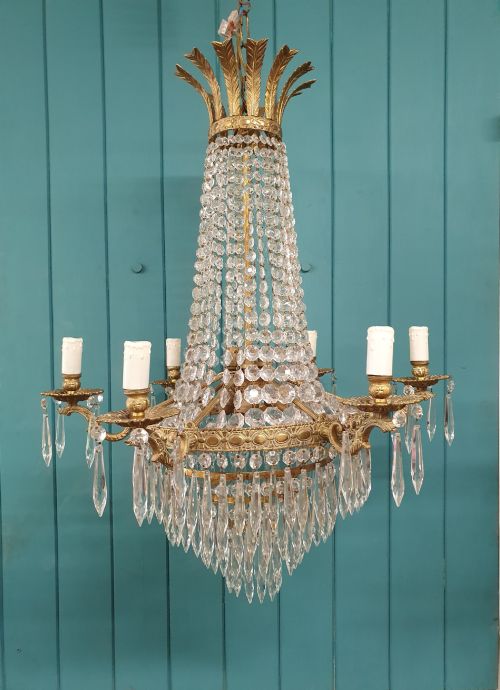
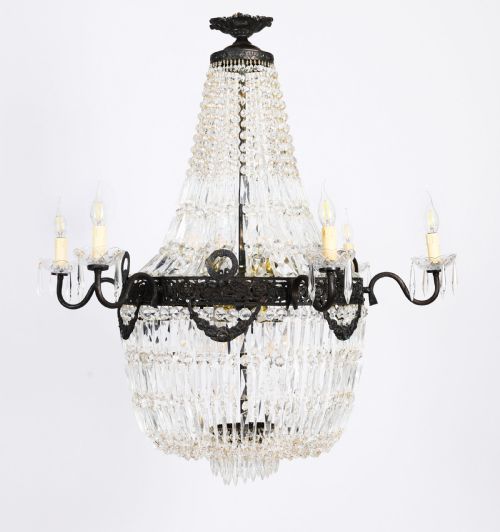
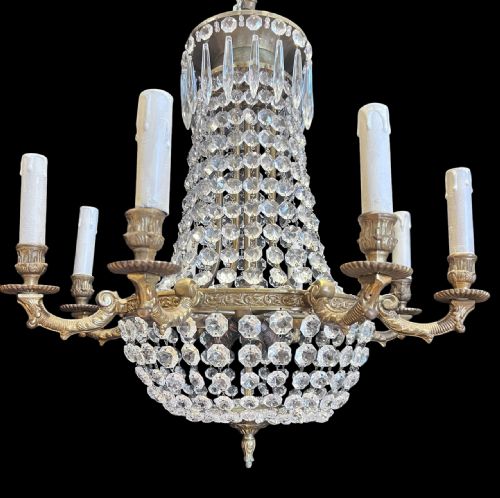
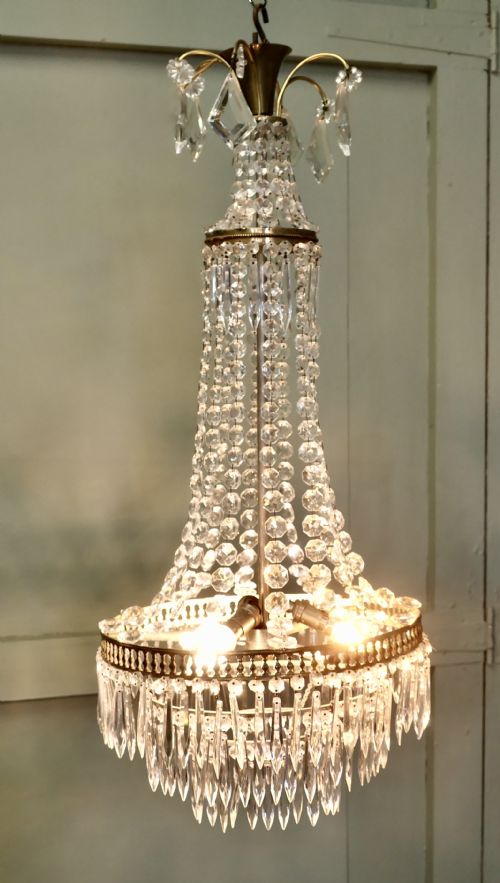
The forms range from single light baskets and lanterns to multi branch chandeliers featuring distinctive tent and waterfall configurations. Many examples originate from France, though nineteenth century Russian pieces also occur.
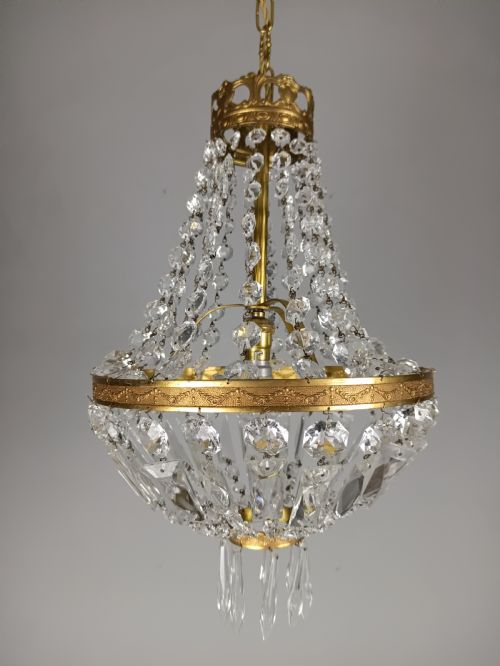
Buyers encounter varied proportions, from compact single light variants to large sixteen light installations designed for high ceilings and generous rooms.
Materials and construction
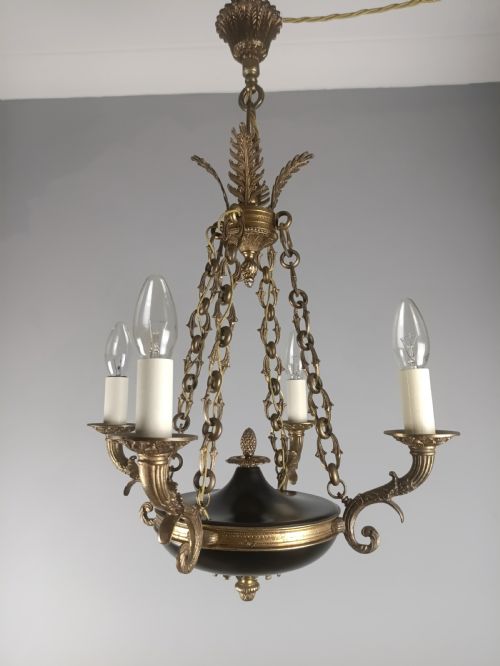
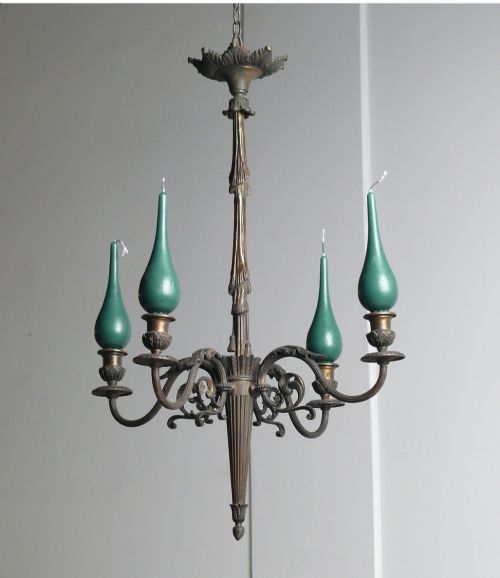
Metals form the structural backbone of these fixtures, with gilt bronze, brass, patinated bronze, and silver plating providing the framework for arms and coronas. Makers combined these metals with glass and crystal elements, including cut droplets, beads, and prisms.
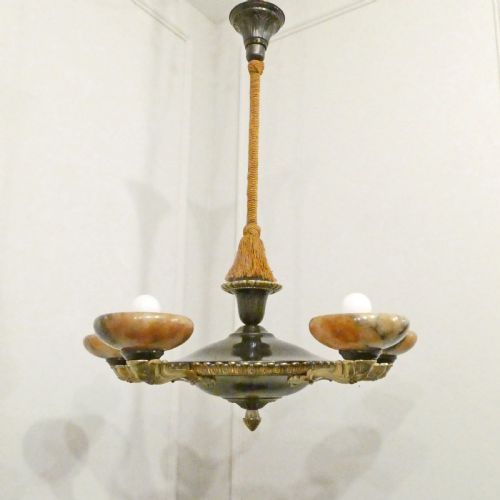
Light distribution relies on tiered arrangements where upper tents of strung beads cascade down to lower waterfall rings or crystal bags. Certain examples incorporate carved alabaster or specialised hanging mechanisms such as colza burners converted to electricity.
The listings show numerous French empire pendant light forms spanning the nineteenth century, the Edwardian era, and the nineteen twenties.
Assessing quality
The standard of a piece rests on the crispness of the cast metal ornamentation, especially on gilt and patinated bronze components where fine leaf decoration and classical mounts define the best examples. Heavier gauge brass and solid bronze frames hold their alignment better over decades of suspension.
Glass and crystal components dictate visual brilliance; hand cut prisms and uniform crystal droplets with clean facets create sharper light refraction than pressed glass alternatives. The integration of the frame, from the crown down to the terminal, shows whether a maker prioritised balanced proportions.
The Antique Empire Pendant Light Glossary
- Tent and waterfall
- A lighting configuration where strings of crystal beads form an upper conical tent that drops down into a lower cascading waterfall of glass prisms.
- Gilt bronze
- Metal cast and treated with a gold finish, frequently utilised in French neoclassical lighting for decorative mounts and arms.
- Bag chandelier
- A lighting form featuring a flattened bag shaped lower section constructed from closely hung crystal drops.
- Patinated bronze
- Metal treated to produce a darkened, weathered surface tone, often providing contrast against brighter gilt elements.
- Prism
- A cut glass or crystal pendant designed to refract light into spectral colours as the fixture operates.
Antique Empire Pendant Light: Frequently Asked Questions
Where should I hang an empire pendant light?
These fixtures suit rooms with adequate vertical clearance, such as high ceilinged drawing rooms, entrance halls, or dining spaces where the suspended tiers can be viewed from below.
Smaller basket or single light variants work effectively in more compact spaces or stairwells where a full scale chandelier would overwhelm the architecture.
How do I date an empire pendant light?
Dating relies on combining the stylistic revival period, such as nineteenth century neoclassical or 1920s empire revival, with the construction methods of the metal frame and wiring.
Materials like patinated bronze, early cut crystal types, and specific casting techniques help place a fixture within its era of manufacture.
Are these lights compatible with modern wiring?
Most antique fixtures have undergone rewiring over their lifespan to meet contemporary electrical standards while retaining their original sockets and internal channels.
Professional installation is recommended to support the weight of heavy bronze and crystal assemblies safely from the ceiling joist.
What is the difference between a tent and waterfall chandelier?
The tent portion refers to the upper triangular or conical section formed by rows of strung crystal beads converging toward a central ring.
The waterfall section describes the lower cascading layer of hanging prisms or drops that surround the light sources.