
Antique Empire Pendant Chandelier
An antique empire pendant chandelier brings the grandeur of French Neoclassical design and glittering cut crystals directly to high ceilings.
Antique Empire Pendant Chandelier
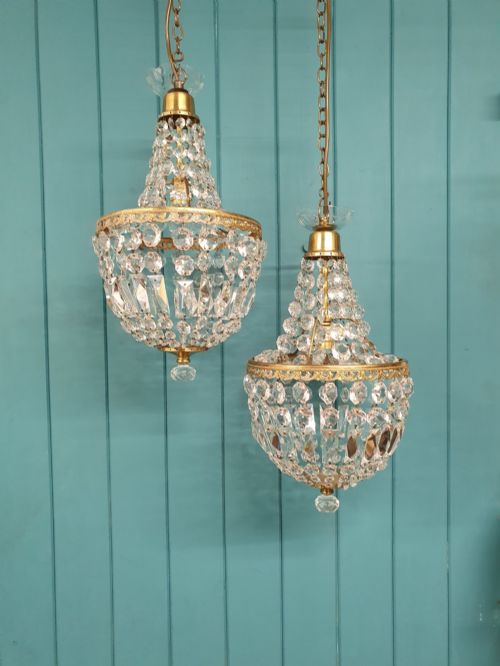
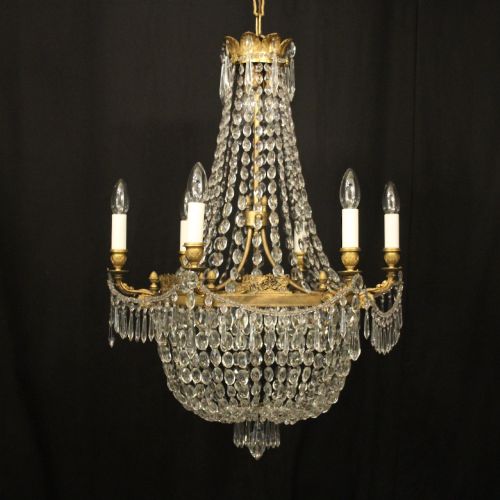
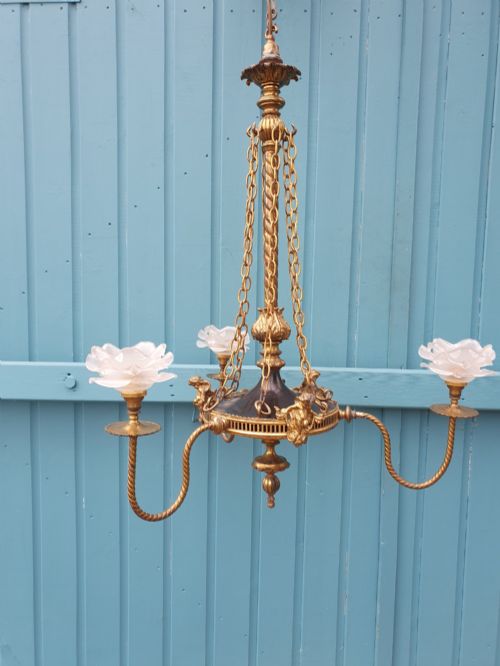
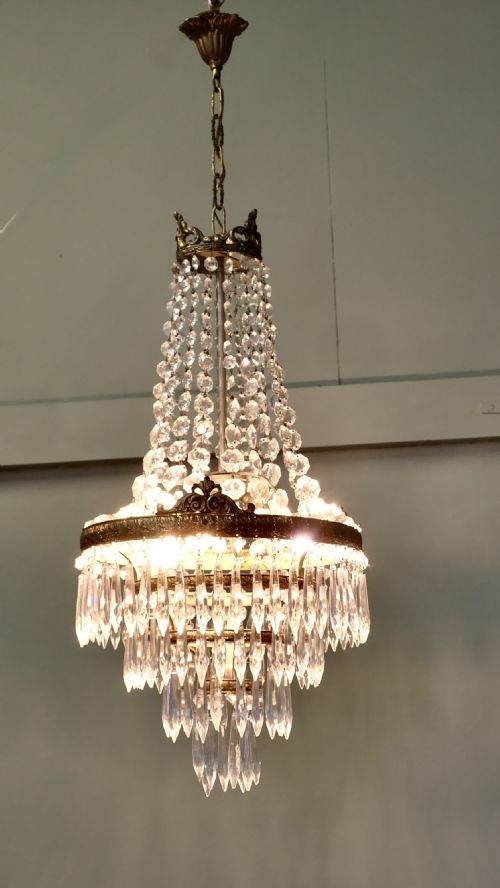
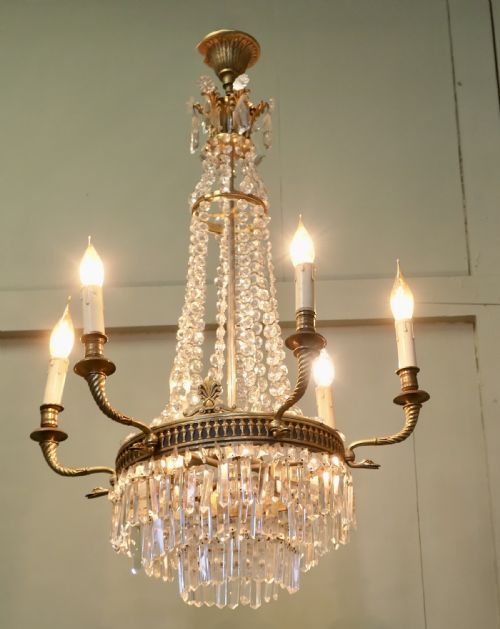
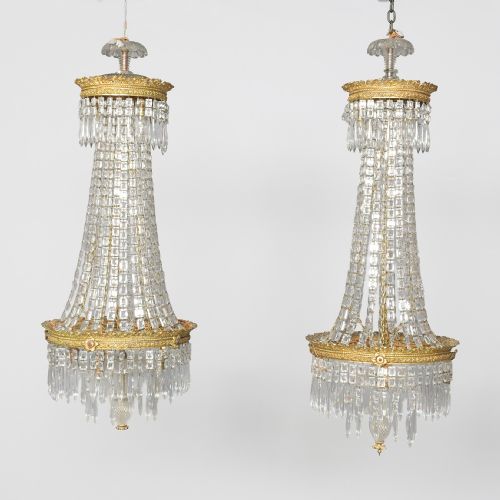
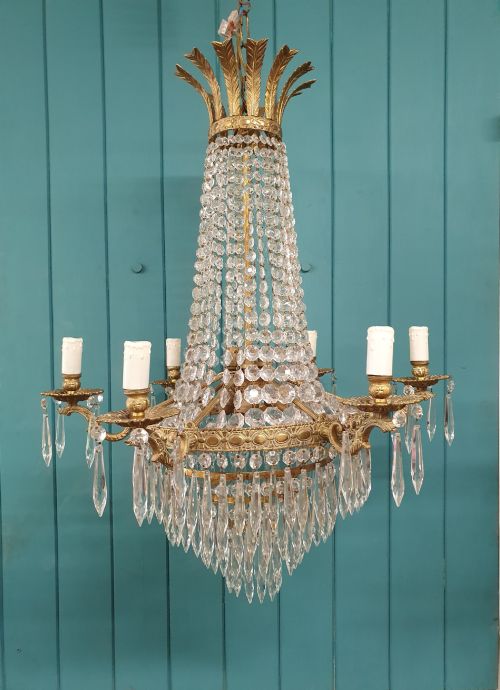
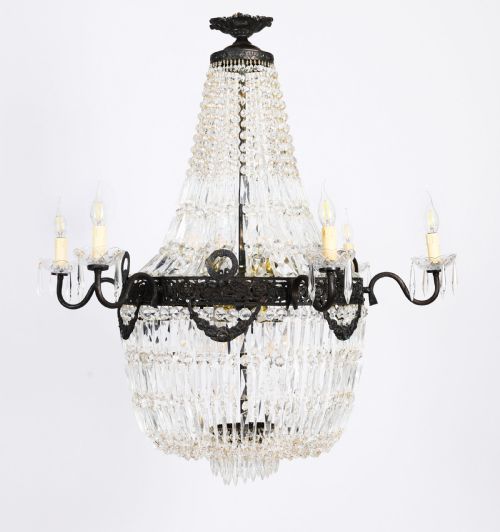
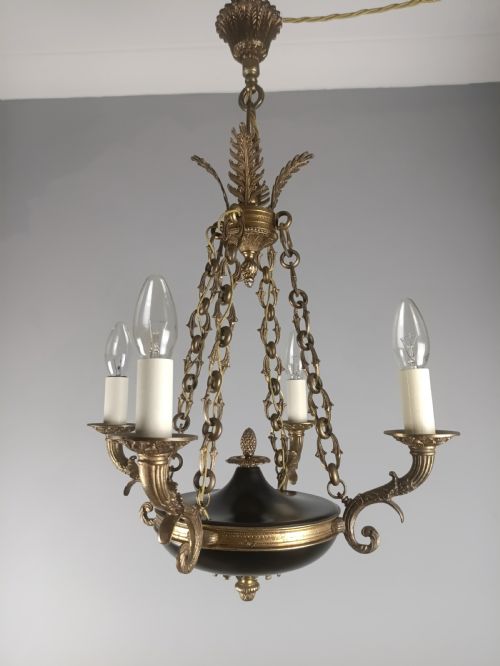
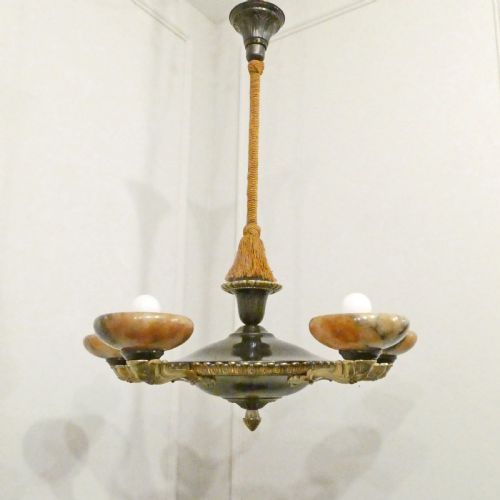
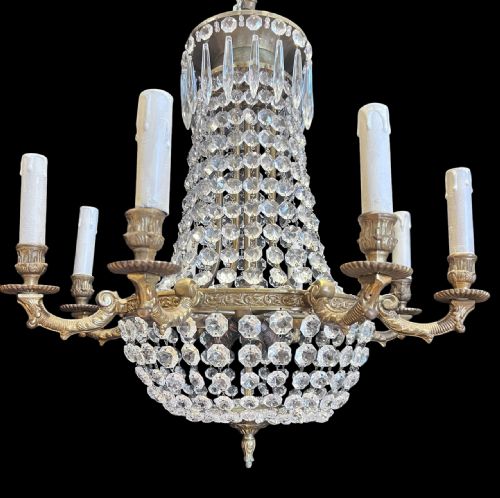
When you search for an antique empire pendant chandelier, you encounter striking ceiling lights spanning the nineteenth century through the 1930s. The selection on this page is dominated by French lighting, ranging from compact single-light baskets to large multi-arm fixtures.
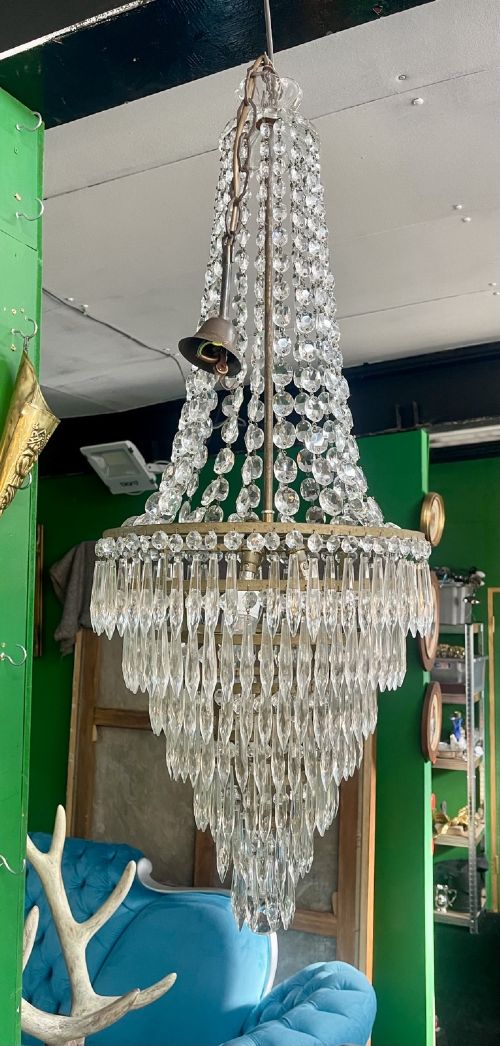
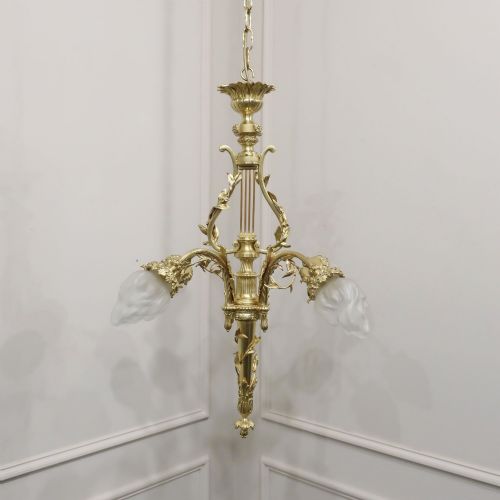
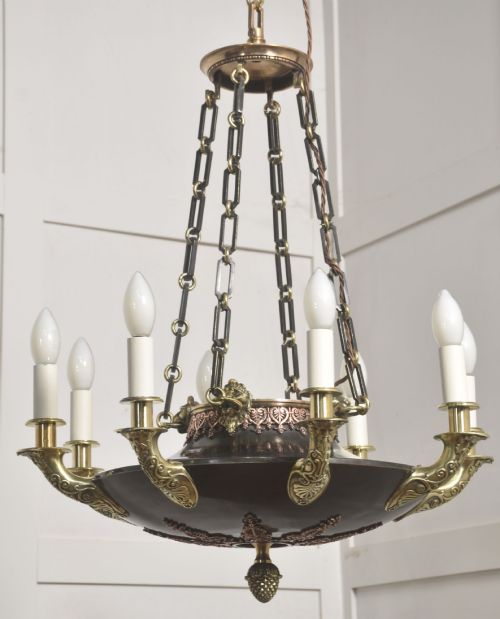
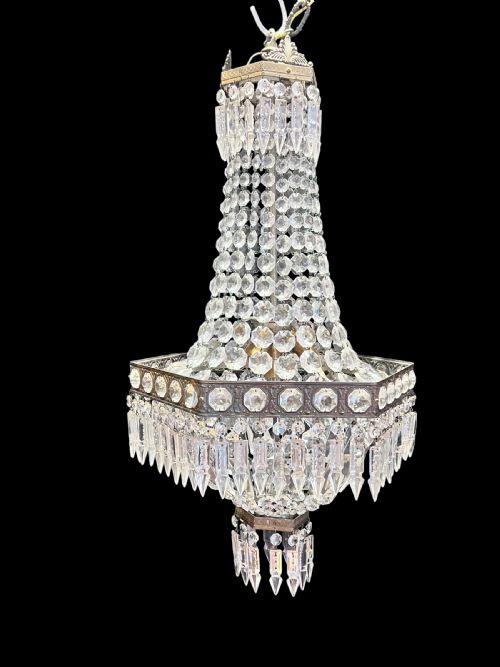
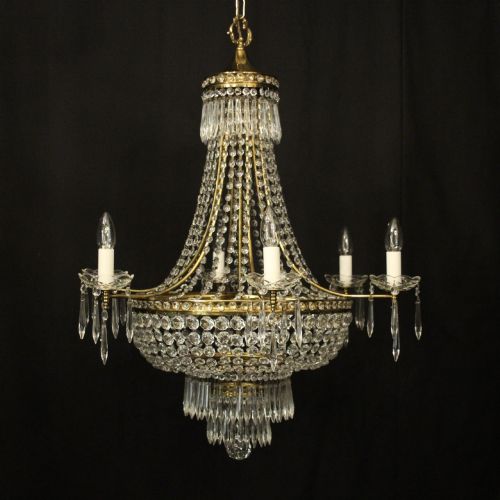
Forms include tent and waterfall arrangements, basket chandeliers, and bronze lanterns with distinct neoclassical proportions. Pieces frequently appear under styles such as French Empire, Regency, and Empire Revival, often featuring elaborate glass beadwork and tiered crystal prisms.
Materials and construction
Workshops constructed these fixtures using robust metal frameworks of brass, bronze, patinated bronze, and gilt bronze, occasionally incorporating copper or silver plating. These structural elements provide the necessary strength to support heavy arrangements of hanging glass and crystal.
Makers adorned the frames with cut crystal drops, glass beads, and prisms arranged in elaborate tent and waterfall configurations. Decorative details such as leaf motifs and lyre shapes were cast directly into the bronze or brass components.
Materials recorded across the inventory include brass, bronze, patinated bronze, gilt bronze, crystal glass, and standard metal frameworks.
Markers of quality
Superior pieces display exceptional crispness in cast bronze or brass ornamentation, with intricate leaf decoration and well-defined structural lines. The weight and finish of the metalwork set finer examples apart from simpler production.
The clarity and cut of the crystal components also determine excellence, with high-grade prisms and beads producing superior refraction. Comprehensive multi-light configurations featuring extensive beadwork represent the more ambitious output of the period.
The Antique Empire Pendant Chandelier Glossary
- Tent and waterfall
- A classic chandelier configuration featuring an upper conical section of beads leading down to a cascading fringe of crystals. This design maximises the play of light from the interior bulbs.
- Gilt bronze
- Metal cast and coated with a layer of gold leaf or a gold-coloured amalgam. It provides a durable and opulent finish characteristic of fine French lighting.
- Prism
- A cut glass or crystal pendant designed to refract light into spectral colours. These elements hang from the frame in various geometric shapes.
- Lyre
- A decorative motif shaped like an ancient musical instrument incorporated into the metal frame. It is frequently seen in neoclassical designs.
- Basket chandelier
- A compact lighting form where crystals enclose the lower portion in a rounded profile. These often operate with a single light or a modest number of bulbs.
Antique Empire Pendant Chandelier: Frequently Asked Questions
How do I hang a heavy crystal chandelier safely?
Suspension requires fixing directly into the ceiling joist or using a dedicated weight-bearing hook capable of supporting the substantial mass of bronze and crystal. Professional installation ensures the electrical wiring safely accommodates multi-light configurations.
Heavier fixtures often require additional chain support and careful balancing to hang level. Consulting an electrician familiar with antique lighting prevents structural damage to both the ceiling and the fixture.
What rooms suit an empire pendant chandelier?
These fixtures suit spaces with sufficient ceiling height to allow the cascading crystals and tent configurations to hang without obstruction. Dining rooms, entrance halls, and formal reception rooms provide the traditional setting for such grand pieces.
Smaller single-light basket versions work effectively in more compact spaces or bedrooms where lower clearances apply. The reflective quality of the glass and crystal also brightens rooms with limited natural daylight.
How do I clean an antique crystal chandelier?
Maintenance involves wiping individual glass drops and metal components with a damp cloth using a mild, non-abrasive cleaning solution. Removing the prisms allows for thorough cleaning, provided they are rehung in their exact original positions.
Harsh chemical sprays should be avoided to protect the patinated or gilded surfaces of the bronze and brass frames. Regular dusting keeps the crystal facets clear and maintains their light-refracting properties.
How do I date an empire style chandelier?
Dating relies on examining the manufacturing techniques, metal alloys, and wiring methods evident in the construction. Pieces from the nineteenth century display hand-finished cast bronze components, whereas twentieth-century revivals often incorporate standardised fittings alongside earlier stylistic motifs.
Stylistic cues such as Art Deco influences or specific revival periods help narrow the timeline. Hallmarks or stamps on the metal frame occasionally provide direct evidence of the workshop's origin.