





Antique Embroidered Chair
An antique embroidered chair brings hand-worked needlepoint, crewelwork or tapestry into a room, offering both historic textile art and structural seating.
Antique Embroidered Chair
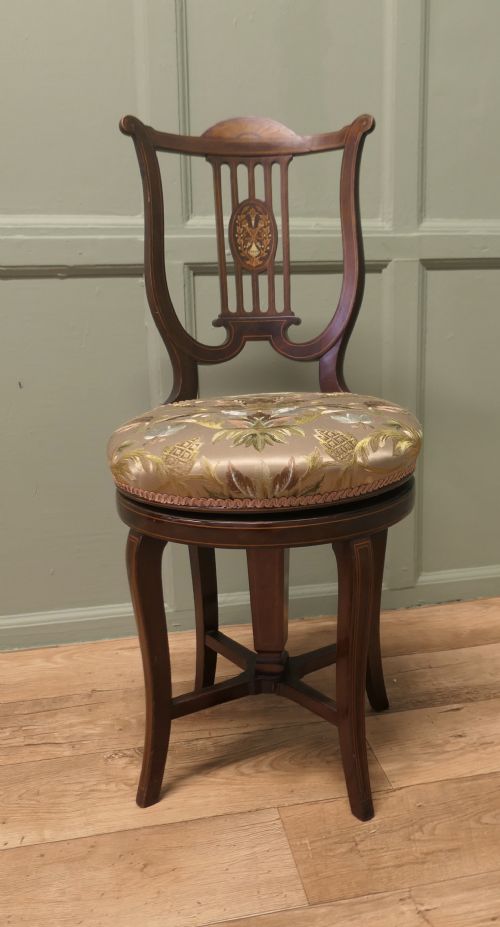
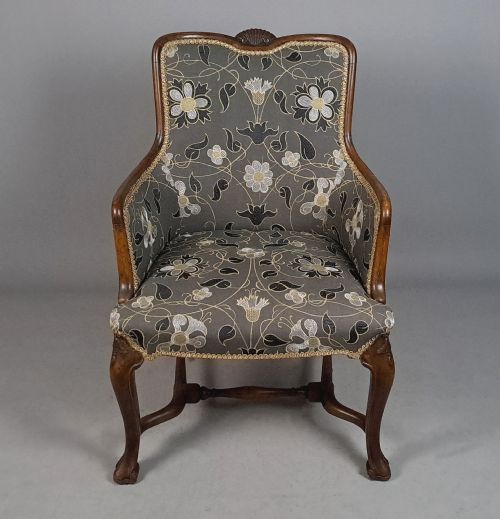
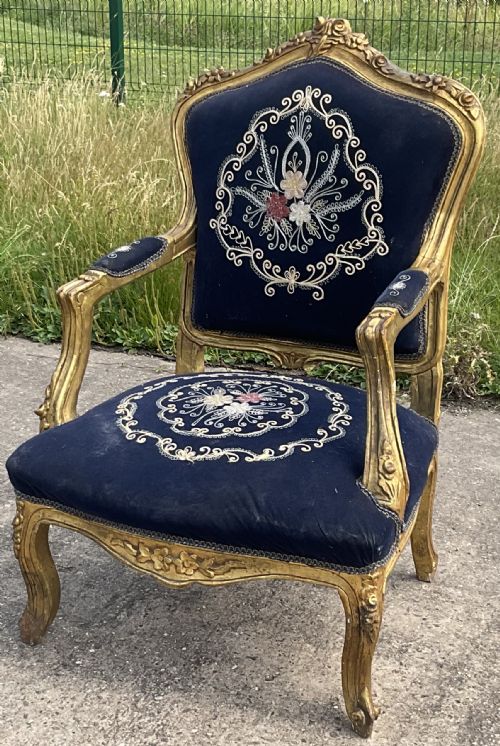
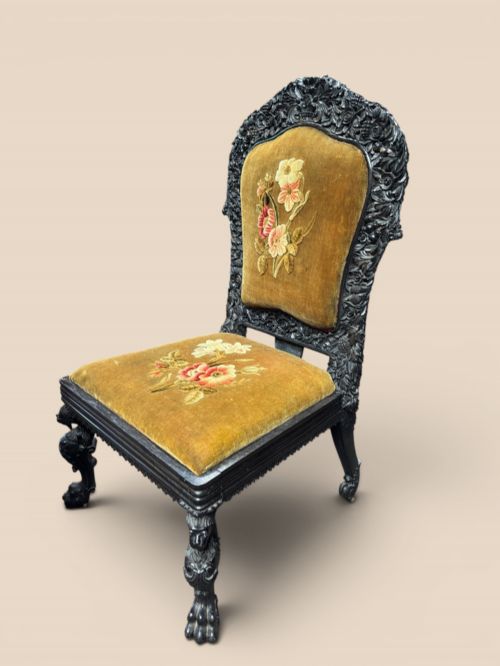
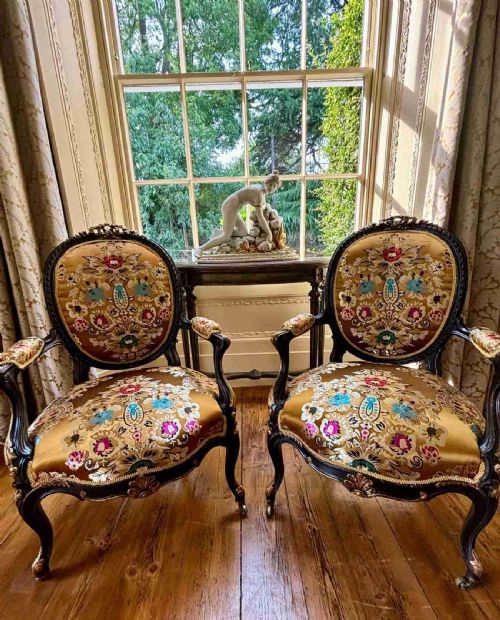
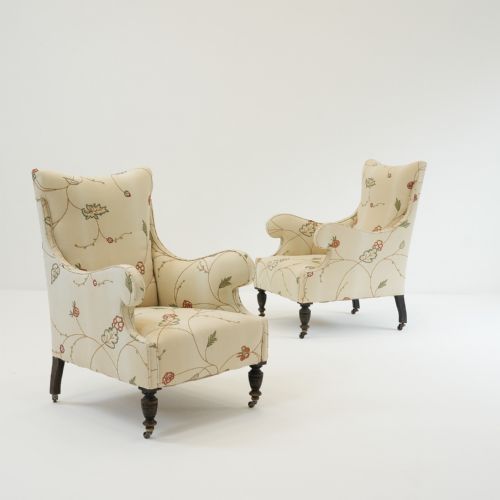
The underlying woodwork mirrors historic stylistic revivals and standard periods, ranging from Queen Anne manner wing armchairs and Sheraton revival mahogany to French walnut open armchairs and Indian ebony frames. These seating variants serve different historic domestic functions, from formal salon armchairs to dressing table stools and occasional side chairs.
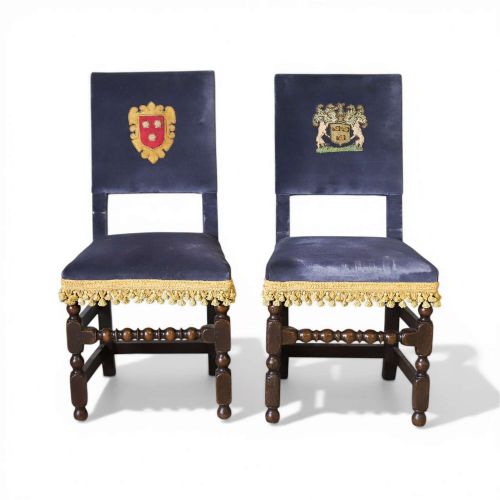
Textiles define the character of these pieces, utilising crewelwork, heraldic crests, and silk upholstery alongside exposed frames of oak, walnut, and mahogany. Buyers find that the textile component is often as historically significant as the wooden frame it adorns.
Materials and construction methods
Makers built the structural frames using hardwoods such as mahogany, walnut, oak, and ebony, frequently integrating brass fittings or gilt details depending on the period. Joinery methods varied by era, supporting heavy textiles and frequent use in parlours, halls, and bedrooms.
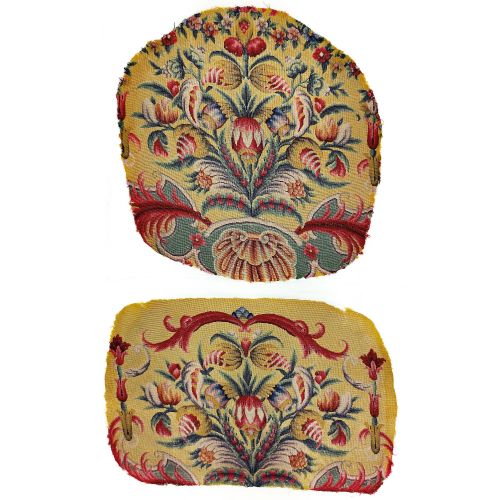
Upholstery relied on textile arts including needlepoint, petit point, crewelwork, and tapestry. These panels and covers were hand-stitched with intricate pictorial or heraldic designs, then secured to frames that ranged from carved Victorian walnut to seventeenth-century Scottish oak.
Antique Embroidered Chair Retail Price Guide 2026
Typical asking prices for embroidered chair among the pieces listed under this phrase on Sellingantiques today, from the lower quarter to the upper quarter. They describe what is for sale here now, not the wider market.
Materials documented across the selection include brass, velvet, tapestry, and silk alongside traditional hardwoods.
Markers of distinction and craftsmanship
The sophistication of the needlework separates standard output from exceptional examples, with tight, detailed petit point and well-preserved crewelwork commanding greater attention. The intricacy of the underlying wood carving, such as the elaborate detail on Indian ebony or Victorian walnut frames, further distinguishes individual pieces.
Originality of the textile relative to the frame influences overall integrity. Pieces retaining their period-appropriate needlework panels alongside structurally sound hardwood frames represent the height of this category.
The Antique Embroidered Chair Glossary
- Crewelwork
- Embroidery executed with wool yarn on a plain-weave fabric, often seen on historic oak and walnut armchairs.
- Petit point
- A fine needlepoint stitch worked on canvas, allowing for high-detail pictorial and decorative upholstery panels.
- Prie-dieu
- A low-backed devotional chair designed for kneeling and prayer, frequently featuring nineteenth-century needlework.
- Slipper chair
- A low-seated bedroom chair originally utilised for sitting while putting on shoes or garments.
- Armorial chair
- Seating displaying heraldic crests or family coats of arms, often worked in elaborate textile upholstery.
Antique Embroidered Chair: Frequently Asked Questions
How do I clean the embroidery?
Historic textiles require delicate surface cleaning rather than heavy washing or immersion. Light vacuuming through a protective mesh screen removes loose dust without disturbing aged threads.
Professional textile conservators should handle stubborn marks or deep cleaning to prevent yarn shrinkage and structural damage to the backing canvas.
Can I use these chairs daily?
Many of these chairs remain structurally robust for regular seating if the wooden frame and internal webbing are sound. However, fragile needlepoint upholstery benefits from gentle use to preserve aged wool and silk threads.
Placing them away from direct sunlight prevents the embroidered colours from fading over time.
How do I identify the period?
Dating relies on combining the chair's overall furniture style, such as Queen Anne revival or Regency proportions, with the characteristics of the wood and joinery. Secondary clues include the weave and subject matter of the textile panels.
Comparing turned legs, stretcher placement, and carving motifs against documented regional furniture helps narrow down the decade of manufacture.
Are the embroideries always original?
Needlework upholstery was frequently replaced, updated, or repaired during a chair's long lifetime as fabrics wore out from friction and light exposure. Some pieces retain their first-period needlepoint panels, while others display later Victorian or Edwardian re-upholstery.
Examining the tack holes, backing materials, and thread wear helps determine whether the embroidery matches the age of the wooden frame.