





Antique Elm Rocker
An antique elm rocker is a vernacular fireside seat built for comfort, and these timber chairs combine vernacular country traditions with smooth rocking movement.
Antique Elm Rocker
When you search for an antique elm rocker, you encounter country-made seating designed for domestic comfort. These chairs span several periods, including the eighteenth century, the Regency era, and the Victorian period, originating from regional workshops across England.
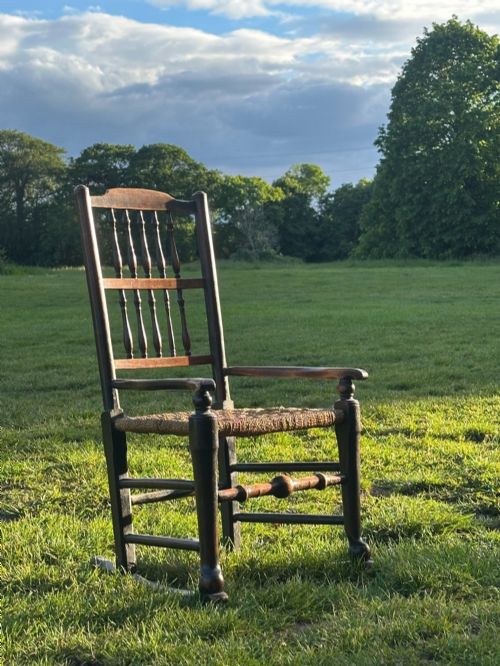
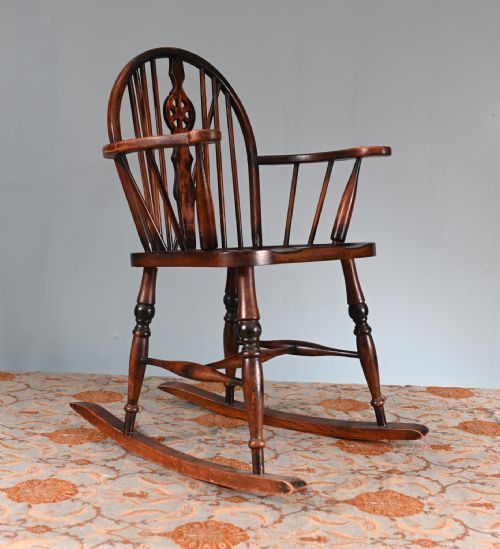
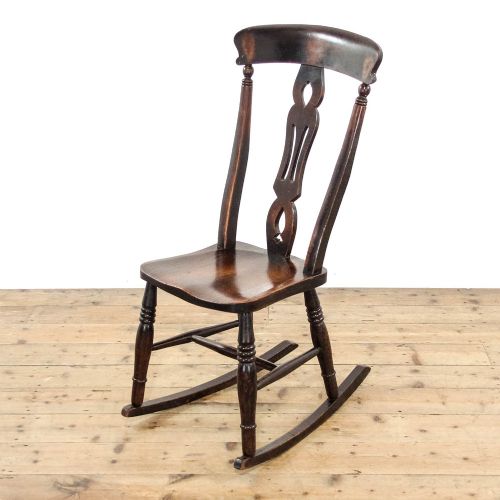
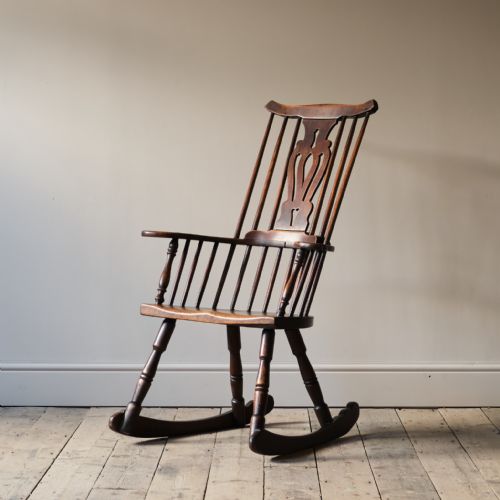
You meet various formats on this page, ranging from full-sized fireside armchairs to smaller child and dolls rocking chairs. Forms include Windsor types, wheelback designs, and spindle back configurations built for everyday use.
The regional character defines these items, with vernacular pieces from locations such as Lancashire, Cheshire, and the Thames Valley showing distinct local variations in turning and construction.
How they were made
The construction relies on a combination of native timbers, predominantly elm for the solid carved seats, paired with ash or beech for the bentwood bows, spindles, and legs. Some examples incorporate rush for seating or feature stained hardwood finishes.
Joinery methods utilise traditional techniques such as bodgving, where turned parts are tenoned directly into thick plank seats. Steam bending shapes the crest rails and arm bows, while rocking rails are fitted to the base of the legs to provide movement.
Antique Elm Rocker Retail Price Guide 2026
Typical asking prices for elm rocker among the pieces listed under this phrase on Sellingantiques today, from the lower quarter to the upper quarter. They describe what is for sale here now, not the wider market.
Listings feature items spanning the eighteenth century, Regency period, and Victorian era, constructed from elm, ash, beech, and rush.
What varies in quality
Quality rests in the balance of the proportions and the character of the timber grain within the seat plank. A well-balanced piece maintains harmonious curves in the spindle work and an organic flow in the elm seat.
The integrity of the original construction and the preservation of surface patination distinguish finer examples. Subtle details in the turning of the arm supports and the crispness of the spindle joints set individual chairs apart.
The Antique Elm Rocker Glossary
- Elm
- A native hardwood known for its interlocking grain and resistance to splitting, making it the primary choice for solid saddle seats. This timber develops a rich patina through centuries of use.
- Windsor
- A chair construction method where all components are fitted directly into a solid wooden seat rather than a frame. These chairs often feature bentwood hoops and spindle backs.
- Spindle back
- A style featuring slender, turned vertical wooden rods supporting the backrest. This method provides lightweight strength to country seating.
- Wheelback
- A Windsor variation incorporating a pierced wheel motif into the centre of the splat. This decorative detail became popular during the nineteenth century.
- Patina
- The surface sheen and colour acquired by wood over generations of handling and polishing. This quality indicates age and authenticity.
Antique Elm Rocker: Frequently Asked Questions
What is an antique elm rocker?
An antique elm rocker is a traditional country armchair built on curved wooden rockers, typically featuring a solid elm seat combined with ash or beech framing.
These pieces were constructed in regional workshops across England for domestic fireside use, spanning the eighteenth and nineteenth centuries.
How were these chairs used?
These chairs served as practical seating by the hearth, utilised for relaxation, nursing, and everyday domestic tasks in country homes.
Smaller child versions were constructed for nursery use, mirroring the forms of full-sized adult seating.
How do I live with an antique elm rocker?
You can place these chairs in a living room, bedroom, or hallway as functional seating that adds rustic character to an interior.
Keep them away from direct heat sources and sudden humidity changes to protect the timber and historic joints.
How do I date an antique elm rocker?
Dating relies on observing construction methods, turning styles, timber selection, and overall form relative to known vernacular traditions.
Earlier eighteenth-century pieces often display simpler regional turnings, while Victorian examples introduce wheelback motifs and steam-bent variations.