



Antique Elephant Table
An antique elephant table brings colonial character and dense carving into a room, joining practical support with sculptural form.
Antique Elephant Table
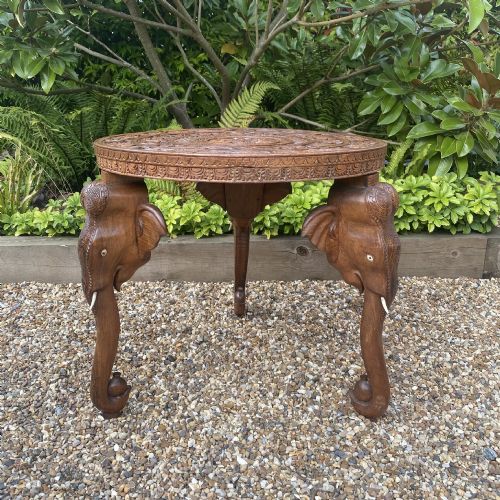
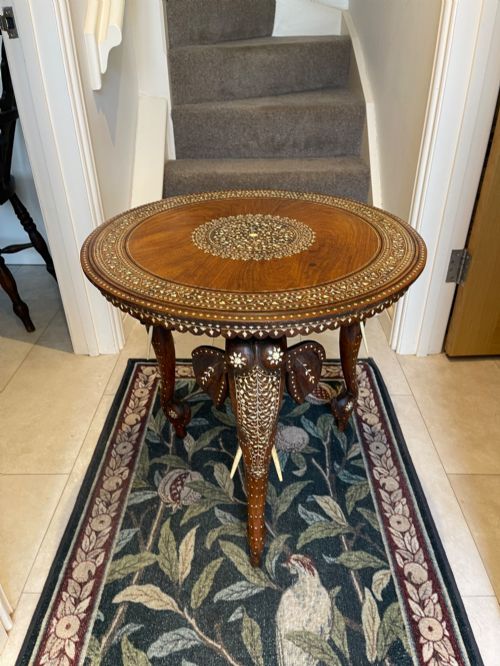
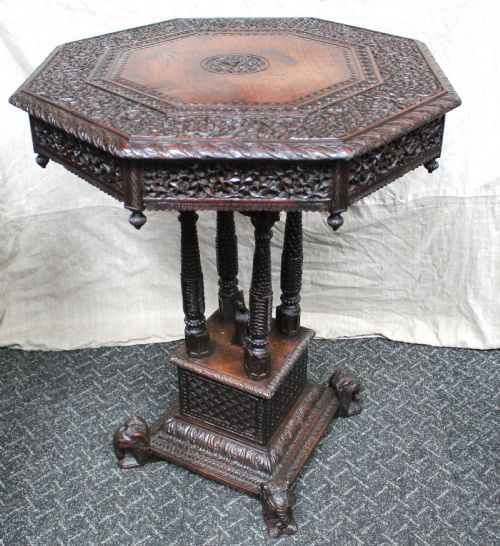
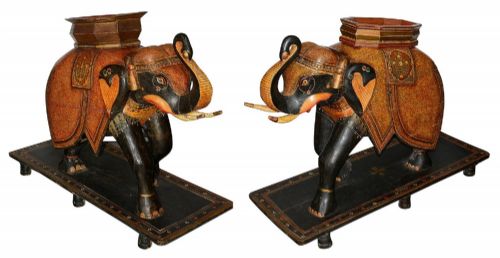
An antique elephant table is a low occasional or side piece taking its form from carved animal supports, most commonly associated with Anglo-Indian and Burmese colonial production from the nineteenth and early twentieth centuries. These works range from small circular tripod stands to larger octagonal coffee tables.
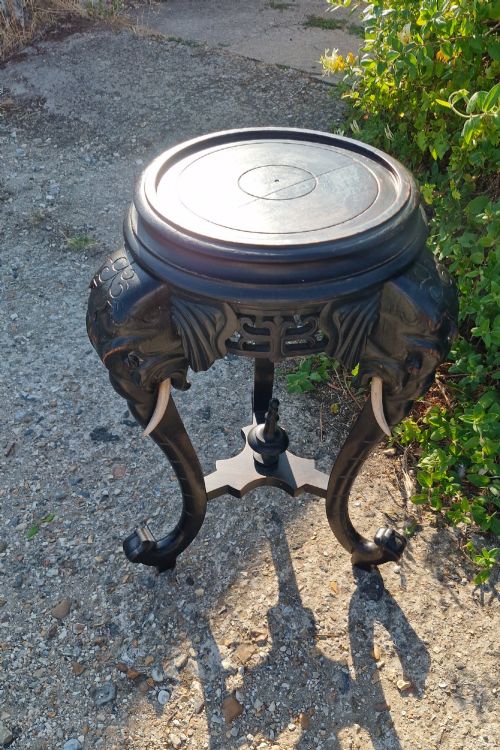
The version you are most likely to meet on this page is an Indian or Burmese occasional table shaped in teak, rosewood, or hardwood. They feature legs carved as full elephant figures, often enriched with bone inlay, geometric carving, or painted details.
Makers drew on regional traditions, producing forms that served as practical stands for lamps or tea while celebrating the iconography of the elephant in domestic furniture. The surviving examples span the Victorian period into the nineteen-twenties.
How they were made
Carpenters utilised dense tropical timbers such as teak, rosewood, and general hardwoods that could endure deep chisel work without splintering. These woods provided the necessary structural strength for slender legs carved into animal forms.
Craftsmen applied intricate surface embellishments including bone inlay, brass highlights, and lacquer. The components were joined with traditional woodworking methods, allowing complex octagonal and circular tabletops to sit securely upon carved animal bases.
Antique Elephant Table Retail Price Guide 2026
Typical asking prices for elephant table among the pieces listed under this phrase on Sellingantiques today, from the lower quarter to the upper quarter. They describe what is for sale here now, not the wider market.
Listings show these pieces predominantly spanning the Victorian period through to the nineteen-twenties, constructed in teak, rosewood, and bone inlay.
What varies in quality
Materials also divide the range, as solid rosewood or heavy teak with well-executed bone inlay commands greater presence than simpler ebonised woods. The integrity of the joinery and the balance of the table under weight complete the hierarchy.
The Antique Elephant Table Glossary
- Anglo-Indian
- Furniture made in India during the British colonial period, combining European furniture forms with local carving traditions and native timbers. It frequently utilises dense rosewood or teak.
- Bone inlay
- A decorative technique where small pieces of animal bone are set into recesses carved into the wooden surface to form geometric or floral patterns. This work appears on finer regional tables.
- Hoshiarpur
- A North Indian centre renowned for intricate woodwork and intricate inlay using bone or brass on shesham or teak. Tables from this region often feature dense foliate patterns.
- Tripod
- A piece supported by three legs, which provides natural stability on uneven floors. This structural arrangement is common in small occasional tables.
- Occasional table
- A light, movable small table designed for specific, temporary uses such as holding a lamp or book. They were widely produced during the Victorian and Edwardian eras.
Antique Elephant Table: Frequently Asked Questions
What is an antique elephant table?
An antique elephant table is a small occasional or side piece featuring legs or supports carved in the likeness of elephants. These works were predominantly made in India, Burma, and Britain during the nineteenth and early twentieth centuries.
They combine functional tabletop surfaces with elaborate colonial carving, often incorporating native timbers like teak and rosewood alongside bone inlay.
How were these tables used?
These pieces served as decorative occasional tables in drawing rooms and studies, holding lamps, clocks, or small ornaments. Their sturdy hardwood construction allowed them to function as practical everyday surfaces.
Today, they continue in similar roles as striking side tables or plant stands that introduce texture and historical character to a modern interior.
How can I tell the period of a table?
Dating relies on examining the timber species, construction methods, and the style of the carving. Nineteenth-century examples often display hand-cut joinery and heavier tropical hardwoods like solid rosewood or teak.
Later pieces from the early twentieth century may show different finishing techniques or machine assistance in the preparation of internal framing components.