
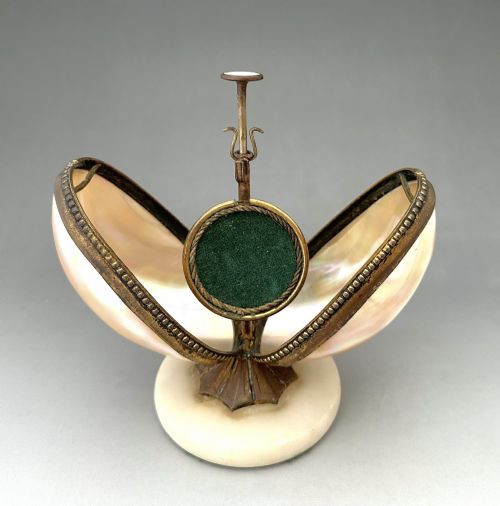


Antique Egg Stand
An antique egg stand organises breakfast with silver, oak or treen, offering a sturdy frame and cups that collectors prize for the dining table.
Antique Egg Stand
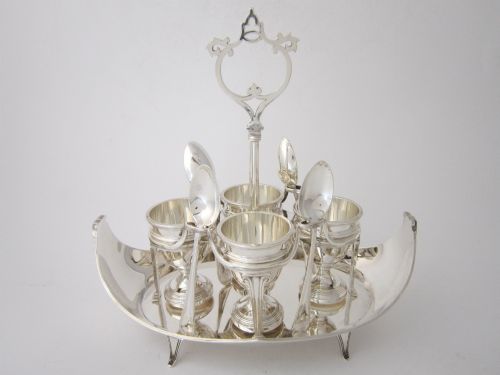
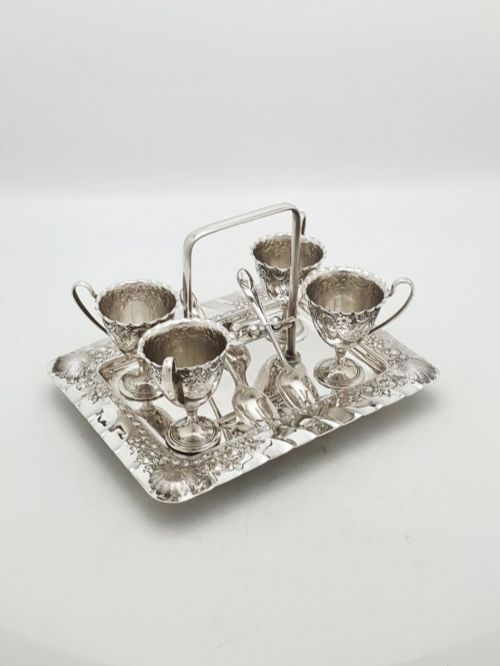
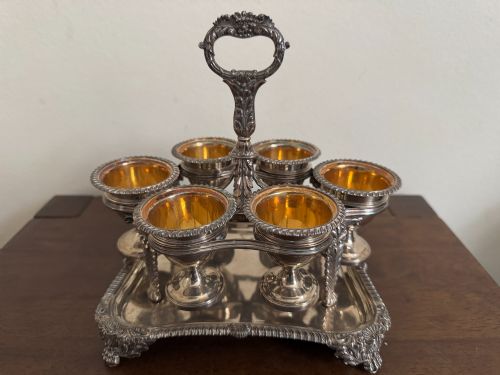
An antique egg stand provides a dedicated frame and cups to serve boiled eggs at the breakfast table, combining practicality with formal dining elegance. When searching for an antique egg stand, buyers encounter various configurations designed to hold two, four or more cups alongside accompanying spoons.
The pieces appearing on this page span the Georgian, Victorian and Edwardian periods, stretching from the early nineteenth century into the twentieth. Forms range from silver cruet frames with carrying handles to revolving treen ware stands and wooden variations.
Materials shift between precious sterling silver, durable silver plate, oak, yew wood and painted pine, reflecting the diverse domestic tastes of past centuries. Most options encountered here represent formal tableware or country house accessories intended for daily use in affluent homes.
Materials and construction
Makers utilised sterling silver and electroplated nickel silver to construct durable metal cruet frames, often incorporating pierced galleries and loop handles for transport. Silversmiths shaped metal through casting, stamping and hand-engraving, applying hallmarks to certify metal purity and assay office origins.
Wooden examples rely on native timbers such as oak and yew wood, shaped by turners on a lathe to create revolving treen ware stands and fitted cup bases. Artisans combined metal fittings with wooden structures, securing silver-plated mounts to timber bases to balance utility with decorative appeal.
One revolving treen ware stand arrived with a documented history tracing straight back to the private collection of the late Mrs Henry T Ford the second.
Factors that define quality
Quality depends upon the crispness of metal casting, the clarity of hallmarks on silver components and the symmetry of turned wooden frames. Superior pieces display balanced proportions, secure joints and original matching components that have survived intact over generations.
The distinction between standard domestic wares and top-tier items rests on maker reputation, sophisticated embossing, and the integration of scarce materials like mother-of-pearl or gilt bronze. Well-executed silver cruets demonstrate precise piercing and heavy gauge metal, whereas lesser examples show simpler construction and thinner plating.
William Burwash·Mappin and Webb
The Antique Egg Stand Glossary
- Cruet set
- A matched frame holding multiple condiment or tableware vessels together on a single base. This term commonly applies to framed collections of egg cups and spoons.
- Treen ware
- Small domestic wooden objects created by turning on a lathe or through hand-carving. Collectors value these items for their rich patination and functional utility.
- Hallmark
- A stamped official mark on precious metal items indicating the maker, metal purity, assay office and year of manufacture. These stamps provide verifiable provenance.
- Electroplated nickel silver
- A base metal alloy coated with a thin layer of pure silver through an electrical process. This technique allowed manufacturers to produce affordable tableware.
- Revolving stand
- A rotatable holder mounted on a central pivot to allow easy access to individual cups. This design mechanism appears frequently in treen and metal serving pieces.
Antique Egg Stand: Frequently Asked Questions
What is an antique egg stand?
An antique egg stand is a tabletop serving frame designed to hold boiled eggs, cups and sometimes spoons during formal breakfast service.
These pieces emerged in various materials including sterling silver, silver plate, oak and treen to suit different domestic settings.
How were egg cruets used?
Servants used them to bring boiled eggs directly from the kitchen to the dining table while keeping the individual portions organised.
The central handle allowed diners or hosts to pass the entire set easily across the table.
How do I date an egg cruet?
Silver versions rely on stamped hallmarks that record the specific assay office and year of manufacture.
Wooden and plated examples require stylistic analysis of the frame shape, turned details and manufacturing techniques.
Are all egg stands made of silver?
Many examples utilise durable silver plate or electroplated nickel silver rather than solid precious metal.
Others appear in timber forms such as oak, yew wood and treen ware without any metal components.
How do I care for silver plated stands?
Silver and silver-plated surfaces require gentle cleaning with appropriate metal polishes to prevent damage to the plating.
Wooden stands benefit from occasional waxing to maintain the natural finish of the timber.