



Antique Egg Set
These pieces of antique egg set tableware and serveware span the Georgian, Victorian, and Edwardian periods in sterling silver, silver plate, mahogany, and brass.
Antique Egg Set
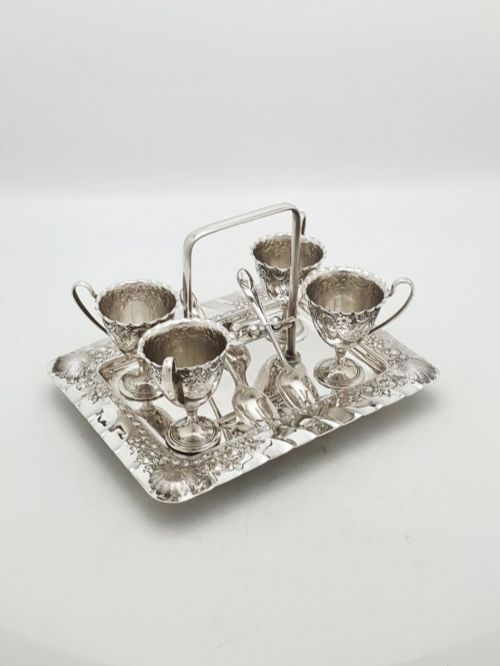
An antique egg set comprises coordinated tableware and serveware designed for breakfast dining, most frequently encountered as silver cruet frames fitted with individual egg cups. The selection ranges from Georgian sterling silver stands and Victorian silver plate and oak arrangements to Edwardian four-person embossed sets and George V sterling silver cruets.
Beyond traditional cruet frames, the category encompasses related kitchen and dining items such as copper egg cups from the Arts and Crafts period, revolving treen ware stands, and specialised wooden items like yew wood egg cup stands. These pieces reflect formal morning dining rituals across the nineteenth and early twentieth centuries.
How they were made
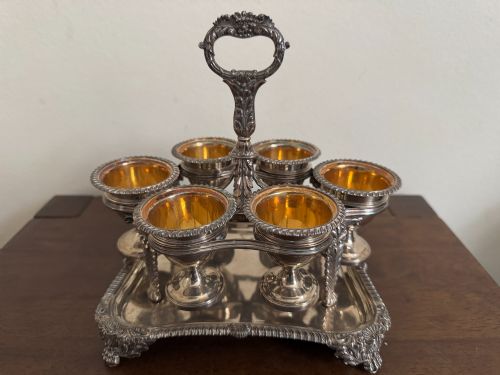
Metal versions utilise sterling silver, silver plate, brass, and copper, shaped through silversmithing techniques to create cruet frames, condiment sets, and individual cups. Makers also employed silver gilt for interior finishes and electroplated nickel silver during later manufacturing phases.
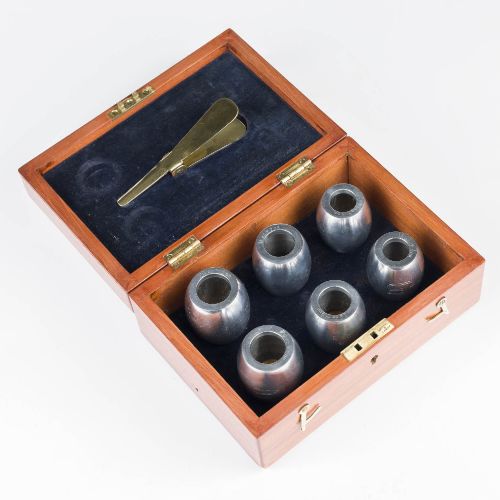
Wooden examples rely on traditional cabinet-making methods utilising mahogany, oak, yew wood, and treen ware. These pieces incorporate turned wood components, sometimes paired with revolving mechanisms or fitted velvet interiors.
Antique Egg Set Retail Price Guide 2026
Typical asking prices for egg set among the pieces listed under this phrase on Sellingantiques today, from the lower quarter to the upper quarter. They describe what is for sale here now, not the wider market.
The category spans tableware, serveware, condiment sets, and specific treen ware revolving stands alongside standard dining furniture.
What varies in quality
Quality depends on the integrity of the materials and the precision of the construction, distinguishing solid sterling silver frames from silver-plated alternatives, and finely turned hardwoods like mahogany and yew from standard treen. The presence of complete, matching sets of cups and original spoons indicates higher original manufacture.
Design complexity and decorative execution separate standard items from superior pieces, such as embossed Edwardian detailing or Arts and Crafts copperwork. The reputation of the silversmith or workshop also influences the standing of individual cruet stands and condiment sets.
William Burwash London·Picards
The Antique Egg Set Glossary
- Egg cruet set
- A fitted table stand holding multiple egg cups and often salt cellars, pepper pots, and mustard pots. These frames typically feature a central carrying handle.
- Sterling silver
- A silver alloy containing 92.5 percent pure silver and 7.5 percent other metals, commonly copper. This standard material appears frequently in Georgian and Victorian tableware.
- Silver plate
- A base metal coated with a thin layer of pure silver. This technique provided a more accessible alternative to solid sterling silver during the Victorian and Edwardian eras.
- Treen ware
- Small wooden household objects made by turning on a lathe or through hand-carving. In this category, it refers to revolving or stationary wooden egg cup stands.
- Arts and Crafts
- A design movement valuing handcraftsmanship and simple forms over mass production. In this category, it is represented by copper egg cups.
Antique Egg Set: Frequently Asked Questions
What is an antique egg cruet?
An antique egg cruet is a specialised frame designed to hold breakfast table items together for serving. It typically incorporates a central handle, a secure base, and fitted spaces for individual egg cups and condiment containers.
These pieces were central to formal morning dining in British households during the Georgian, Victorian, and Edwardian eras. They allowed servants to bring all necessary breakfast elements to the table in a single, organised unit.
How do I date a silver egg set?
Dating a silver egg set relies heavily on official hallmarks stamped into the metal by assay offices. These marks reveal the exact year of manufacture, the city of assay, and the silversmith's mark.
For silver-plated or wooden sets without hallmarks, dating depends on the prevailing style, manufacturing techniques, and materials used. Victorian, Edwardian, and Georgian designs each exhibit distinct aesthetic characteristics that help narrow the period of creation.
Are wooden egg cup stands durable?
Wooden egg cup stands made from hardwoods such as mahogany, oak, and yew are remarkably sturdy when properly maintained. They require standard care to protect the wood from excessive moisture and extreme temperature fluctuations.
Over the decades, these wooden pieces develop a rich patina that enhances their appearance. Regular light polishing keeps the surface conditioned without damaging the original finish.
What materials were used for these sets?
Makers utilised a wide range of materials depending on the period and the intended market. Precious metals like sterling silver and silver gilt appear in high-end dining pieces, alongside more accessible silver plate and electroplated nickel silver.
Alternative materials include various woods such as mahogany, oak, yew, and treen ware, as well as copper produced during the Arts and Crafts movement. Some designs also incorporated velvet linings or brass fittings.