

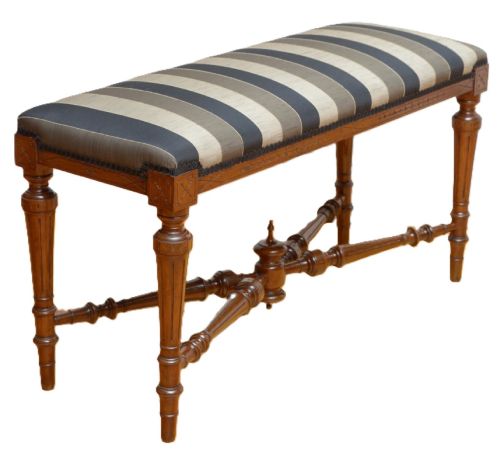
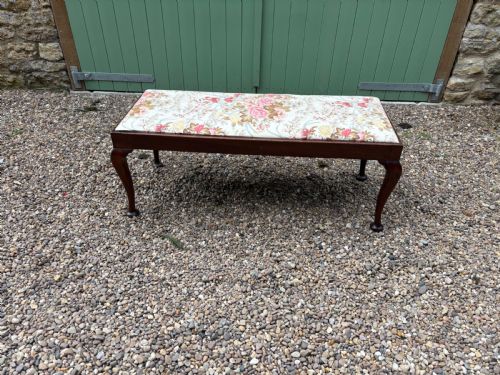
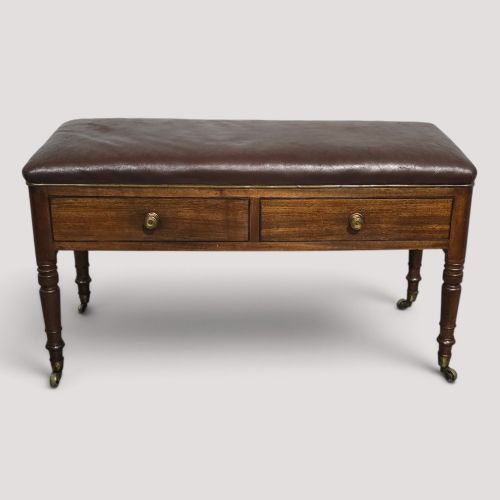
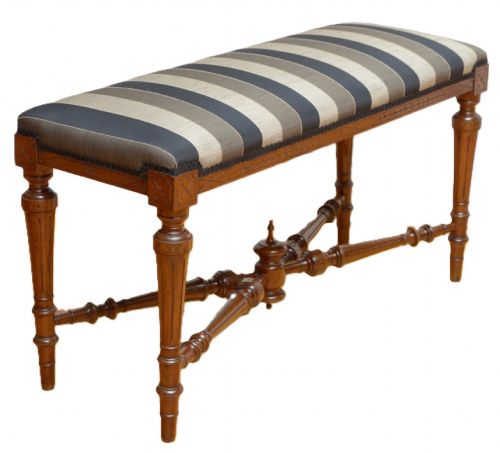


Antique Duet Window Seat
An antique duet window seat offers shared seating for two, combining the long proportions of a bench with the refined joinery of period living spaces.
Antique Duet Window Seat
An antique duet window seat provides extended seating designed to accommodate two people comfortably by a bay or standard room opening. These long stools and benches appear across several historical periods, reflecting shifts in domestic interior design from the eighteenth to the early twentieth century.
The pieces listed here include examples from the Georgian, Regency, and Victorian eras, alongside Edwardian creations and revival pieces. Makers also produced specific musical variants, such as piano duet stools, which often feature hinged seats for storage.
Forms range from George III mahogany benches to Aesthetic Movement designs and French-influenced gilt or tapestry models. Buyers encounter everything from formal Georgian Revival frames to practical Edwardian freestanding seating.
How they were made
Cabinetmakers constructed these frames primarily from solid timbers like mahogany and walnut, utilising traditional joinery to support the extended length of a duet seat. Selected pieces incorporate fine inlay work or gilt finishes to elevate their decorative presence.
Seating surfaces required durable support, utilising textile, leather, velvet, and specialised upholstery techniques. Hinged mechanisms built into piano duet variants allowed the top to lift securely while maintaining a clean exterior line.
Antique Duet Window Seat Retail Price Guide 2026
Typical asking prices for duet window seat among the pieces listed under this phrase on Sellingantiques today, from the lower quarter to the upper quarter. They describe what is for sale here now, not the wider market.
Listings feature mahogany, walnut, and brass, spanning the Georgian, Regency, Victorian, Edwardian, and Aesthetic Movement periods.
What varies in quality
The distinction between standard examples and finer pieces lies in the crispness of the timber carving and the selection of figured wood veneers. Superior frames display careful attention to structural proportion and balanced decorative detailing.
Original upholstery materials and the integrity of internal mechanics, such as hinged seat mechanisms, differentiate utilitarian seating from more ambitious workshop productions.
The Antique Duet Window Seat Glossary
- Duet stool
- A wide seat designed for two people to sit side by side, frequently utilised at musical instruments or by windows. These pieces provide extended proportions compared to standard single stools.
- Mahogany
- A dense, reddish-brown tropical hardwood favoured by cabinetmakers for its strength and stability. This material accepts fine carving and polish exceptionally well.
- Aesthetic Movement
- A late nineteenth-century design style that emphasised visual beauty over narrative content, often incorporating simplified lines or specific artistic motifs. Pieces from this movement display distinct stylistic departures from heavy Victorian norms.
- Hinged seat
- A top mounted on pivots or hinges that lifts to reveal an internal compartment. This feature appears frequently on piano duet stools for sheet music storage.
- Georgian Revival
- A twentieth-century style that reinterprets eighteenth-century design vocabulary. These pieces adopt the proportions and decorative grammar of earlier periods.
Antique Duet Window Seat: Frequently Asked Questions
How were duet window seats used historically?
Historically, these seats were placed in large bay windows to provide comfortable spots for reading or viewing the grounds outside. Their elongated proportions also suited placement at the foot of a bed or alongside drawing-room walls.
Musical variants served dual purposes by providing a seat for two piano players while storing sheet music beneath the lid.
How do I identify the period of a seat?
Dating relies on observing the timber choice, decorative motifs, and overall joinery style relative to known historical eras. Georgian and Regency pieces show classical proportions, whereas Edwardian examples often feature lighter framing and inlaid details.
Comparing the specific turnings, leg styles, and upholstery types against recorded period examples confirms the era of manufacture.
How do I live with an antique window seat?
Living with these seats involves placing them in rooms where their extended length can function practically without obstructing high-traffic pathways. Regular dusting of the timber and careful maintenance of the fabric or leather upholstery preserve their condition.
They function well as freestanding statement pieces in living rooms, bedrooms, or entrance halls.