

Antique Drop Drawer Chest
An antique drop drawer chest offers hidden writing surfaces and deep storage, combining practicality with centuries of fine cabinetmaking.
Antique Drop Drawer Chest
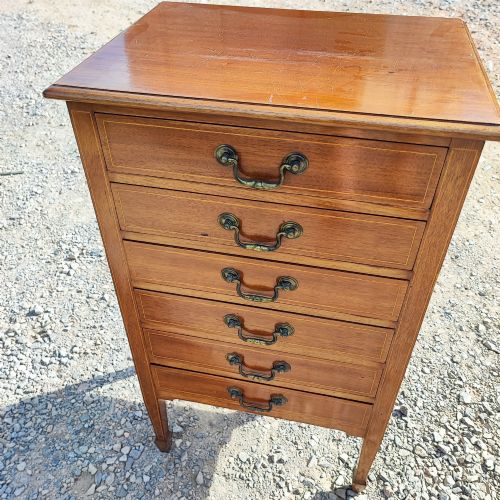
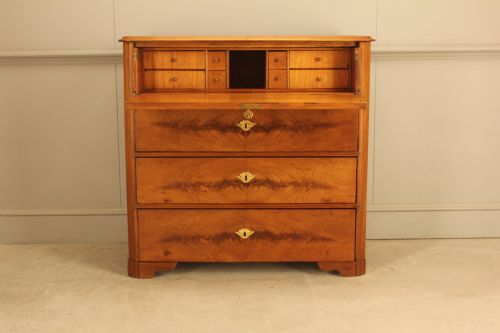
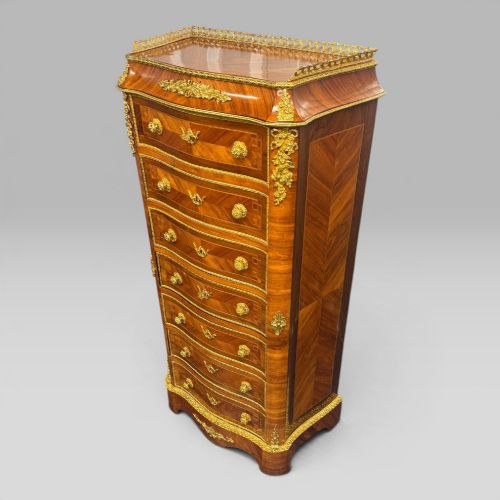
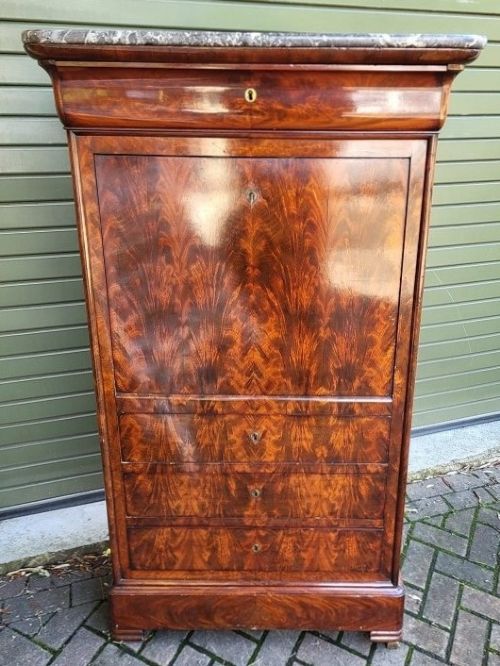
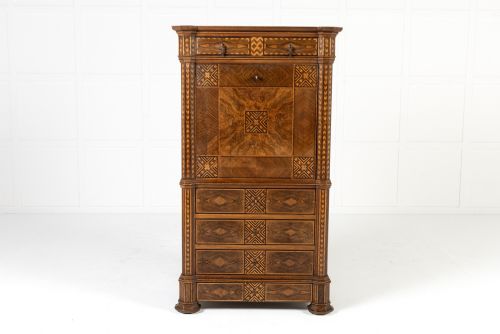
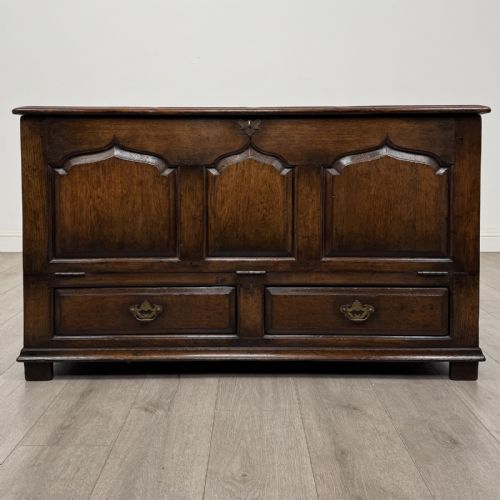
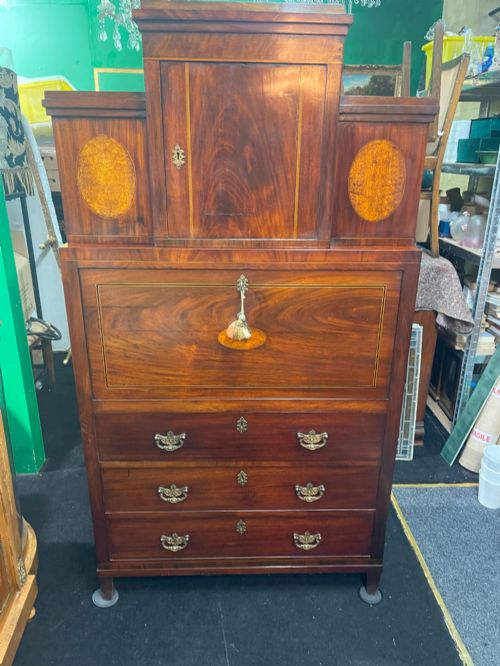
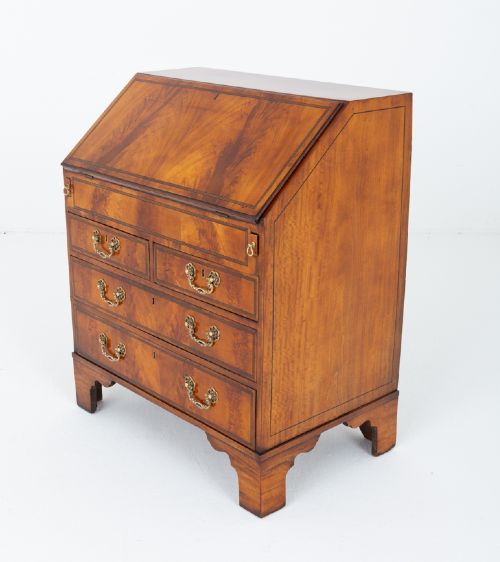
An antique drop drawer chest encompasses pieces with fall fronts, drop fronts, and secretaire drawers designed for writing or storage. The selection spans from the seventeenth century through the Georgian and Victorian eras, reaching into the twentieth century.
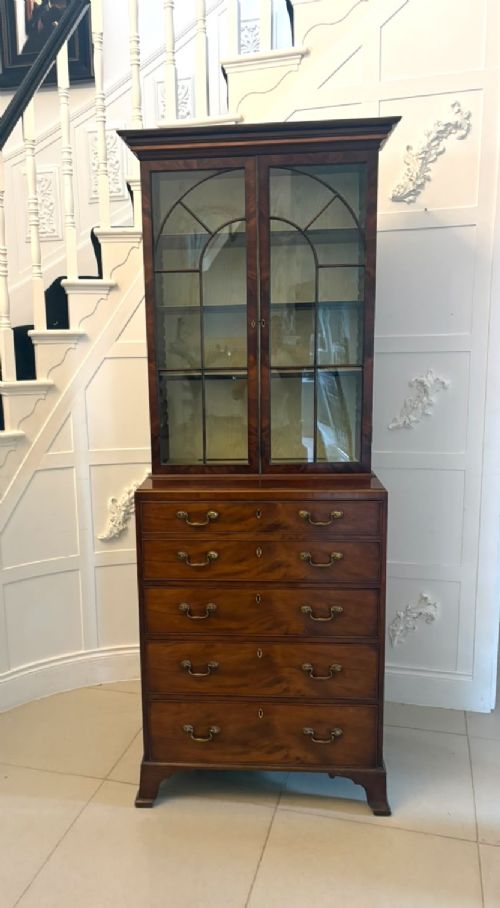
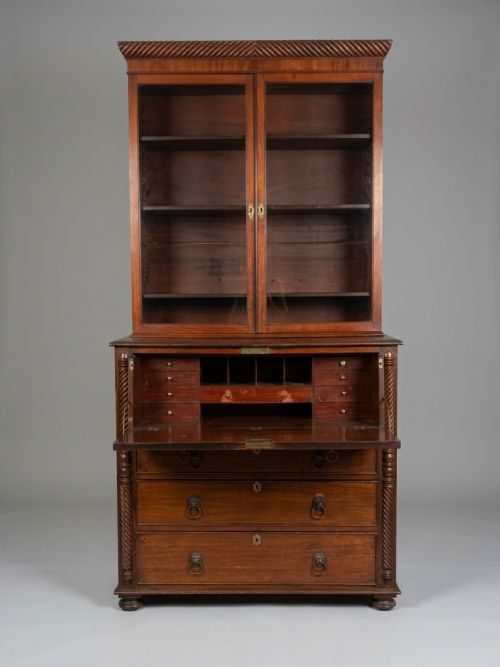
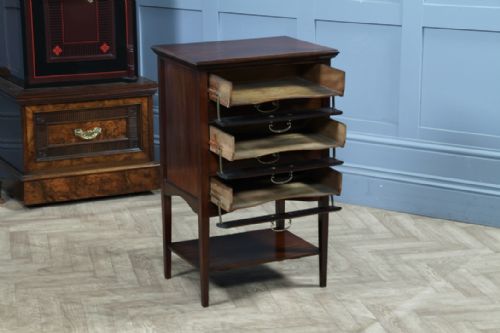
Mahogany and oak dominate the pieces found here, often paired with walnut, burr walnut, and satinwood veneers. These items range from tall secretaire bookcases and compact music cabinets to writing bureaux and traditional chests of drawers.
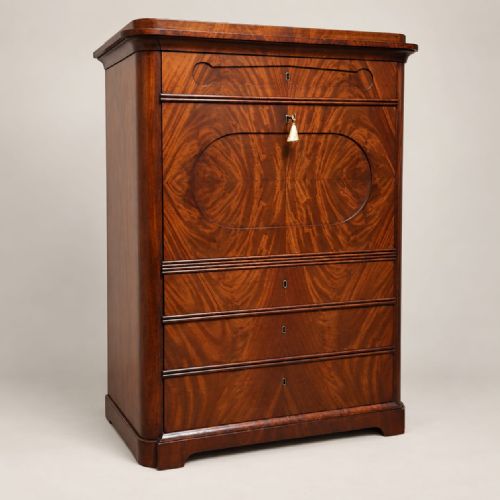
Continental examples such as Biedermeier and Swedish pieces sit alongside English Georgian and Edwardian designs. Buyers frequently encounter fall-front writing desks and Wellington chests fitted with locking flaps.
Materials and construction
Cabinetmakers utilised solid timbers including oak, elm, and mahogany for structural integrity, often applying figured walnut, burr birch, and satinwood veneers to primary surfaces. Drawer linings frequently employ secondary woods like pine, shaped and joined with traditional techniques.
Brass handles, escutcheons, and hinges secure the moving parts, while glass panels appear in upper bookcase doors. Interior fitted compartments utilise small drawers and pigeonholes constructed with meticulous attention to detail.
Antique Drop Drawer Chest Retail Price Guide 2026
Typical asking prices for drop drawer chest among the pieces listed under this phrase on Sellingantiques today, from the lower quarter to the upper quarter. They describe what is for sale here now, not the wider market.
Listings feature pieces spanning from the 17th century through the Georgian, Victorian, and Edwardian eras, constructed in oak, mahogany, and walnut.
Quality and craftsmanship
The standard of an antique drop drawer chest rests upon the selection of timber veneers and the precision of the internal pigeonholes and small drawers. Uniformity in grain matching and the crispness of inlaid satinwood indicate superior workshop output.
Mechanical execution separates standard items from exceptional ones, particularly in the smooth operation of drop fronts, fall-front writing surfaces, and locking flap mechanisms. Original brass hardware and well-preserved secondary woods elevate a piece significantly.
Gillows
The Antique Drop Drawer Chest Glossary
- Secretaire
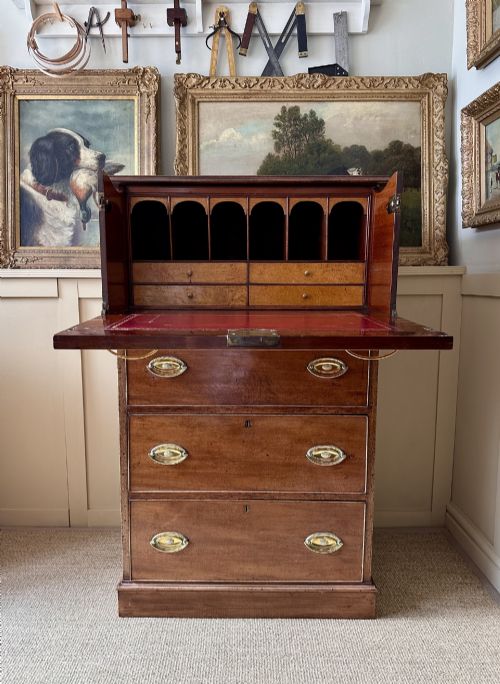
- A piece of furniture incorporating a built-in writing drawer with a drop front that conceals small compartments and pigeonholes. This form allows a chest of drawers or bookcase to function as a desk.
- Fall Front
- A hinged panel that drops down to form a horizontal writing surface. It typically reveals an organised interior fitted with stationery drawers.
- Wellington Chest
- A tall, narrow chest of drawers secured by a hinged vertical locking sidebar on one side. This mechanism locks all drawers simultaneously with a single key.
- Oyster Veneer
- Cross-sections of small branches or roots cut in oval shapes to create an intricate, undulating pattern on cabinet surfaces. This decorative technique appears frequently on seventeenth-century walnut furniture.
- Astragal Glazed
- Glass cabinet doors divided into smaller panes by slender wooden framing strips. These frames support the glass while adding architectural detail to library cabinets and bookcases.
Antique Drop Drawer Chest: Frequently Asked Questions
What is a drop drawer chest?
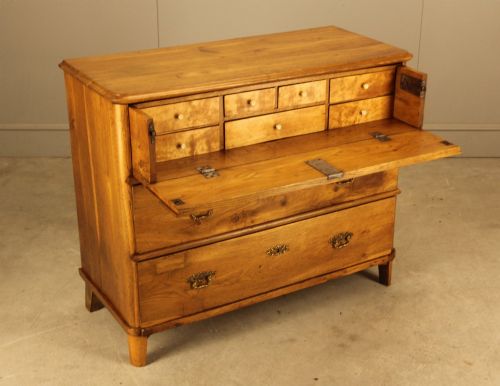
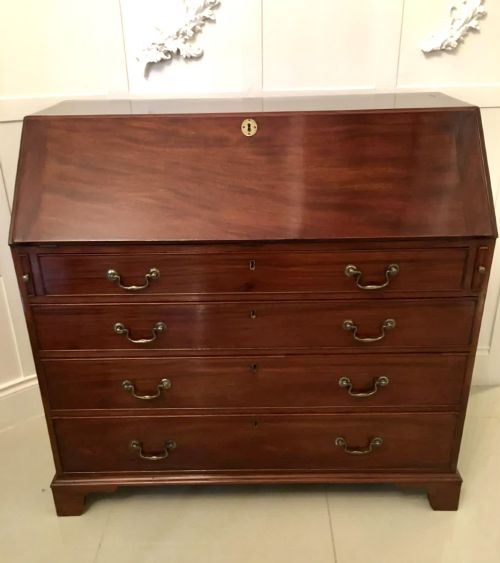
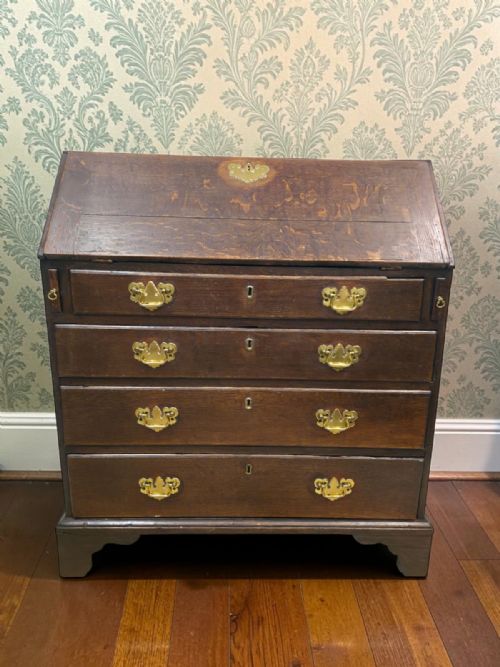
A drop drawer chest is a hybrid piece of furniture that combines standard storage drawers with a hinged front drawer that folds down to create a writing desk.
Inside the drop section, makers typically built small compartments, pigeonholes, and miniature drawers for stationery.
How do I use a secretaire daily?
The drop front opens outward to provide a stable wooden surface for writing or placing a laptop, while the lower drawers remain accessible for storage.
When closed, the mechanism conceals the desk interior entirely, maintaining a neat appearance in a room.
How do I date an antique chest?
Dating relies on identifying the primary wood species, construction methods, hardware styles, and overall aesthetic period such as Georgian or Victorian.
Secondary woods and drawer dovetailing also offer reliable clues to a piece's century of origin.
Where should I place a bureau?
These pieces suit studies, living rooms, and bedrooms where their dual function as storage and a desk provides maximum utility.
Allow sufficient clearance in front of the piece for the drop front or fall front to open fully.