

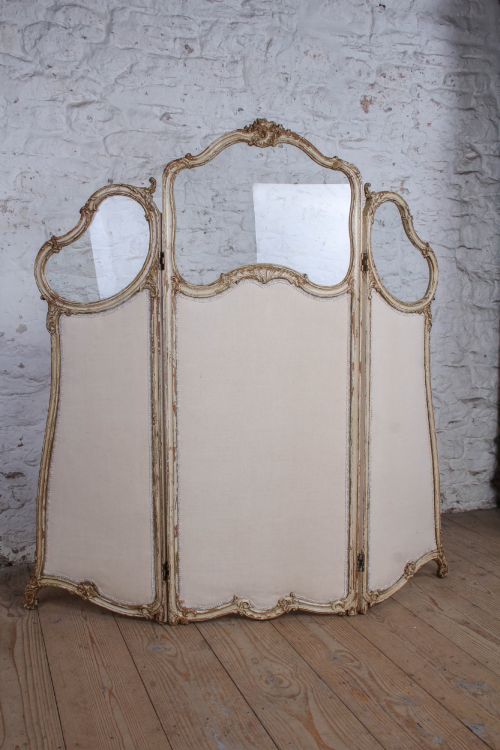
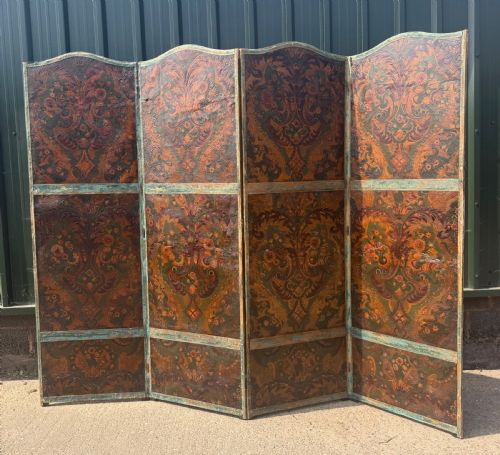



Antique Dressing Divider
These antique dressing divider pieces are folding screens crafted to create private spaces, bringing period character and flexible layout options to a room.
Antique Dressing Divider
An antique dressing divider is a folding screen used historically to partition rooms or create private areas for changing clothes. These pieces operate through multiple hinged panels that fold flat or angle to suit the interior layout.
The versions met on this page span several distinct eras, incorporating Edwardian and Victorian examples alongside Regency and mid-nineteenth-century items. Formats range from modest three-fold vanity screens to larger architectural four-fold and eight-fold room dividers.
Makers utilised various decorative vocabulary, incorporating Chinoiserie black lacquer papier-mâché, giltwood, inlaid mahogany, and polychrome decorated canvas. Such variety reflects both domestic utility and ornamental ambition across different periods of manufacture.
How they were made
Construction relies heavily on timber frames, with mahogany and giltwood forming structural supports for multiple hinged panels. Cabinet makers joined these panels using metal hinges to allow flexible articulation.
Surface decoration defines the visual impact of these pieces, employing hand-painted Chinoiserie lacquer, inlaid wood details, and polychrome canvas or silk cotton. Skilled artisans applied techniques such as papier-mâché moulding and Dutch-style tooling to achieve textured, ornate finishes.
Antique Dressing Divider Retail Price Guide 2026
Typical asking prices for dressing divider among the pieces listed under this phrase on Sellingantiques today, from the lower quarter to the upper quarter. They describe what is for sale here now, not the wider market.
Materials across the listings include wood, brass, lacquer, mahogany, mother-of-pearl, glass, fabric, and silk, spanning the nineteenth and twentieth centuries.
What varies in quality
Quality in an antique dressing divider rests primarily on the execution of the surface ornamentation, from hand-painted lacquer details to finely inlaid woodwork. Superior examples exhibit precise craftsmanship in both the structural hinges and the decorative panels.
The choice of base materials also distinguishes the range, with dense hardwoods and intricate giltwood frames representing higher standards than simpler constructions. Preservation of original canvas, silk, or lacquer finishes determines the integrity of the piece.
The Antique Dressing Divider Glossary
- Chinoiserie
- European decorative style inspired by Chinese artistic traditions, frequently featuring lacquer and gilt motifs. This style appears prominently on nineteenth-century black lacquer and papier-mâché panels.
- Giltwood
- Timber carved and coated with gold leaf or a gold-coloured finish for an ornate appearance. Mid-nineteenth-century continental vanity screens often utilise this material.
- Inlaid
- Technique where contrasting materials are set into the surface of a wood base to form a decorative pattern. Edwardian examples frequently showcase this method using fine timbers.
- Polychrome
- Decorated in multiple colours, typically applied to canvas or wood surfaces. Large country-house screens utilise this palette to depict intricate pictorial scenes.
- Papier-mâché
- Composite material made from paper pulp mixed with adhesive, moulded and finished with lacquer. This technique provided a smooth base for detailed Victorian ornamentation.
Antique Dressing Divider: Frequently Asked Questions
What is an antique dressing divider used for?
These folding screens were traditionally positioned in bedrooms or dressing rooms to provide privacy while changing garments. They also functioned to block drafts or divide large living spaces into intimate areas.
Today, owners utilise them as striking decorative backdrops, photographic props, or functional partitions in open-plan rooms.
How do I date an antique dressing divider?
Dating relies on examining the timber types, hinge construction, and decorative styles characteristic of specific periods like the Victorian or Edwardian eras. Stylistic clues such as Chinoiserie lacquer or giltwood carving help anchor the piece to a particular decade.
Comparing the methods of joinery and materials against known historical examples clarifies the likely manufacturing timeframe.
How many panels do these screens have?
The listings show variations ranging from three-fold vanity screens up to larger four-fold and eight-fold room dividers. The number of panels dictates the overall width and how sharply the screen can be angled.
Smaller three-fold versions suit intimate corners, while eight-fold examples require considerable floor space to display properly.
How do I care for a lacquered screen?
Lacquered and painted surfaces require gentle dusting with a soft, dry cloth to prevent scratching the finish. Keep these items away from direct sunlight and excessive moisture to protect the delicate materials.
Avoid chemical polishes, which can degrade historical lacquers, varnishes, and delicate fabric elements over time.