

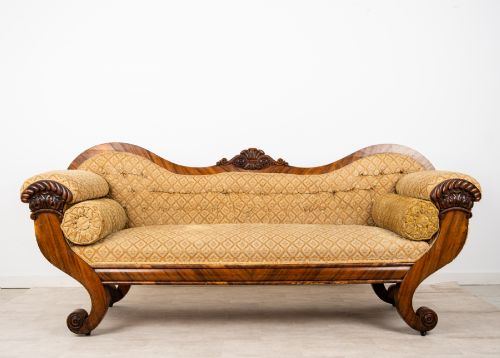


Antique Drawing Room Settee
An antique drawing room settee brings refined seating to reception spaces, offering comfortable proportions and period character.
Antique Drawing Room Settee
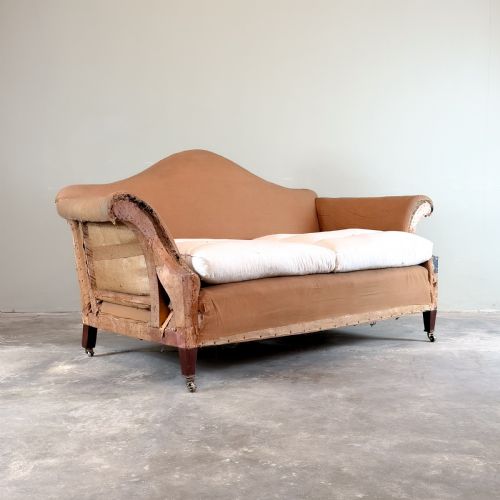
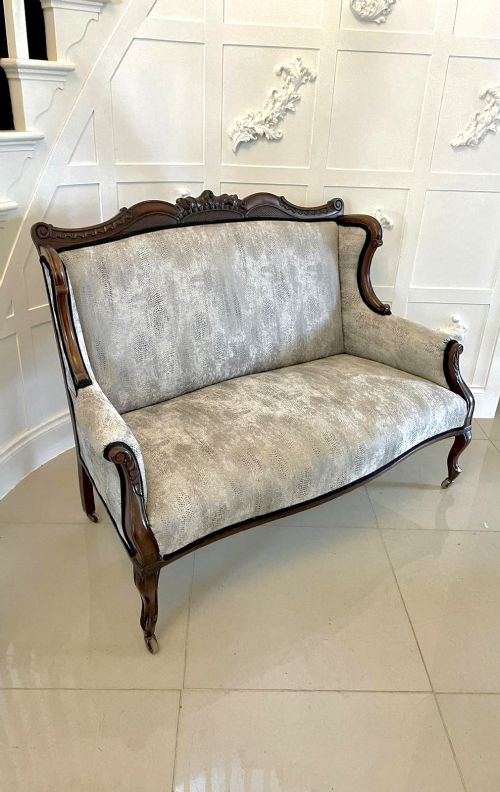
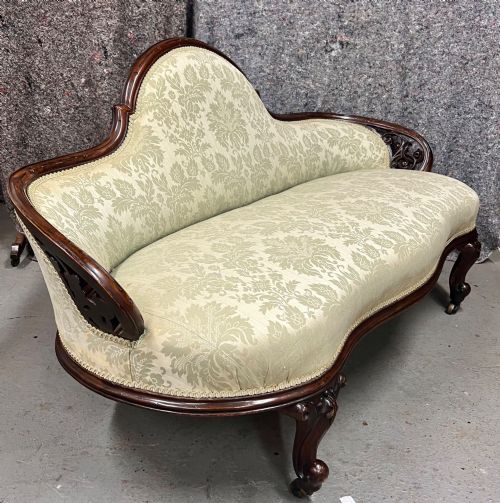
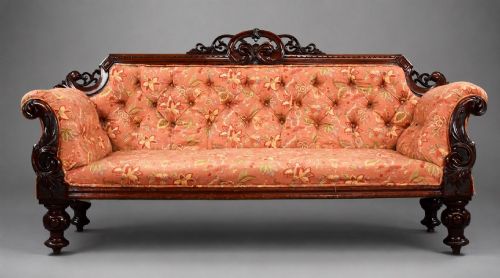
When buyers search for an antique drawing room settee, they encounter a variety of upholstered seating forms originating mainly from the nineteenth century and the early twentieth century. These pieces encompass specific settee and sofa designs alongside larger salon, parlour, and drawing room suites.
The most common examples on this page date from the Victorian era down to the Edwardian period, often featuring rich timber frames and traditional upholstery. Forms range from compact two-seat settees to larger show-frame sofas and matched suites.
Stylistic influences span several distinct periods, including William IV, Victorian Rococo Revival, and French Louis XV Revival. Buyers will find both carved mahogany and inlaid rosewood constructions among the available selection.
Materials and construction
Makers utilised dense hardwoods like mahogany, walnut, and rosewood to build the structural frames of these settees. Timber components frequently display detailed carving around scroll ends and show frames, or delicate inlay work.
Upholstery techniques relied on traditional stuffing materials supported by jute webbing. Finished surfaces were upholstered in textiles such as velvet, damask, and standard upholstery fabric, often secured with brass detailing.
Antique Drawing Room Settee Retail Price Guide 2026
Typical asking prices for drawing room settee among the pieces listed under this phrase on Sellingantiques today, from the lower quarter to the upper quarter. They describe what is for sale here now, not the wider market.
Even the jute webbing hidden beneath the upholstery often carries the sturdy DNA of a nineteenth-century shipping yard.
What separates the finest pieces
Quality in an antique drawing room settee rests upon the crispness of the timber carving and the sophistication of any inlaid decoration. Pieces executed in richly figured rosewood or finely carved mahogany demonstrate a higher grade of craftsmanship.
The architectural integrity of the frame and the elegance of the silhouette determine the overall distinction of the piece. Well-proportioned show frames and balanced revival styling distinguish superior examples from standard production.
Morison & Co Edinburgh
The Antique Drawing Room Settee Glossary
- Show frame
- A wooden structural frame left partially or fully exposed around the upholstered elements of a settee. This design highlights the carved timber and finish of the wood.
- Scroll end
- A curved terminal feature shaping the armrests or ends of a sofa. It reflects the fluid lines popular in nineteenth-century revival styles.
- Inlay
- A decorative technique where contrasting woods or materials are inserted into recesses within the primary timber surface. This creates flat, patterned ornamentation on the frame.
- Parlour suite
- A coordinated set of seating furniture designed for formal reception rooms. These suites typically include a settee accompanied by matching chairs.
- Cameo back
- An oval or medallion-shaped upholstered backrest framed in carved wood. This shape is characteristic of mid-nineteenth-century seating.
Antique Drawing Room Settee: Frequently Asked Questions
How were these settees used historically?
These settees served as formal seating in the principal reception rooms of nineteenth-century homes. They accommodated guests during social calls, musical recitals, and afternoon gatherings.
Their decorative show frames and upholstered finishes were intended to display the household's taste and social standing.
How do I care for antique upholstery?
Caring for antique upholstery requires gentle maintenance to preserve delicate fabrics such as damask, velvet, and standard textiles. Regular light vacuuming with a soft brush attachment prevents dust accumulation within the fibres.
Protecting the piece from direct sunlight prevents the fading of both the fabric and the underlying timber frame.
How do I distinguish Victorian from Edwardian styles?
Victorian settees, produced during the nineteenth century, often feature heavier carved mahogany or rosewood frames with ornate scroll ends and revival motifs. They frequently employ deep-buttoned upholstery and rich fabrics.
Edwardian pieces, dating from around the turn of the twentieth century, tend to exhibit lighter proportions, delicate inlay work, and simpler structural lines.