
Antique Drawer Mirror
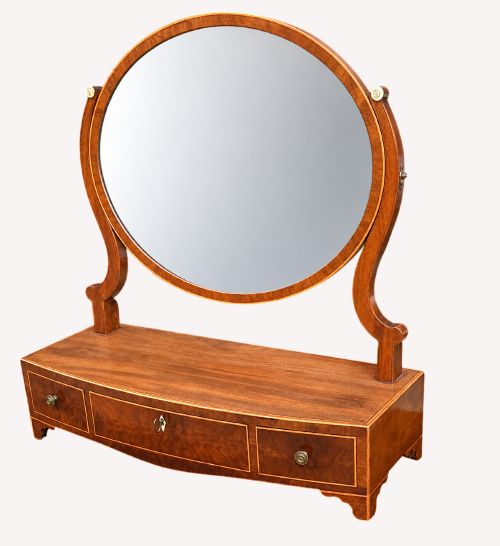
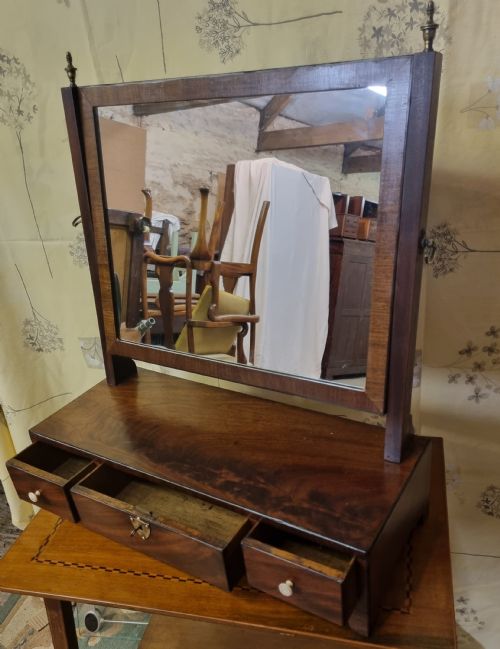
An antique drawer mirror is a small, tilting looking glass mounted on a fitted base containing functional storage compartments.
Antique Drawer Mirror
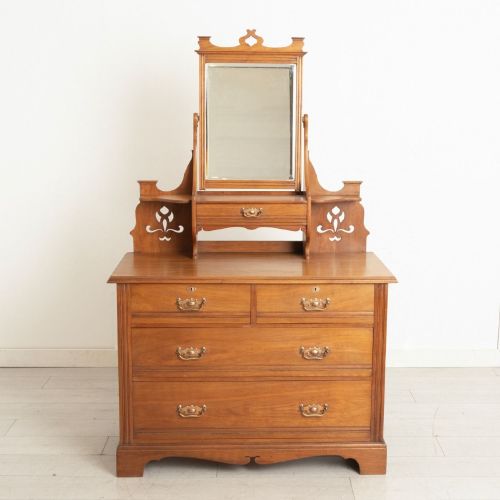
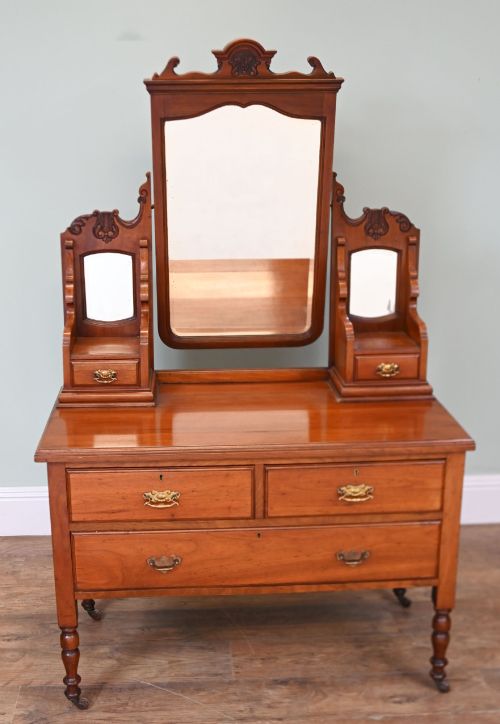
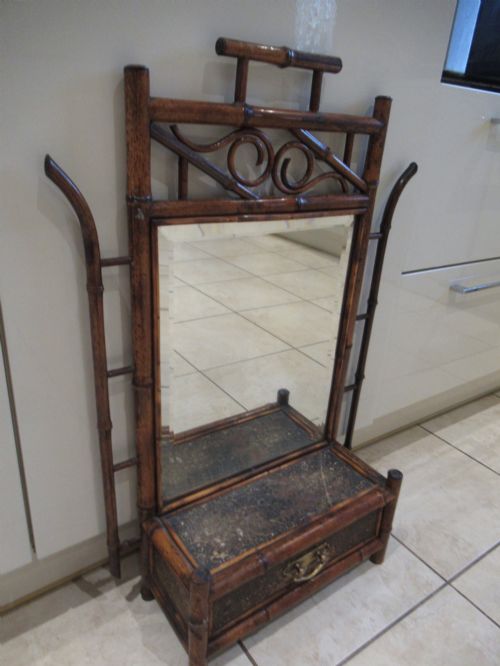
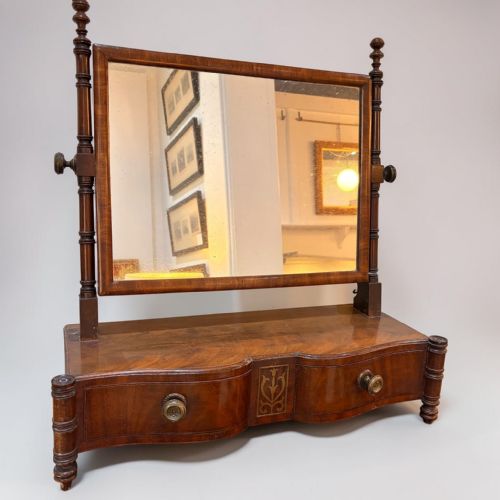
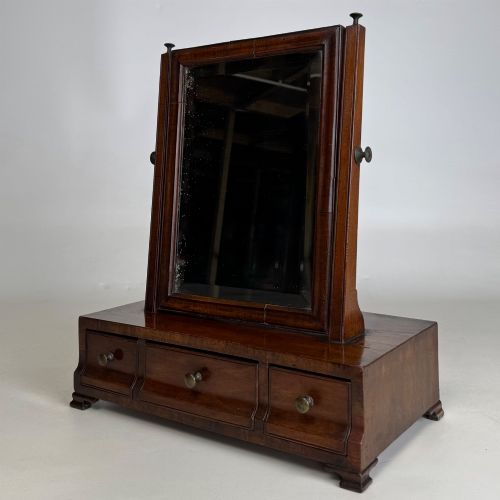
When you search for an antique drawer mirror, you encounter a specialised form of bedroom furniture designed to sit upon a chest, table or dressing surface for grooming and personal use. These pieces combine a movable plate within upright arms with a box base housing one, two or three small compartments.
The most common examples on this page date from the Georgian, Regency and Victorian periods, executed primarily in rich timbers with brass mounts and swing adjustments. They vary from plain, utilitarian boxes to serpentine or crossbanded designs of considerable refinement.
How they were made
Cabinetmakers constructed the supportive bases of these mirrors using durable hardwoods such as mahogany, walnut and oak, frequently employing secondary timbers like pine for internal linings and drawer sides. Surfaces often display fine decorative techniques including crossbanding, inlay and figural veneers.
The mirror plates themselves utilise glass set into pivoted frames held by turned uprights and secured with brass screw caps or pins, allowing the user to tilt the angle of reflection.
What varies in quality
The standard of a piece rests heavily on the choice of timber, where tightly figured mahogany or burr walnut elevates the visual weight of the base. Cabinetmaking details, such as hand-cut dovetails on the internal drawers and delicate ogee bracket feet, separate superior examples from simpler utilitarian workshops.
Proportion also defines the hierarchy, with finer items maintaining a balanced relationship between the height of the swing frame and the depth of the drawer box below.
Heal & Sons·Maple & Co·George Walton
The Antique Drawer Mirror Glossary
- Toilet mirror
- A smaller tabletop glass traditionally used for personal grooming and ablutions. These items sit upon dressing tables or chests rather than standing independently on the floor.
- Swing mirror
- A looking glass hung on pivoted side screws that allows the user to adjust the viewing angle. The mechanism relies on threaded brass caps or wooden side pins.
- Crossbanding
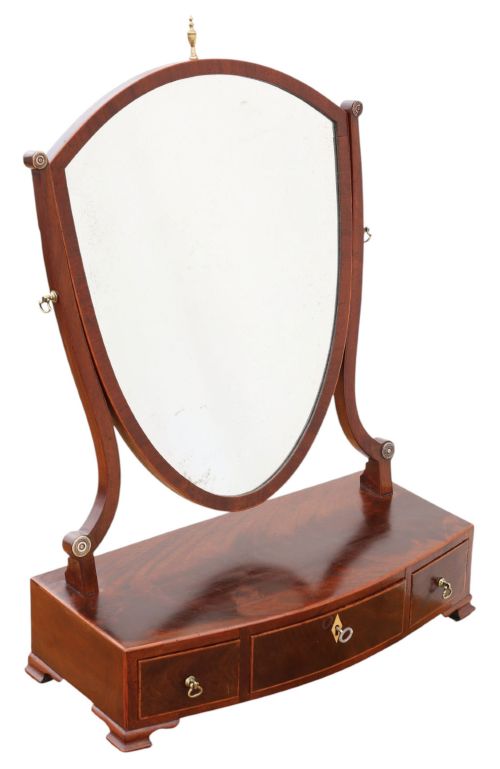
- A decorative border technique where thin strips of veneer are laid across the grain of the primary wood. This method frames the drawer fronts and top surfaces of finer Georgian and Regency examples.
- Shield mirror
- A glass shaped in the curved outline of a heraldic shield. Popular in the eighteenth century, this form softens the rectilinear lines of the supporting base box.
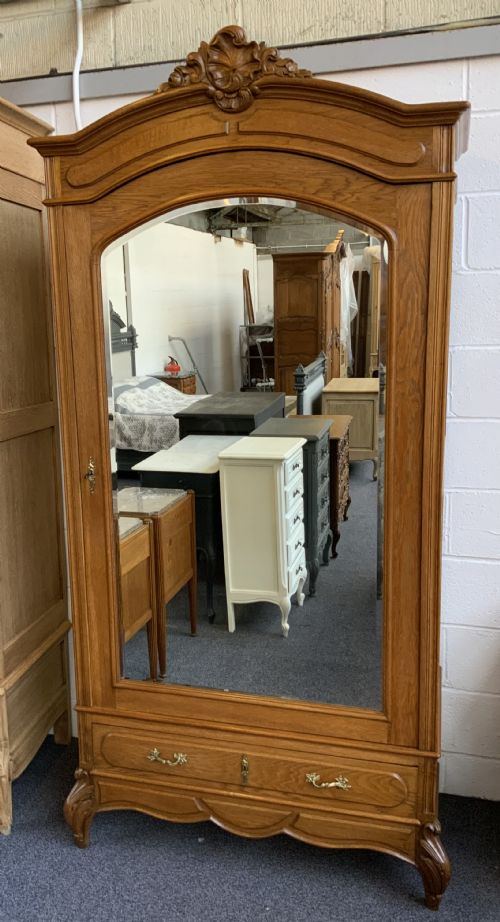
- Compactum
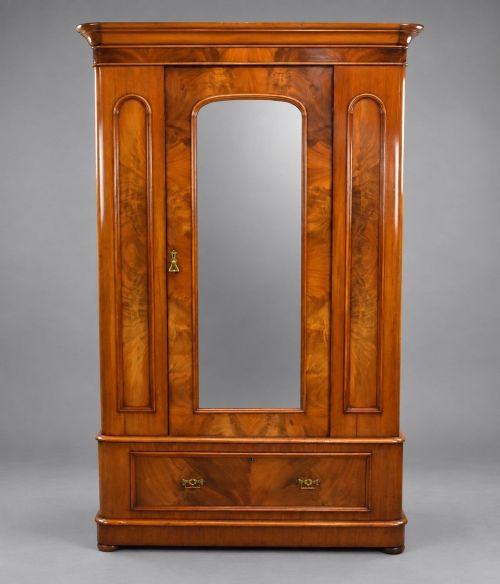
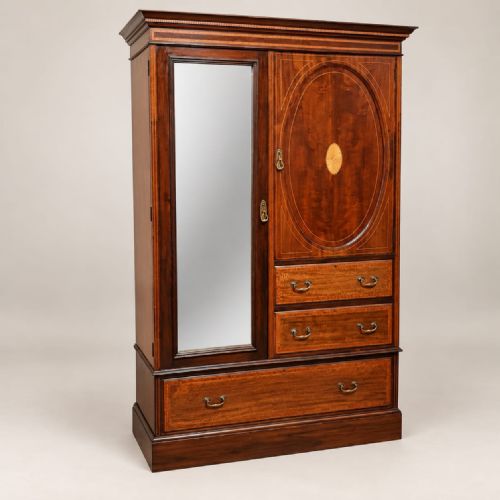
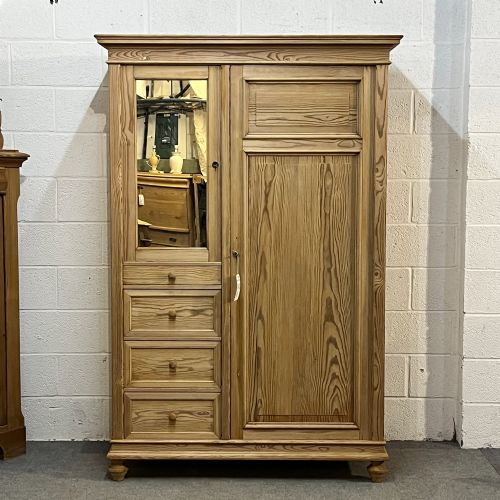
- A large fitted wardrobe combining hanging space, shelving and integrated drawers. Some iterations incorporate central mirrored doors and dressing compartments.
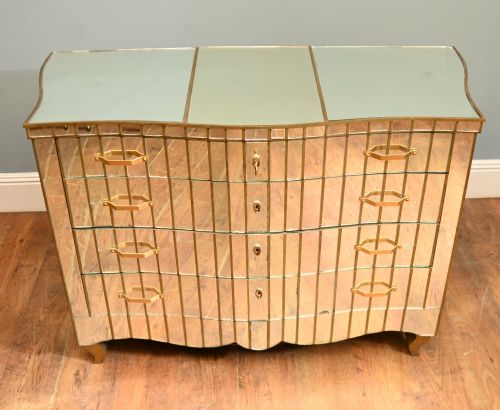
- Serpentine
- A gently undulating curved front line found on superior drawer bases. This shape requires advanced woodworking skill to cut and fit accurately.
Antique Drawer Mirror: Frequently Asked Questions
What is a drawer mirror used for?
These pieces served as functional dressing accessories in bedrooms and dressing rooms, providing a clear reflection for shaving and styling hair while keeping small personal items organised in the base.
The integrated compartments held cosmetics, jewellery, letters or grooming tools close to hand during morning routines.
How do I date an antique mirror?
Dating relies on observing the timber species, construction methods of the drawers, and the shape of the mirror plate frame. Georgian examples often feature slender uprights and mahogany ogee feet, whereas Victorian pieces tend to be heavier with rounder mouldings.
The backing boards, screw types and secondary timbers inside the drawers further clarify the period of manufacture.
Where should I place it?
An antique drawer mirror sits comfortably upon a sturdy chest of drawers, a side table, or a dedicated dressing surface in a bedroom or hallway. Because the base is relatively shallow, it requires only a modest surface depth.
Position the piece near a natural light source to make best use of the tilting glass for daily grooming.
Are the mirror plates original?
Many surviving examples retain their original mercury or early silvered glass, which often exhibits characteristic light foxing, minor spots and soft oxidation around the edges. Replacement plates do appear and typically present a much brighter, flawless reflection.
Examining the silvering and the way the glass sits within the rebate helps determine if the plate has been changed over time.