


Antique Drawer Base Table
An antique drawer base table brings domestic utility and sturdy carpentry from earlier centuries into modern rooms.
Antique Drawer Base Table
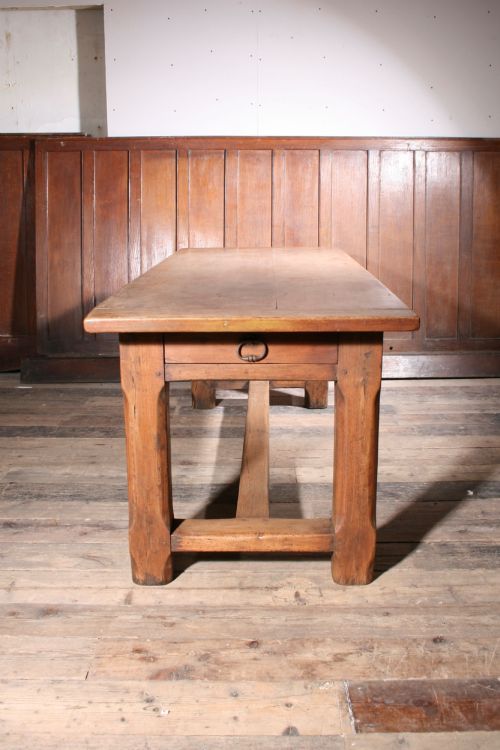
An antique drawer base table combines surface workspace with storage drawers beneath, frequently seen in forms like oak dresser bases and lowboy side tables. These pieces originate across the seventeenth, eighteenth, and nineteenth centuries, alongside later revival styles from the Edwardian era and the nineteen-twenties.
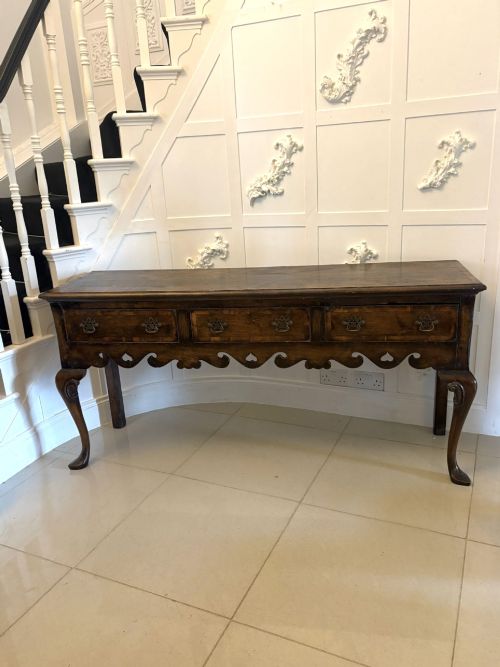
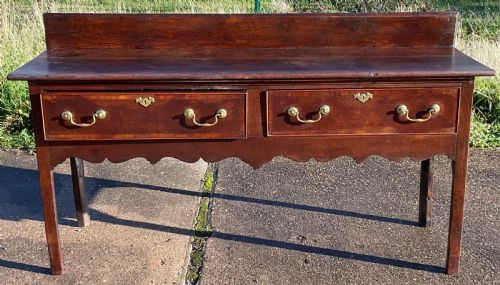
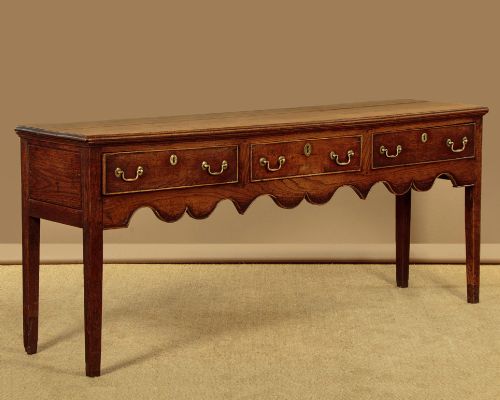
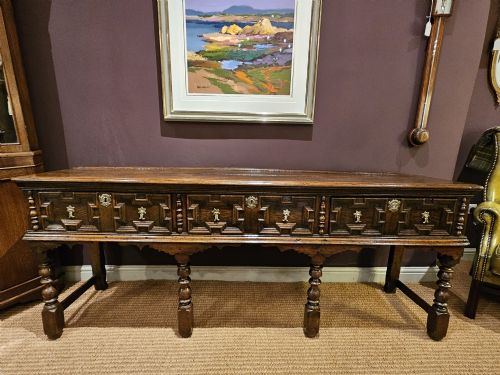
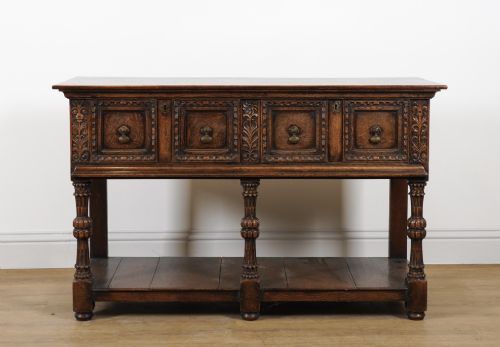
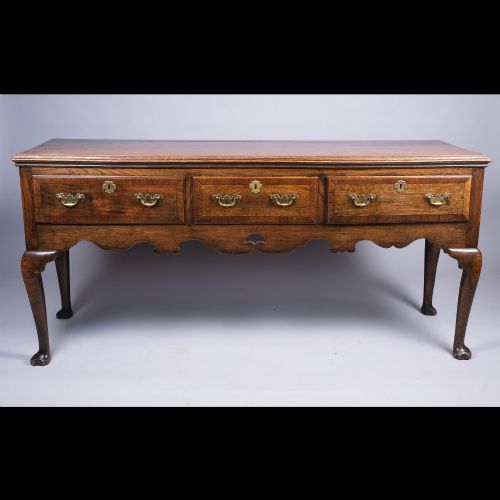
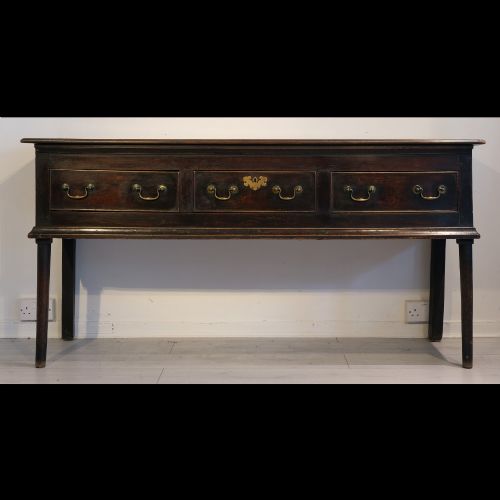
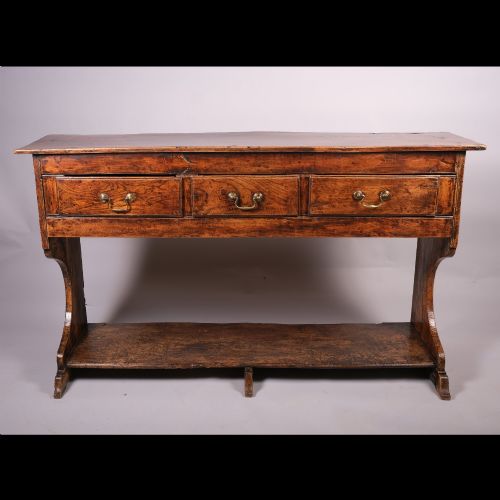
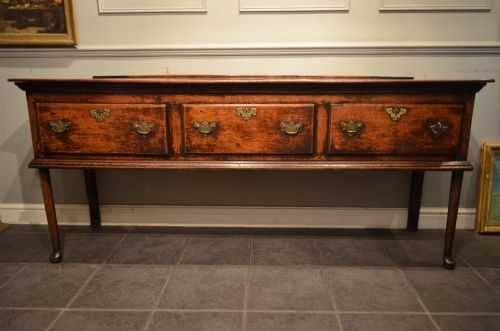
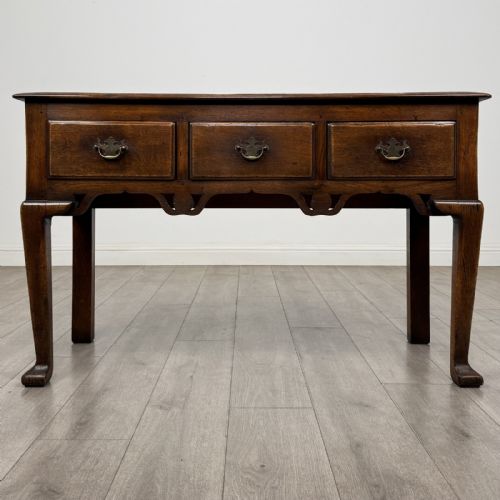
The version most commonly met on this page is the oak dresser base from the Georgian period or the eighteenth century, often fitted with multiple drawers and sometimes an open pot board beneath. Surviving examples reflect regional English or country house workshops, utilising hardwoods like oak, walnut, and elm alongside pine and chestnut.
Beyond standard dresser bases, the inventory spans related side tables, lowboys, and serving tables that share the characteristic drawer construction and low-profile framework. These utilitarian forms served kitchens, dining rooms, and parlours, evolving from plain vernacular pieces to more refined walnut or mahogany designs.
How they were made
Carpenters constructed these tables predominantly using native timbers, with oak, elm, and pine forming the structural carcasses of earlier vernacular pieces, while walnut and mahogany appeared in more formal Georgian and later designs. Boards were joined using traditional methods, evident in plank tops, twin plank chestnut surfaces, and geometric mouldings.
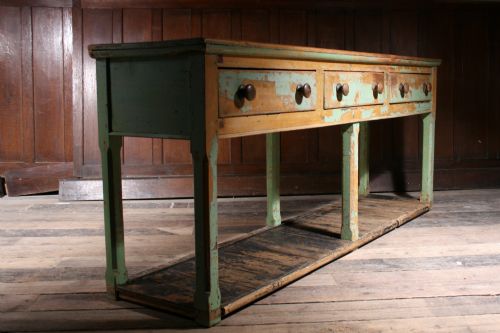
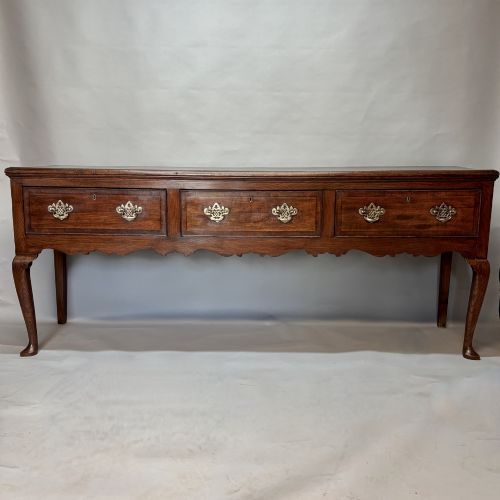
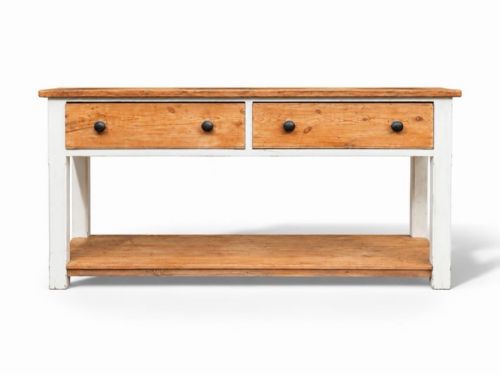
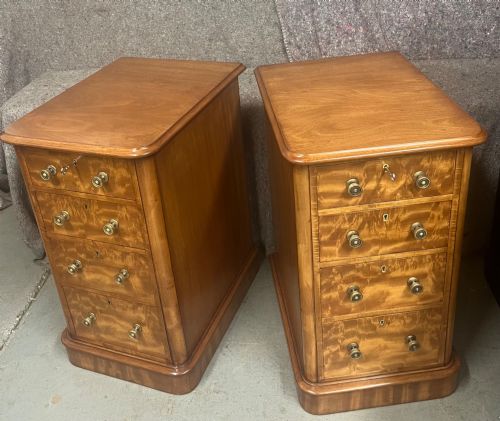
Drawer construction relied on hand-cut joints and timber linings, paired with brass handles, escutcheons, and occasional inlaid details. Surface finishes ranged from plain waxed oak and figured walnut to painted treatments on pine and potboard dresser bases.
Antique Drawer Base Table Retail Price Guide 2026
Typical asking prices for drawer base table among the pieces listed under this phrase on Sellingantiques today, from the lower quarter to the upper quarter. They describe what is for sale here now, not the wider market.
Listings feature oak, mahogany, walnut, pine, elm, chestnut, glass, and paint across periods spanning the seventeenth century to the nineteen-twenties.
What varies in quality
The degree of alteration also distinguishes the range, as many pieces underwent surface stripping, repainting, or structural repairs over centuries of domestic use. Untouched vernacular surfaces and period-correct timber patination separate standard utility items from finer country house specimens.
The Antique Drawer Base Table Glossary
- Pot board
- A low lower shelf fitted between the legs of a dresser base, traditionally used for storing pots and domestic vessels. It sits parallel to the floor, raised on feet or integrated into the stretcher framework.
- Lowboy
- A small oak or walnut table with one or more rows of drawers, standing on relatively tall legs. These pieces functioned as dressing tables or side tables in eighteenth-century interiors.
- Cabriole leg
- A furniture leg that curves outward at the knee and tapers inward at the ankle, ending in a pad or foot. This style appeared frequently on eighteenth-century and revival period drawer bases.
- Geometric moulding
- Raised wooden mouldings applied to drawer fronts in symmetrical patterns, characteristic of seventeenth-century and early eighteenth-century joinery. They added decorative relief to otherwise plain timber surfaces.
- Twin plank
- A tabletop constructed from two wide boards joined side by side. This method appears on larger farmhouse tables and dresser bases where single wide boards were unavailable.
Antique Drawer Base Table: Frequently Asked Questions
What is an antique drawer base table?
An antique drawer base table is a heavy, utilitarian surface featuring one or more rows of drawers beneath the top, often associated with dresser bases and lowboys. These pieces originated primarily in kitchen and dining environments for food preparation and storage.
They combine a sturdy timber work surface with enclosed storage, distinguishing them from standard dining tables or desks. Surviving examples date mainly from the seventeenth through the nineteenth centuries.
How were these tables used originally?
In historical households, these tables served central roles in food preparation, serving meals, and storing household linens or utensils. The lower drawers held daily implements while the top surface accommodated heavy kitchen tasks.
Over time, refined versions moved from working kitchens into dining rooms and parlours to function as sideboards or serving tables. Their robust construction allowed them to withstand decades of heavy domestic labour.
How do I tell an 18th century piece from a later revival?
Eighteenth-century pieces display authentic timber shrinkage, hand-cut joinery marks, and natural patination accumulated through generations of use. Revival pieces from the Edwardian era or nineteen-twenties often use machine-cut elements and cleaner, uniform finishes.
Examining the drawer linings, backboards, and fastener types reveals the period of manufacture. Revival pieces frequently emulate earlier styles like Queen Anne or Jacobedan while retaining late-period construction traits.
Where should I place a drawer base table in a modern home?
A drawer base table fits well in a modern kitchen or dining room as a functioning sideboard, island alternative, or serving station. The surface provides ample space for display while the drawers offer practical concealed storage.
They also anchor long hallways or living rooms when paired with table lamps or mirrors. Their neutral timber tones allow them to anchor both contemporary and traditional interior schemes.