




Antique Dowry Coffer
An antique dowry coffer is a heavy storage chest meant for household linen and bridal gifts, built to last generations in family hands.
Antique Dowry Coffer
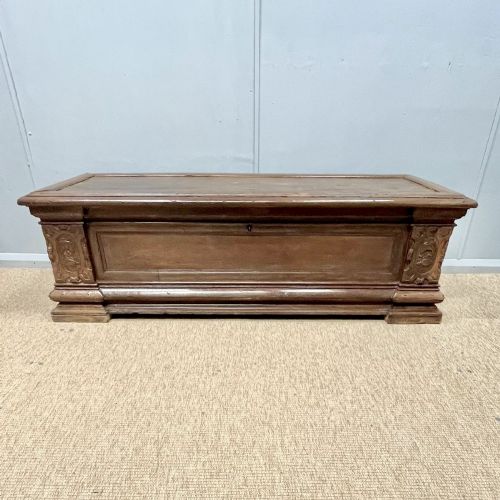
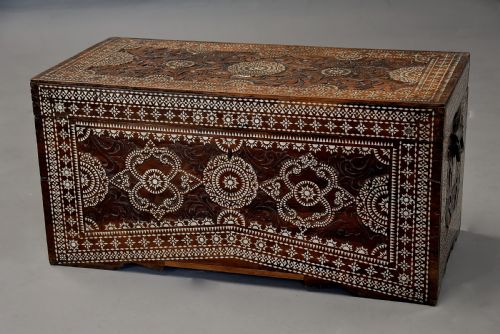
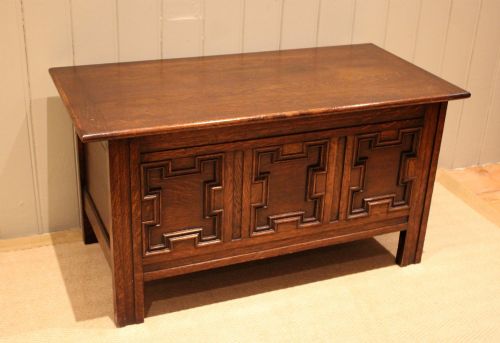
An antique dowry coffer serves as a traditional storage chest for bridal linen, household goods and family valuables. These pieces appear across various regional styles, from English oak to Indian teak and painted European pine.
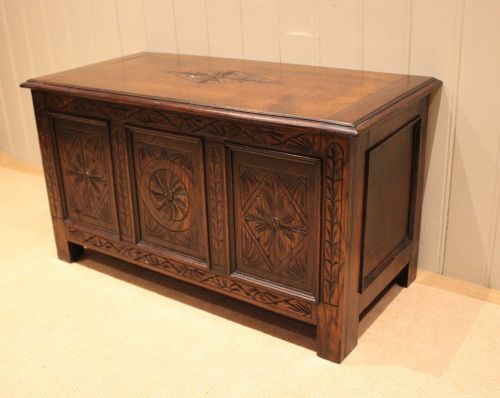
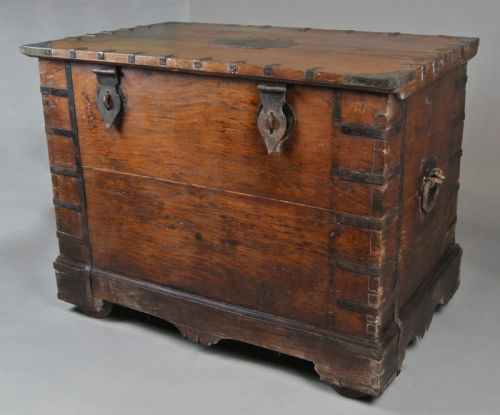
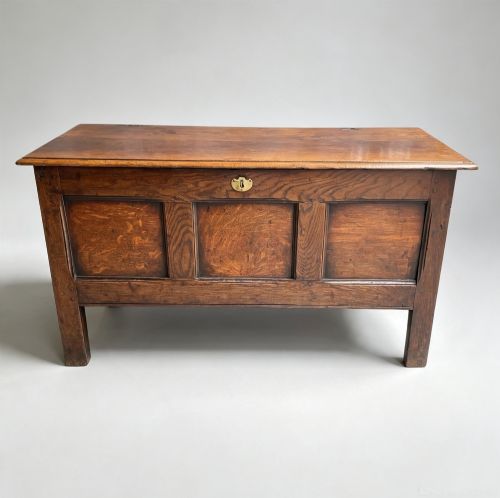
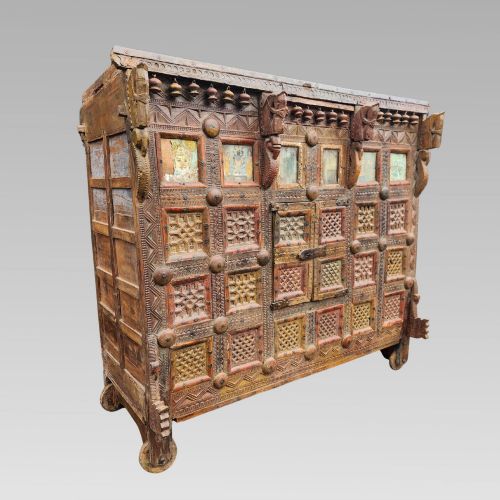
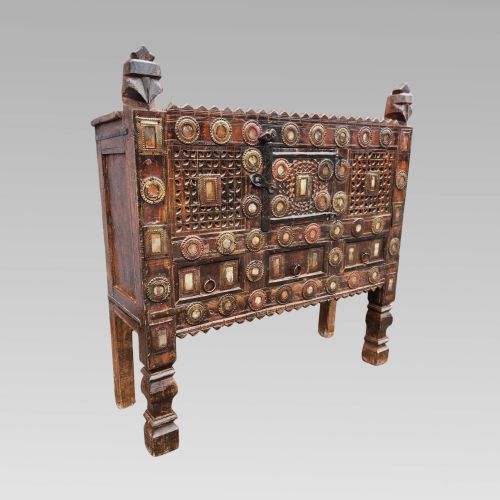
The most common examples on this page are sturdy oak coffers from the seventeenth and eighteenth centuries alongside nineteenth-century Indian damchiya chests and painted Scandinavian marriage boxes. Each regional variation reflects local marriage customs and available timbers.
Makers built these chests to travel with a bride to her new home or to remain as a central piece of furniture in the household. They function today as practical storage trunks and window seats.
Materials and construction
Wood selection depends heavily on region, with English examples utilising sturdy oak and mahogany, while overseas pieces rely on dense teak and local hardwoods. European folk art boxes employ soft pine as a smooth base for elaborate hand-painted decoration.
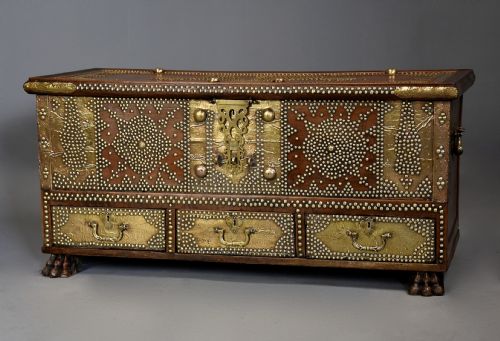
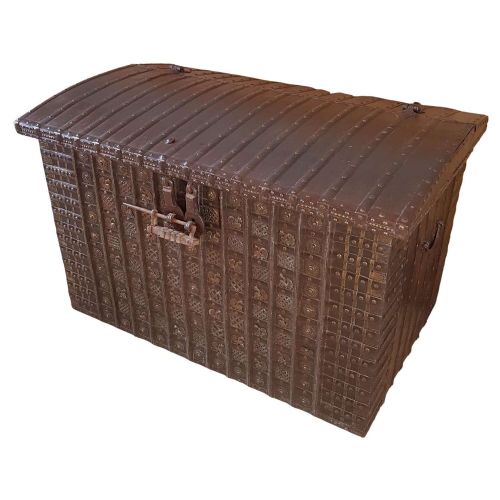
Metal fittings provide essential structural reinforcement and security. Heavy iron bands, brass studs and intricate locking mechanisms protect the contents of large storage chests from damage and theft.
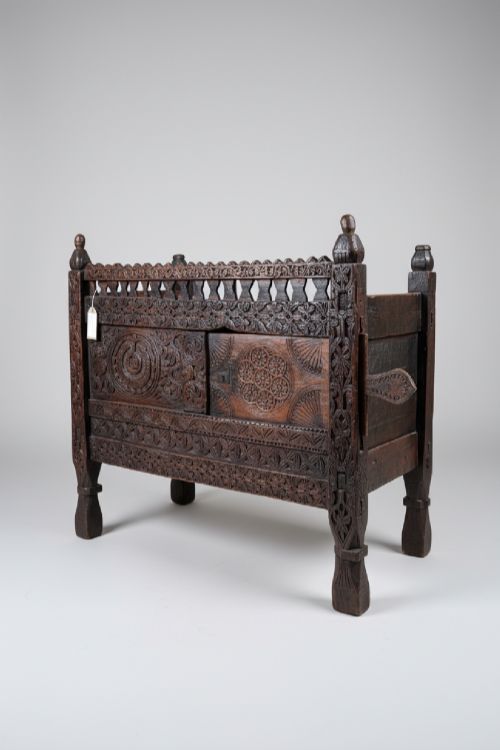
Surface treatment ranges from deep scratch-carving on early oak panels to colourful folk art paintwork and intricate mother-of-pearl inlay. These finishes define the character of each regional trunk.
Antique Dowry Coffer Retail Price Guide 2026
Typical asking prices for dowry coffer among the pieces listed under this phrase on Sellingantiques today, from the lower quarter to the upper quarter. They describe what is for sale here now, not the wider market.
Some nineteenth-century Indian marriage trunks include secret compartments designed to hide family gold from unexpected visitors.
Separating the ordinary from the exceptional
Quality rests primarily on the integrity of the timber and the depth of the craftsmanship. Deeply carved panels and original unblemished painted surfaces separate superior pieces from plain utilitarian boxes.
Survival of original hardware, including hinges, locks and iron banding, elevates the stature of a chest. Later replacements alter the historical character and diminish the integrity of the piece.
Proportion and scale dictate desirability, particularly in monumental marriage chests and large mule trunks fitted with lower drawers. Balanced proportions indicate a workshop of high capability.
The Antique Dowry Coffer Glossary
- Damchiya
- A traditional Indian dowry chest featuring heavy wooden construction, often adorned with iron banding and intricate carvings. These storage cabinets served a central role in regional marriage customs.
- Mule chest
- A storage chest fitted with one or more drawers beneath the main lift-top compartment. This form bridges the gap between the traditional coffer and the modern chest of drawers.
- Cassone
- An Italian Renaissance marriage chest designed to hold the bride's trousseau. These pieces frequently display elaborate painted or carved decoration.
- Scratch carving
- A simple decorative technique where designs are gouged directly into the wooden surface using a specialised tool. This method appears frequently on early oak coffers.
- Folk art
- Decorative work produced by traditional craftsmen rather than professional academic artists. In marriage chests, this includes naive painted motifs and regional floral patterns.
Antique Dowry Coffer: Frequently Asked Questions
What did families store inside an antique dowry coffer?
Families used these chests to store household linen, blankets, clothing and precious items collected for a bride's new household. The heavy wooden construction and secure locks protected valuable textiles from dampness and pests.
Over time, these trunks also served as general domestic storage for important family documents and silverware. Their sturdy flat lids meant they frequently doubled as benches or tables within the home.
How do I identify the age of an oak coffer?
Early oak coffers from the seventeenth century typically feature hand- split timber, pegged mortise and tenon joints, and scratch-carved or panelled fronts. Tool marks and handmade iron hinges provide clear physical evidence of early construction methods.
As manufacturing shifted towards the eighteenth and nineteenth centuries, timber preparation became more uniform and machine-sawn components began to appear. Comparing the construction methods of the carcass and lid helps narrow down the period of origin.
Where were painted marriage chests traditionally made?
Painted marriage chests appear widely across Scandinavian, Hungarian and Alpine regions during the eighteenth and nineteenth centuries. Local communities decorated these pine boxes with vibrant floral patterns and marriage dates to celebrate weddings.
These pieces reflect distinct regional folk art traditions rather than urban furniture styles. The original paintwork provides a direct record of local artistic customs and rural aesthetics.
How can I incorporate a large coffer into a modern room?
A large coffer functions well as a practical storage trunk at the foot of a bed or as a low window seat in a living space. The flat top provides a convenient surface for placing cushions, books or decorative objects.
Placing a heavy wooden chest against a hallway wall creates an immediate focal point while concealing bulky items like winter blankets. Their durable construction makes them suitable for daily household use.