


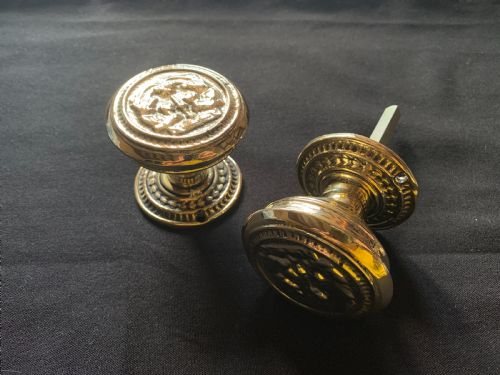


Antique Door Pull Knob
These antique door pull knob examples deliver immediate tactile presence to period interiors, offering substantial brass, bronze, steel, iron, ebony, and amber glass hardware.
Antique Door Pull Knob
An antique door pull knob represents functional architectural hardware designed for period entryways and interior doors. These fittings appear frequently in Victorian, Regency, Georgian, and Edwardian iterations.
The inventory on this page centres predominantly upon Victorian brass centre door knobs and Regency variations. Examples range from simple spherical forms to architectural centre pulls.
Buyers encounter specialised shapes including bee hive, octagonal, and ovular silhouettes. Materials extend from solid brass and bronze to ebony wood and amber glass.
How they were made
Metal components utilise cast brass and bronze, providing robust weight and durability for daily domestic usage. Iron and steel appear within supporting mechanisms or distinct utilitarian forms.
Organic and vitreous materials introduce contrasting textures through turned ebony wood and moulded amber glass. These substances reflect period manufacturing capabilities without relying on modern synthetic polymers.
Current listings encompass brass, bronze, steel, iron, ebony, and amber glass across Victorian, Regency, Georgian, and Edwardian periods.
What varies in quality
Distinction across the range lies in surface finish, casting crispness, and material density. Solid brass and heavy bronze exhibit superior handling weight compared to lighter alternatives.
Geometrical precision in faceted designs, such as octagonal or bee hive turning, dictates the refinement of the piece. The depth of moulding in amber glass and the hand-finished detail on ornate ebony wood further separate standard production from superior examples.
The Antique Door Pull Knob Glossary
- Centre door knob
- A stationary or functional pull mounted centrally on a door leaf rather than the edge. These pieces assist with pushing or pulling heavy timber doors.
- Bee hive
- A distinctive turning pattern featuring concentric stepped rings resembling a traditional skep. This profile provides tactile grip and decorative shadow lines.
- Octagonal
- A geometric eight-sided cross-section applied to metal or glass knobs. This shape catches light differently than a standard spherical profile.
- Ovular
- An elongated egg-like form utilised for specific period door furniture. The shape offers a comfortable grip for the hand during operation.
Antique Door Pull Knob: Frequently Asked Questions
Where do these door knobs go?
These fixtures mount directly onto the face of interior or exterior doors. Centre door knobs specifically operate as pull handles rather than latch-turning mechanisms.
They serve both residential and commercial buildings aiming to retain period architectural integrity.
How do I identify a Victorian knob?
Victorian examples frequently display heavier proportions and distinct profiles like the bee hive or octagonal shape. Materials often include cast brass, bronze, and occasionally ebony wood or amber glass.
Comparing the casting weight and surface finish helps distinguish them from later reproductions.
Are these hardware pieces functional?
Most items function as solid pulls or operational door furniture for traditional doors. They withstand regular daily handling when correctly installed with compatible spindle mechanisms.
Buyers should verify the fixing method matches their specific door thickness and mounting requirements.
What materials are most common?
Brass and bronze dominate the available selection across multiple historical periods. Solid brass offers a traditional bright or patinated metallic surface.
Alternative materials like iron, steel, ebony wood, and amber glass provide varied textural contrasts for specific interior schemes.