


Antique Dog Collar
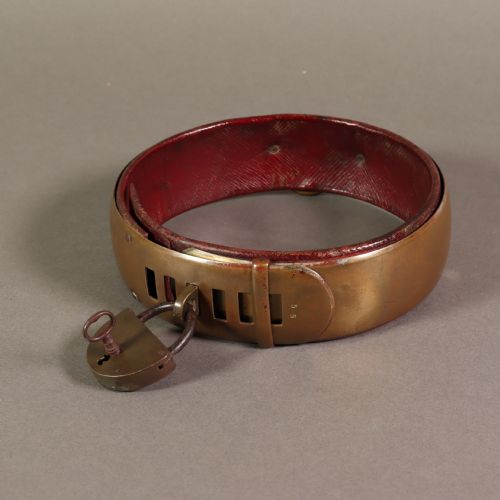
An antique dog collar carries the weight of past companionship, fashioned from heavy leather and gleaming brass or silver to mark a prized hound.
Antique Dog Collar
When searching for an antique dog collar, buyers encounter robust pieces of canine history spanning the nineteenth century and the Edwardian era. The selection ranges from sturdy working examples to ornate decorative pieces.
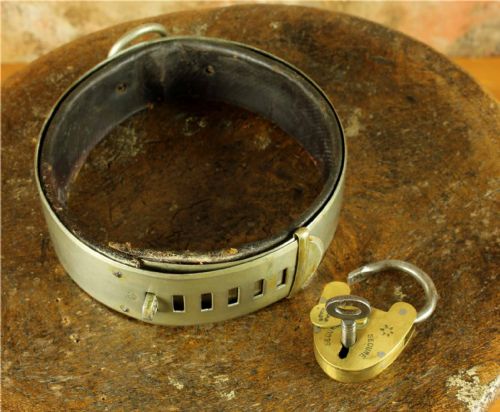
Leather and metal dominate the forms available here, often accompanied by original brass padlocks, bells, and engraved nameplates. French and English examples appear regularly, reflecting distinct regional styles of manufacture.
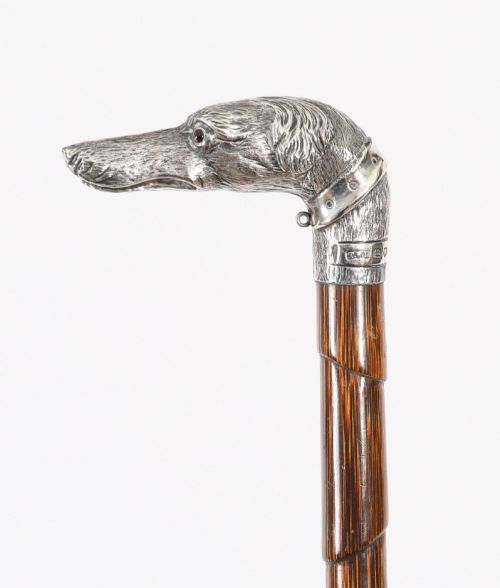
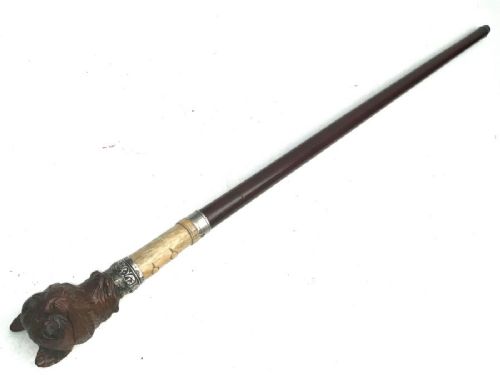
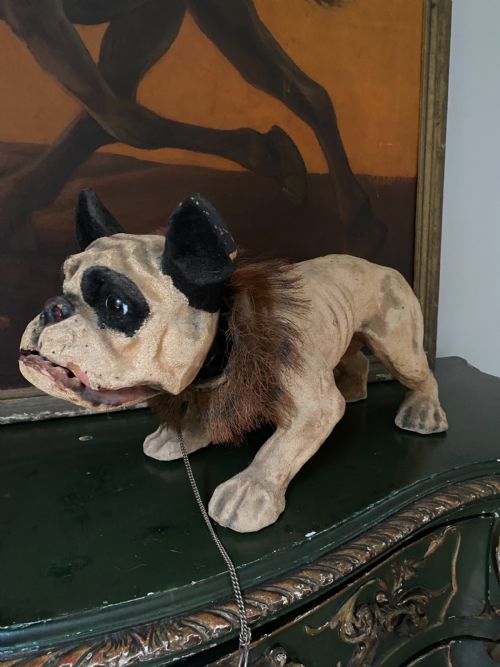
Beyond actual collars, the category encompasses related pet antiques including bronze poodle models, Staffordshire figures, and walking sticks topped with canine carvings.
Materials and construction
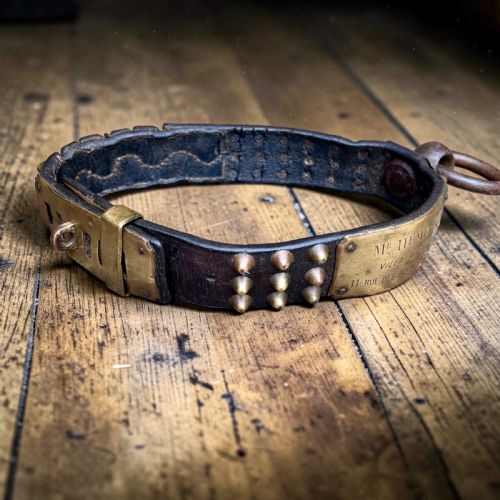
Makers utilised thick, durable leather as the primary foundation for many collars, applying metal stud detailing for strength and decoration. Brass, silver plate, nickel, and white metal formed the padlocks, plates, and bells attached to the leather bands.
Casting and engraving techniques shaped the solid brass and bronze components, with craftsmen chiselling names and decorative motifs directly into the metal surface.
Periods represented span the early nineteenth century through to the Edwardian era and nineteen-ten.
Judging the work
Quality rests in the integrity of the materials and the crispness of the metalwork, distinguishing utilitarian items from bespoke commissions. Heavy-gauge brass, substantial silver plating, and supple yet enduring leather indicate superior initial manufacture.
The presence of original hardware such as working padlocks, intact bells, and distinct engraved nameplates elevates an example above stripped or heavily altered pieces.
The Antique Dog Collar Glossary
- Padlock
- A detachable lock used to secure the collar around the animal's neck. These often retain their original miniature keys or mechanism.
- Nameplate
- A small plaque affixed to the collar, typically engraved with the dog's name or the owner's address. They provide a direct historical link to the original owner.
- Stud detailing
- Small metal brads hammered into the leather surface in geometric patterns. This technique added structural rigidity and visual decoration.
- White metal
- An alloy of various low-melting-point metals used as a cheaper alternative to silver. It provides a bright, silvery finish seen on Edwardian examples.
Antique Dog Collar: Frequently Asked Questions
How were antique dog collars used?
These collars secured working and companion animals, often indicating ownership, status, or registration through attached brass plates and padlocks.
Heavier specimens served larger sporting hounds, while smaller polished versions belonged to lapdogs and household pets of the nineteenth century.
Are original padlocks common?
Many surviving collars retain their original padlocks, though some have been separated from their bands over the decades.
Matching padlocks complete the piece and add significantly to the historical integrity of the collar.
How do I date an antique collar?
Dating relies on the materials used, such as nickel plating emerging later in the nineteenth century alongside traditional brass and leather.
Stylistic cues in the engraving and the presence of hallmarks or maker stamps help narrow the period of origin.
How should I display a dog collar?
Collars look striking mounted on custom acrylic stands or framed within shadow boxes to highlight the metalwork and leather texture.
Keeping them away from direct sunlight and excessive humidity preserves the organic material of the leather.