
Antique Display Rack
An antique display rack organises books, plates and domestic objects on timber shelves or metal frames.
Antique Display Rack
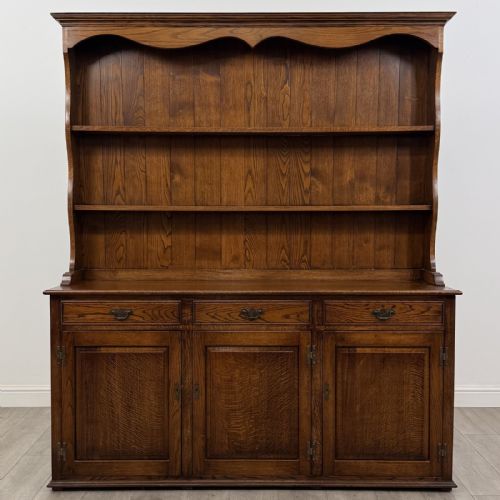
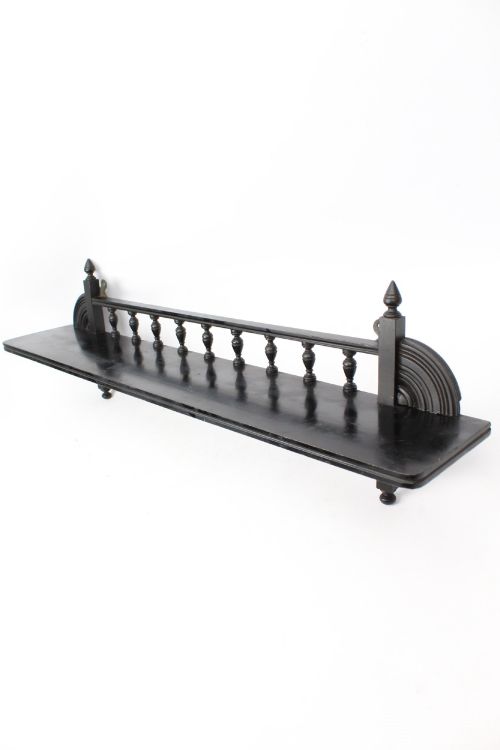
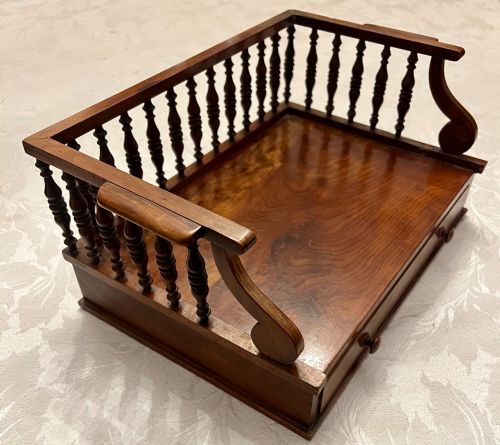
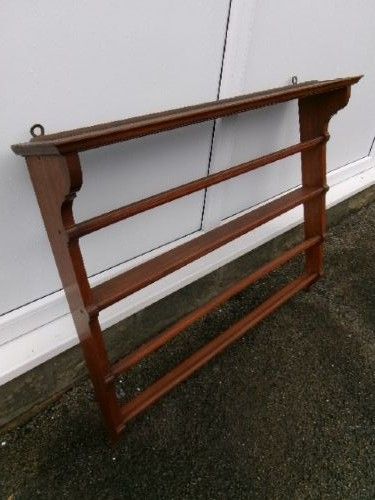
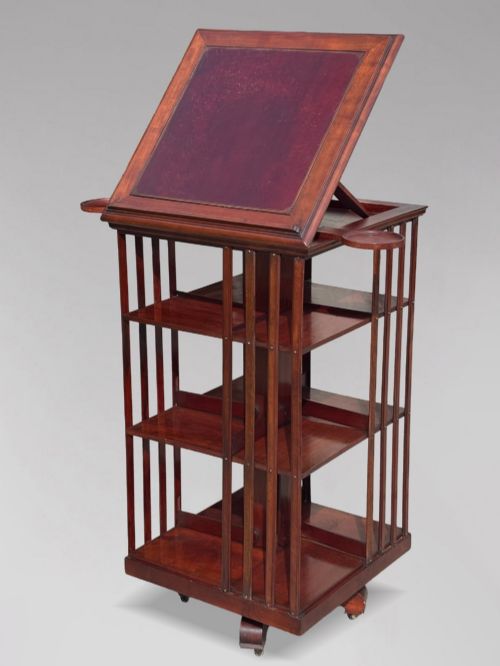
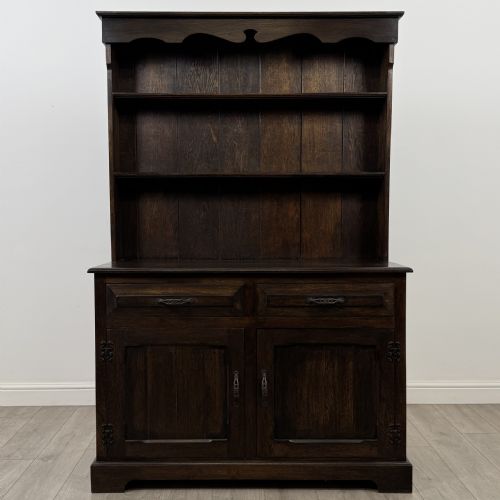
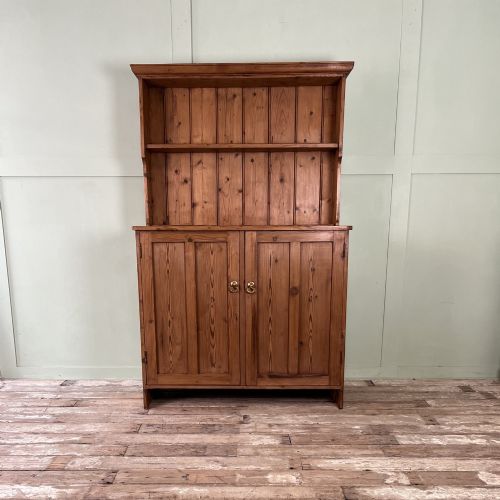
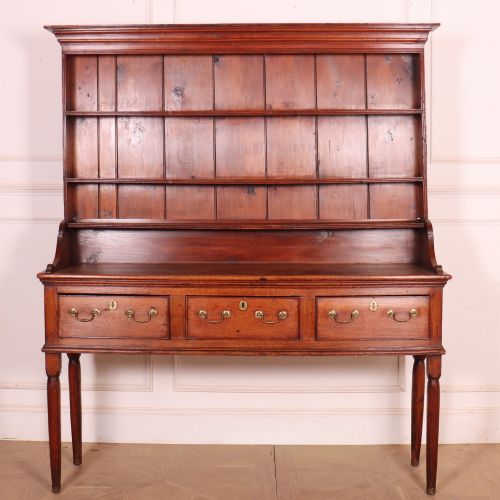
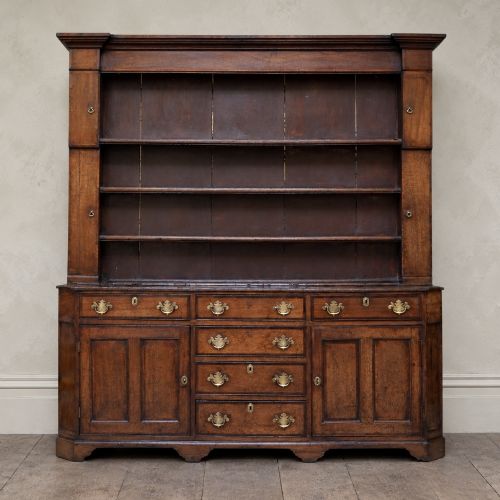
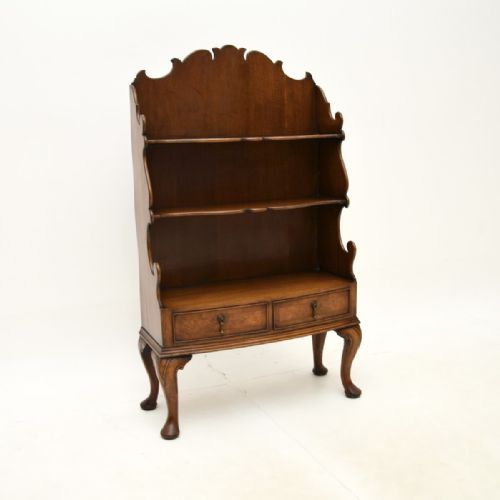
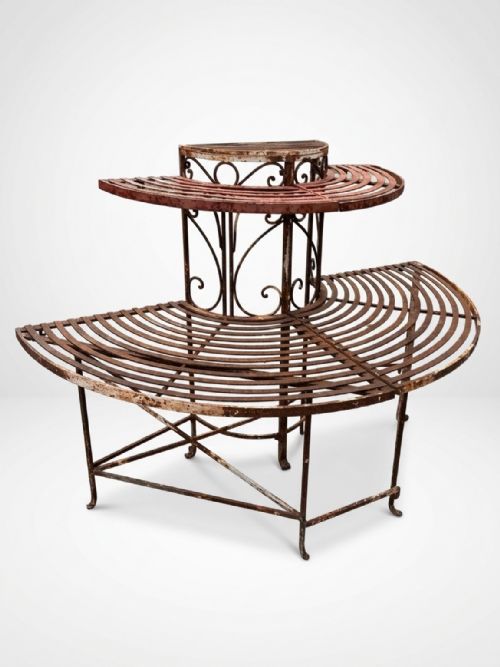
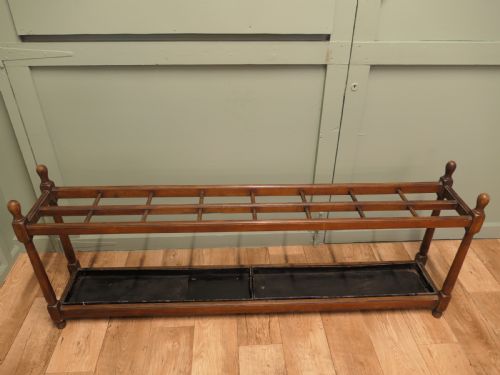
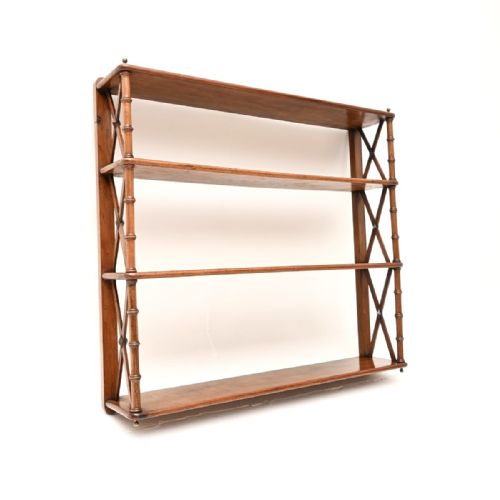
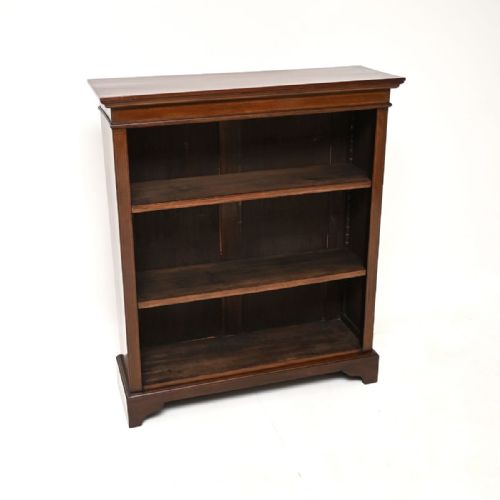
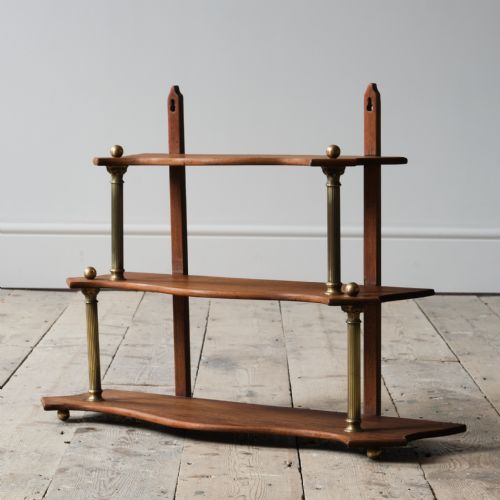
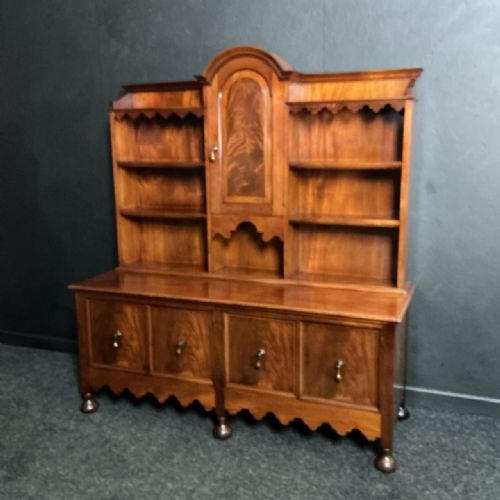
An antique display rack serves to hold and present books, ceramics, plants and household items in a room. The items on this page span several centuries and include wall-hanging shelves, open bookcases, plate racks, dressers, whatnots and specialised stands.
Buyers meet variations ranging from compact mahogany wall shelves and walnut bookcases to large oak Welsh dressers and iron baker's racks. The forms reflect domestic and commercial storage needs from the eighteenth century through the Edwardian era.
Originating largely from British and French workshops, these pieces utilise traditional forms to display possessions openly. Oak, mahogany, pine and walnut dominate the selection, shaped into functional furniture for kitchens, libraries and halls.
How they were made
Joinery relies heavily on solid timber construction using oak, mahogany, walnut and pine, often enhanced by crossbanding, inlay or burr walnut veneers. Iron and brass appear in structural frames, hanging brackets and plant or towel stands.
Craftsmen built these display pieces with dovetailed joints, pegged frames and turned supports, applying wax or polish to finish the wood surfaces. Metal racks utilise forged iron and cast brass components to sustain heavier utilitarian loads.
Listings feature timbers including oak, mahogany, pine, walnut and wrought iron across the eighteenth, nineteenth and twentieth centuries.
What varies in quality
Distinction across the range depends on the selection of timber veneers, the precision of inlay work and the integrity of the original structural joints. Finer examples display balanced proportions, select grain figures and thoughtful decorative mouldings.
Utility pieces such as pine dressers or kitchen racks demonstrate robust vernacular construction, whereas formal bookcases and inlaid mahogany shelves exhibit refined cabinetmaking techniques tailored for polite rooms.
Dubois of Lyon·Gillows
The Antique Display Rack Glossary
- Plate rack
- A wall-mounted or dresser-integrated tier designed to hold dining plates upright. These fixtures display ceramics safely while keeping them accessible.
- Whatnot
- A multi-tiered open piece of furniture used for displaying ornaments and small objects. These stands became popular in the Victorian period for parlor rooms.
- Welsh dresser
- A large kitchen or dining room unit combining lower cupboards with upper open shelves. The upper section functions as an open display rack for serving ware.
- Crossbanding
- A decorative border technique where veneer strips are laid perpendicular to the grain of the central panel. This detail frames drawer fronts and cabinet tops on Georgian and later pieces.
- Gallery
- A raised raised rim or railing along the edge of a shelf or top surface. It prevents items from sliding off display tiers.
Antique Display Rack: Frequently Asked Questions
What is an antique display rack?
An antique display rack is a piece of furniture designed to hold and exhibit items like books, plates, and ornaments openly.
These pieces range from wall-mounted wooden shelves to large freestanding dressers and iron baker's racks.
How were antique dressers used?
Antique dressers served as functional kitchen and dining room storage for everyday tableware and food preparation.
The lower cupboards held provisions while the upper racks displayed ceramic plates and platters.
Where should I place wall shelves?
Wall-hanging shelves fit well in kitchens for displaying crockery, or in studies and living rooms for books and small collections.
Securing them properly to wall studs ensures they safely support the weight of timber and stored items.
How do I identify Victorian bookcases?
Victorian bookcases often feature dark timbers like mahogany or burr walnut, alongside carved decorative motifs and adjustable shelving.
They reflect the period's preference for heavier proportions and rich wood grains in domestic libraries.