

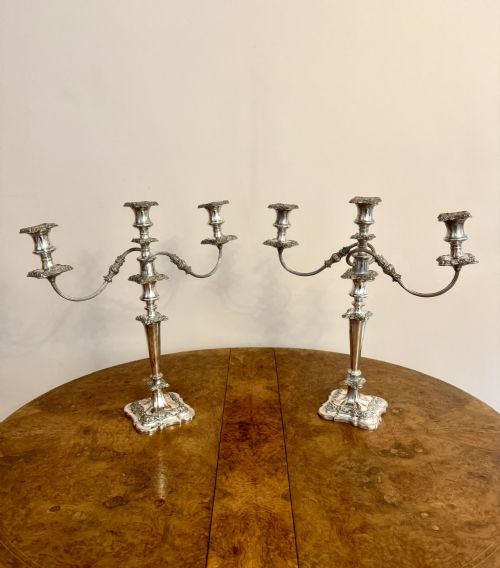
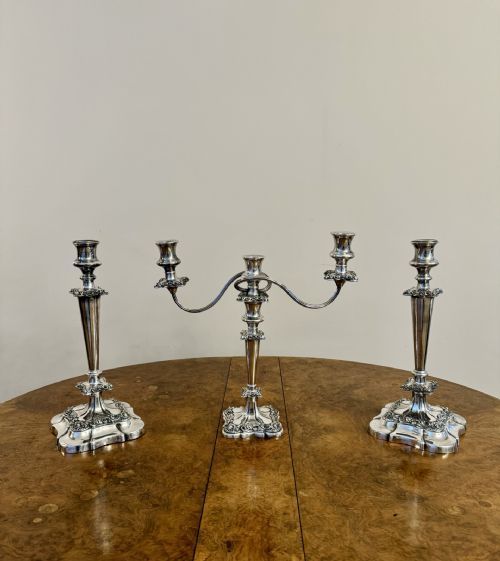


Antique Dining Candelabra
Antique dining candelabra bring height and soft illumination to a table, most often appearing as silver plated Victorian or Edwardian pairs.
Antique Dining Candelabra
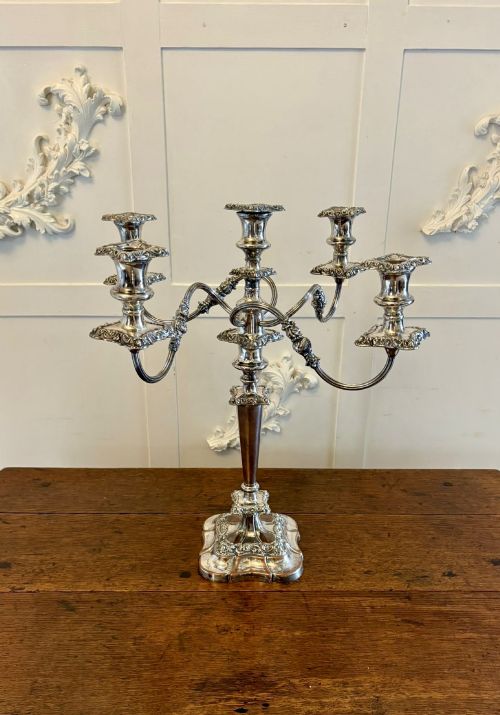
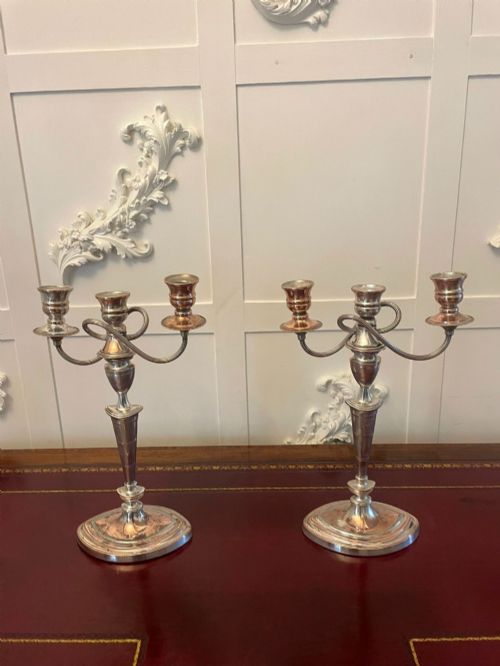
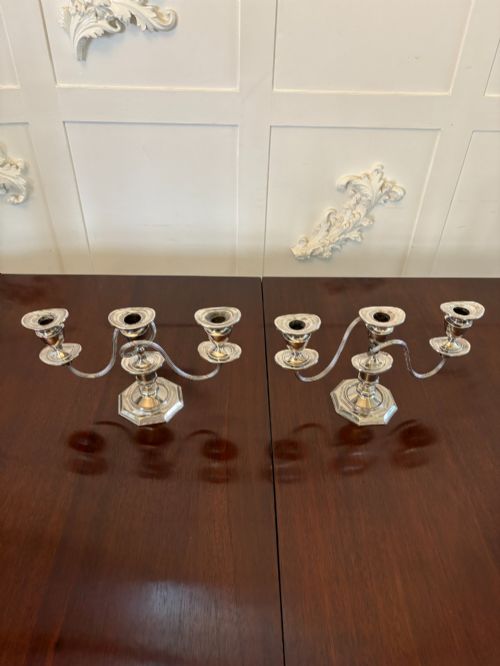
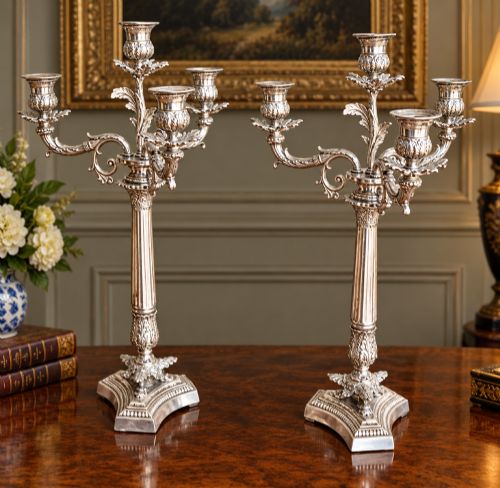
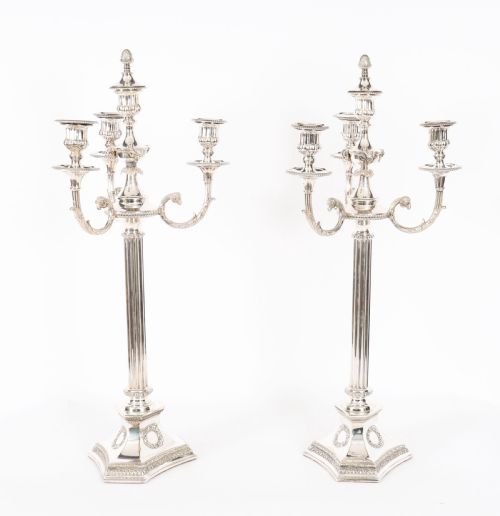
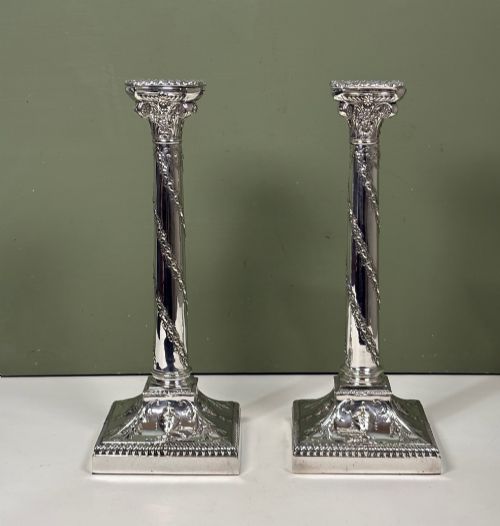
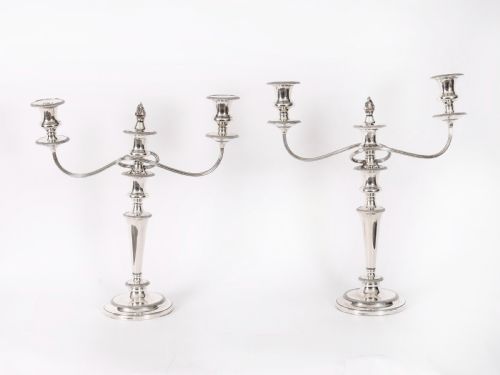
When you search for antique dining candelabra, you find table lights designed to hold multiple candles upon a central shaft and branch arms. The pieces on this page span the nineteenth and twentieth centuries, taking the form of candelabra, convertible candlesticks and larger table centrepieces.
Victorian and Edwardian examples dominate the selection, frequently formed as matched pairs in silver plate or sterling silver. Styles range from restrained Georgian revival patterns to heavily ornamented Victorian rococo revival and classical forms.
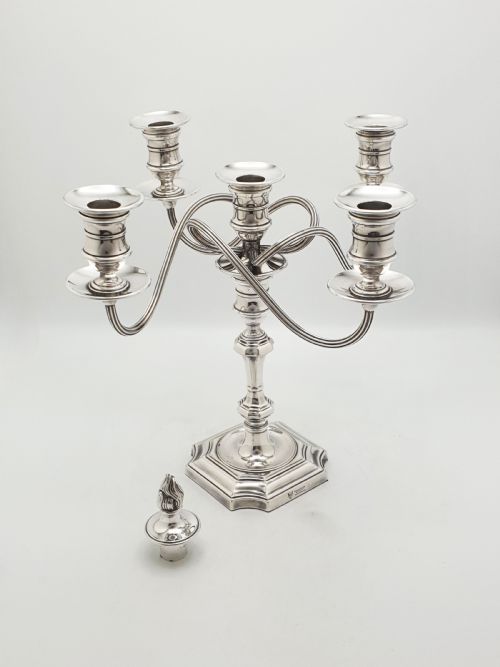
Branch counts typically vary between two and five lights, sometimes featuring detachable sconces or figural elements such as cherubs. Lower two-branch table versions and grand thirty-inch Sheffield plate pairs represent the extremes of scale available.
Materials and manufacturing methods
Makers constructed these pieces primarily from silver plate, Old Sheffield plate, electroplated nickel silver and sterling silver, supported by base metal, copper or brass beneath the precious metal surface. Glass also appears in specific Edwardian branch configurations.
Silversmiths utilised casting and plating techniques to build heavy structural components and decorative branch arms, often mounting detachable drip pans and sconces for ease of cleaning.
The application of silver plating over copper or base metal allowed workshops to produce substantial dining table pieces that carried the visual weight of solid silver at a different scale of production.
Antique Dining Candelabra Retail Price Guide 2026
Typical asking prices for dining candelabra among the pieces listed under this phrase on Sellingantiques today, from the lower quarter to the upper quarter. They describe what is for sale here now, not the wider market.
The selection includes both single candelabra and matched pairs, alongside convertible candlesticks and multi-piece table suites.
Assessing quality and craftsmanship
Quality rests in the crispness of cast ornamentation and the balance of the branch arms when fully assembled on the table. Heavier gauge metalwork and substantial proportions distinguish the finer pairs from lighter commercial production.
The integrity of the plating layer and the weight of the base metal dictate the longevity of the piece, particularly where screw threads join the stem to the weighted base. Maker marks from established silversmiths provide further indication of workshop standards.
Garrard & Co·Smith & Sissons & Co·Elkington·Blagden, Hodgson & Co
The Antique Dining Candelabra Glossary
- Candelabra
- A branched candlestick holding multiple lights on a central stem. These pieces sit upon dining tables to provide ambient illumination.
- Sconce
- The small cup at the top of a branch that holds the candle in place. Detachable versions allow easier removal of wax drippings.
- Sheffield Plate
- An early fusing technique where a sheet of silver is fused to a copper core. This method produced durable tableware before electroplating became common.
- Electroplated Nickel Silver
- A base metal alloy of copper, nickel and zinc coated with a layer of silver using an electrical current. It serves as the foundation for many nineteenth-century table pieces.
- Centrepiece
- A large decorative item placed in the middle of a dining table. Candelabra often form the central element of a larger silver service suite.
Antique Dining Candelabra: Frequently Asked Questions
How do I clean an antique silver plated candelabra?
Clean silver plate gently using a specialised silver polish and a soft cloth to avoid wearing through the thin plating layer to the base metal underneath. Wash away wax residue with warm water rather than scraping with metal tools.
Store the pieces in a dry environment and handle them by the stem or base to minimise fingerprint tarnishing on the branches and sconces.
Can I use modern candles in antique candelabra?
Most antique sockets accommodate standard taper candles, though slight variations in nineteenth-century sizing mean you may need to pare down the base of the candle for a secure fit.
Ensure candles sit upright in the sconce and use drip pans to protect the silver arms from melting wax.
How do I date an antique dining candelabra?
Dating relies on stylistic clues such as neoclassical motifs, Victorian rococo revival scrolls, or cleaner twentieth-century art deco lines, alongside any stamped maker marks or hallmarks.
Materials also offer evidence, as Old Sheffield plate predates the widespread adoption of electroplated nickel silver from the mid-nineteenth century onwards.