


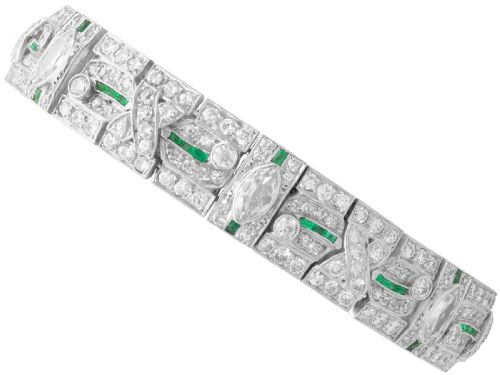


Antique Diamond Cuff Bracelet
An antique diamond cuff bracelet brings substantial wrist presence, combining precious gemstones with enduring platinum and gold settings.
Antique Diamond Cuff Bracelet
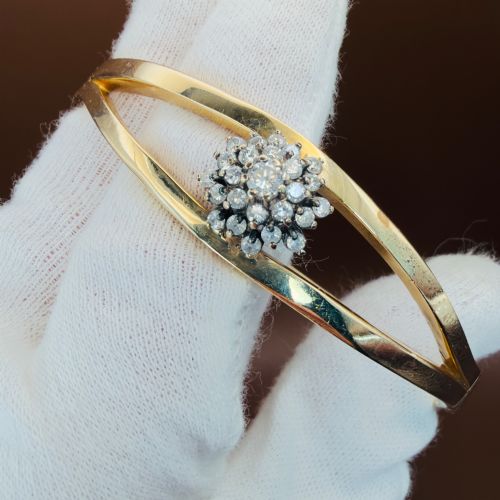
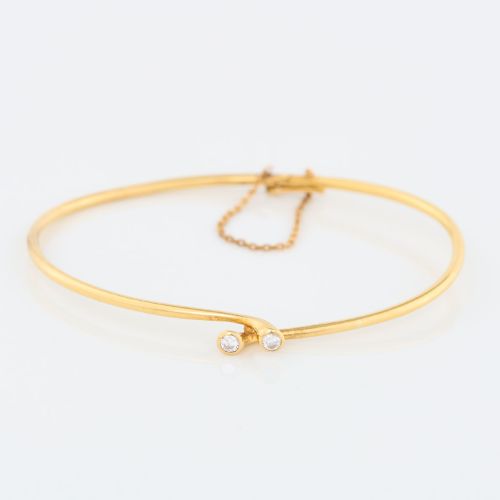
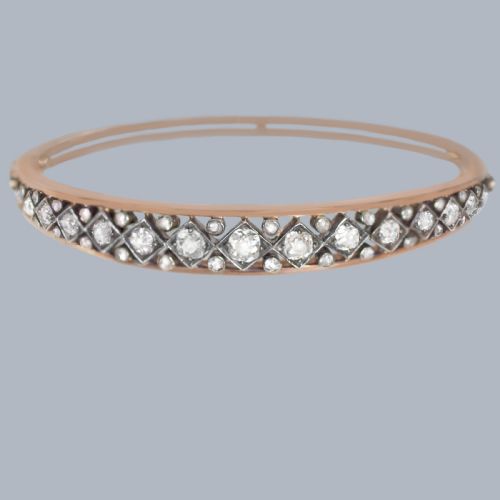
An antique diamond cuff bracelet comprises hinged bangles and wide flexible bands designed to encircle the wrist securely. These pieces span multiple eras, encompassing Victorian floral motifs, Edwardian grace, Art Deco geometric symmetry, and mid-century statements.
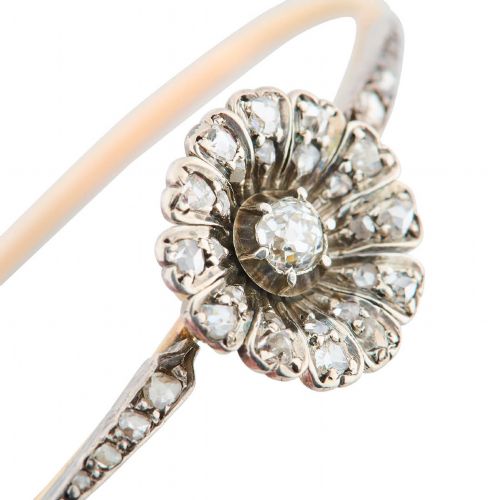
The version most commonly met on this page is the platinum Art Deco bracelet featuring clustered diamonds alongside sapphires, emeralds, or rubies. Victorian and Edwardian gold and silver pieces also appear frequently, often incorporating seed pearls or coloured gemstones alongside old-cut diamonds.
How they were made
Goldsmiths and platinumsmiths utilised durable metals such as platinum, 15ct gold, 18ct yellow gold, and silver to house stones safely. Platinum gained prominence in the early twentieth century for its strength in holding intricate geometric designs with minimal metal visibility.
Craftsmen set old mine cut, rose cut, and modern diamond cuts by hand into elaborate bezels, channel settings, and pavé arrangements. Enamel work and delicate granulation further augmented the metal structures on select Victorian and revivalist examples.
Design eras span from Victorian and Edwardian to Art Deco and mid-century fine jewellery.
What varies in quality
The calibre of lapidary work and the integration of secondary gems like rubies, sapphires, and emeralds dictate the upper tier of these pieces. Superior examples exhibit harmonious gemstone proportioning and secure, flush stone settings that withstand daily wear.
Structural integrity of the hinges, clasps, and safety chains marks the difference between everyday utility and delicate preservation. Master goldsmiths achieved seamless articulation in flexible platinum bracelets, whereas lesser pieces suffer from rigid movement or replaced components.
Ilias Lalaounis
The Antique Diamond Cuff Bracelet Glossary
- Old mine cut
- An early diamond cutting style characterised by a cushion shape, high crown, and large culet facet. This cut appears frequently in Victorian and Edwardian pieces.
- Platinum
- A dense, ductile, and malleable white metal utilised extensively in twentieth-century jewellery for its exceptional tensile strength. It securely holds heavy diamond carat weights.
- Bangle
- A rigid solid or hinged bracelet that slips over the hand or fastens closely around the wrist. These items frequently incorporate secure tongue and box clasps.
- Belle Epoque
- A French design period spanning the late nineteenth and early twentieth centuries noted for delicate platinum garland motifs and diamond-encrusted scrollwork.
Antique Diamond Cuff Bracelet: Frequently Asked Questions
How do I secure an antique bracelet?
Most hinged bangles rely on a snap-in tongue clasp supplemented by a safety chain for added security during wear.
Ensuring the clasp clicks firmly into place prevents accidental loss while moving through daily activities.
Can I wear these bracelets daily?
Sturdy platinum and gold pieces tolerate regular wear provided the stone settings receive periodic inspection by a professional jeweller.
Delicate pearl or enamel-accented designs require more careful handling to avoid surface abrasion.
How do I distinguish Art Deco from Victorian?
Art Deco pieces favour strict geometric symmetry, platinum settings, and calibre-cut sapphires or emeralds. Victorian examples lean towards warmer gold tones, floral motifs, and old mine cut diamonds.
Examining the metal choice and overall structural silhouette quickly reveals the manufacturing period.
What is the difference between a cuff and a bangle?
A bangle is typically a rigid circular band that slides or hinges onto the wrist. A cuff often describes a broader, more substantial band construction.
Both terms frequently overlap in historical jewellery descriptions depending on the width of the piece.