



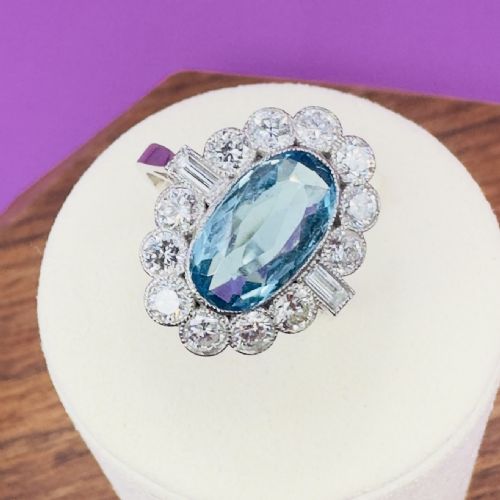


Antique Diamond and Aquamarine
Antique diamond and aquamarine pieces pair pale blue beryl with brilliant stones across Edwardian, Art Deco and mid-century designs.
Antique Diamond and Aquamarine
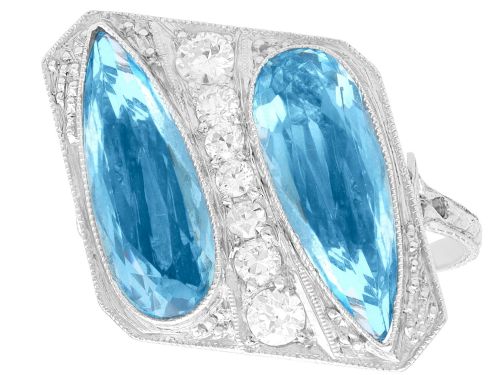
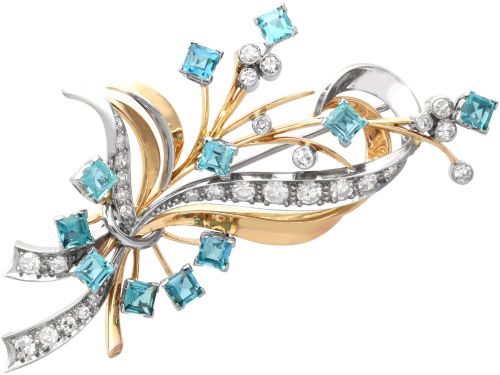
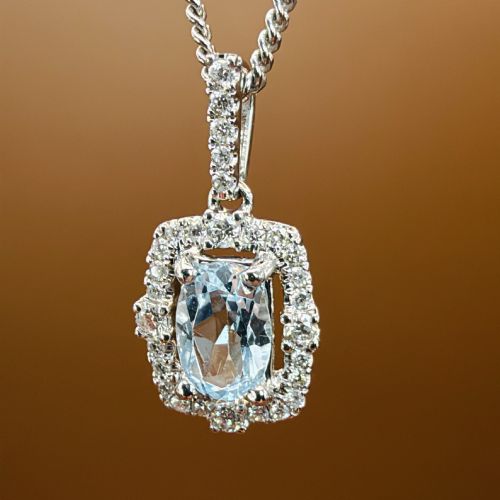
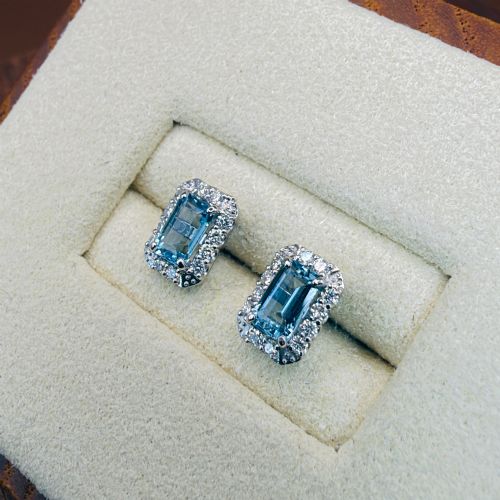
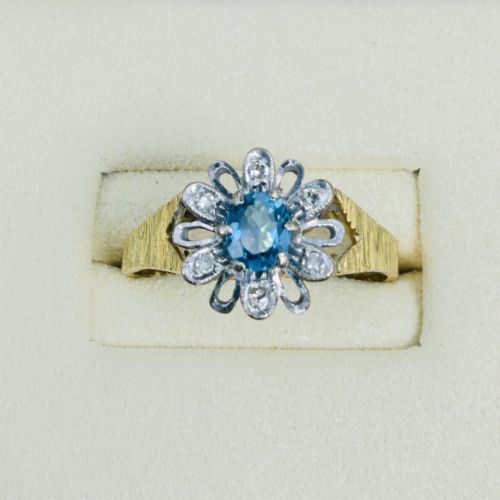
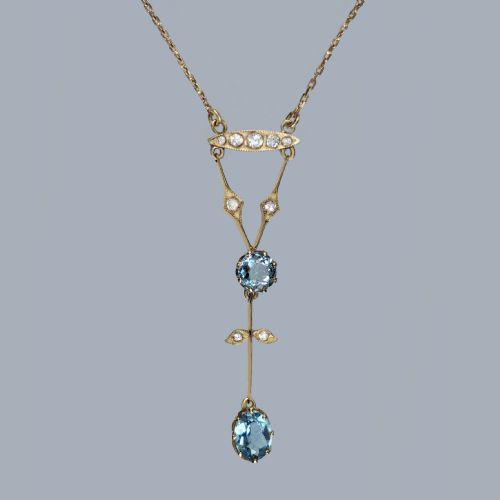
When you search for antique diamond and aquamarine, you find rings, drop earrings, pendants, necklaces and brooches spanning the Victorian era through to the mid-century. The selection here leans heavily towards Art Deco platinum and white gold settings alongside delicate Edwardian gold work.
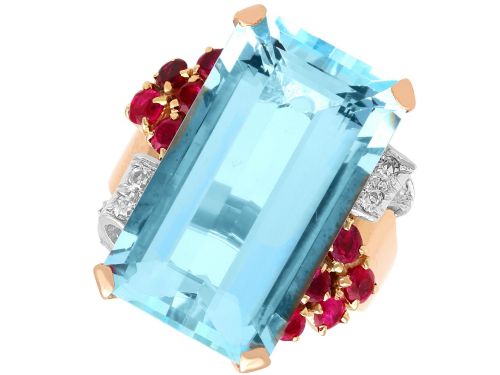
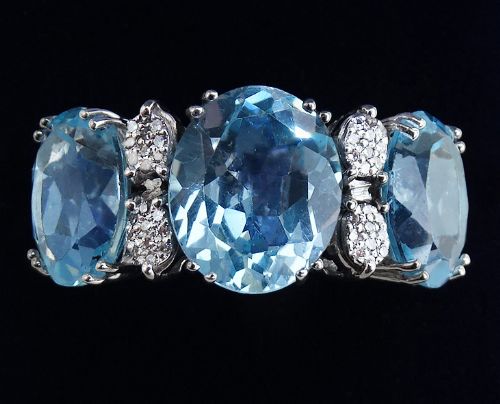
Rings dominate the offering, ranging from substantial emerald cut cluster cocktails to slender trilogy designs. Pendants and drop earrings appear frequently, often suspending large pale beryls beneath configurations of old cut or baguette diamonds.
The periods represented stretch from the late nineteenth century into the nineteen-fifties, capturing stylistic shifts from flowing organic lines to strict geometric symmetry. Every piece combines the icy blue of aquamarine with the sharp flash of diamonds.
Materials and construction
Makers set these stones in platinum, white gold, yellow gold in various carats such as nine, fourteen and eighteen, and occasional combinations of platinum and gold. Platinum gained favour during the Edwardian and Art Deco decades for its strength in holding delicate piercing and tiny claw settings.
Stones take characteristic cuts of the eras, including emerald cuts, old cuts and baguettes, accompanied by pearls, demantoid garnets, tourmalines and peridots in specific Victorian and Edwardian examples. Metalwork relies on fine millegrain edges, open wirework frames and secure prong settings.
Antique Diamond and Aquamarine Retail Price Guide 2026
Typical asking prices for diamond and aquamarine among the pieces listed under this phrase on Sellingantiques today, from the lower quarter to the upper quarter. They describe what is for sale here now, not the wider market.
Listings feature platinum, yellow gold, white gold and nine to eighteen carat gold across Edwardian, Art Deco and mid-century periods.
Assessing quality
Quality rests upon the depth of colour and clarity in the central beryl, alongside the cut and brilliance of the accompanying diamonds. Stones with strong, even blue saturation command attention above pale or washed-out crystals.
The integrity of the metalwork, from hand-pierced platinum galleries to crisp millegrain decoration, separates standard production from finer artisan pieces. Original settings that retain their structural weight without thinning or repair demonstrate superior longevity.
The Antique Diamond and Aquamarine Glossary
- Aquamarine
- A transparent blue to greenish-blue variety of beryl named for its seawater hue. It belongs to the same mineral family as emerald and morganite.
- Millegrain
- A decorative technique featuring a row of tiny raised metal beads along the edge of a setting. This finish was widely used in Edwardian and Art Deco jewellery.
- Old cut
- A diamond facet style hand-cut before modern brilliant proportions were standardised. These stones typically possess a smaller table, higher crown and open culet.
- Baguette
- A rectangular step-cut diamond shape with straight parallel sides. It provides linear contrast to round or emerald cut stones in geometric mounts.
- Trilogy ring
- A ring featuring three principal stones symbolising the past, present and future. In this selection, they pair a central aquamarine with flanking diamonds.
Antique Diamond and Aquamarine: Frequently Asked Questions
How do I care for antique aquamarine jewellery?
Clean these pieces gently using warm soapy water and a soft brush, avoiding harsh ultrasonic cleaners that can loosen old settings. Store them separately in lined boxes to prevent diamonds from scratching the softer beryl.
Regular checks by a jeweller will ensure platinum claws and fine millegrain edges remain secure around the stones.
Can I wear an antique aquamarine ring daily?
Aquamarine rates around eight on the Mohs hardness scale, making it durable enough for regular wear when properly mounted. However, antique rings with delicate Edwardian wirework or high-set Art Deco galleries require mindful handling during heavy tasks.
Removing cocktail rings before manual work preserves the integrity of the original metal and stone prongs.
What is the difference between Edwardian and Art Deco mountings?
Edwardian mounts favour yellow gold, platinum and pearls with lacy, garland-inspired motifs that echo nineteenth-century elegance. They often incorporate softer curves and naturalistic floral themes.
Art Deco mounts shift sharply towards platinum and white gold, prioritising geometric symmetry, step-cut stones and clean architectural lines.