



Antique Devotional Medal
An antique devotional medal brings together French religious art and fine gold smithing, offering a wearable piece of history.
Antique Devotional Medal
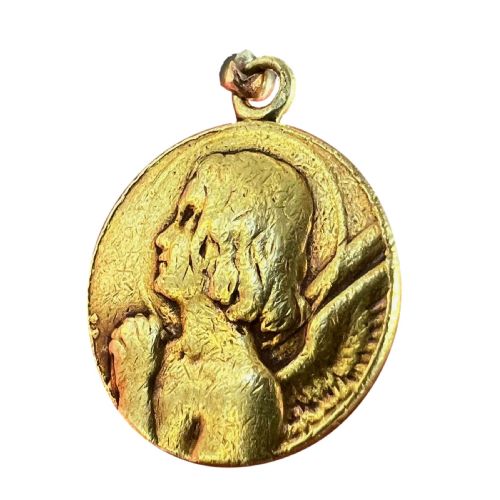
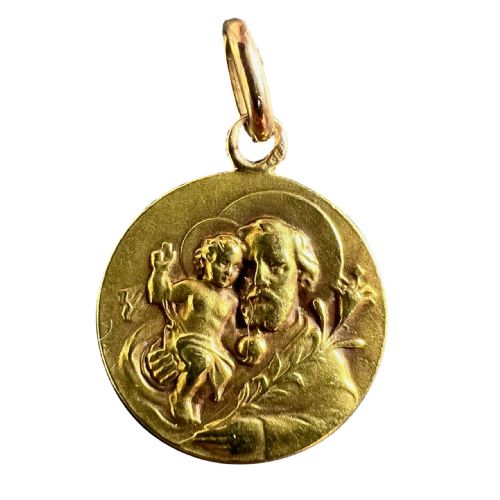
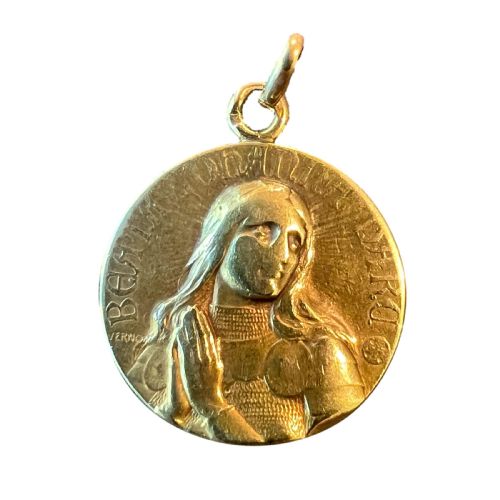
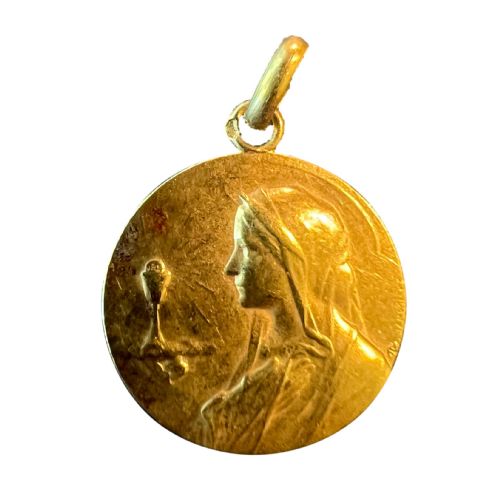
An antique devotional medal is a small, wearable pendant typically depicting figures such as the Virgin Mary, the Madonna and Child, or Saint Christopher. These pieces belong predominantly to French religious art traditions dating from the late nineteenth century through to the mid twentieth century.
Most examples found here take the form of pendants, charms, or framed medals designed to be worn around the neck. They appear in varied shapes, including oval formats, incorporating sacred iconography like the Sacred Heart and the Crown of Thorns.
The objects stem from a culture of personal devotion and travel protection, functioning simultaneously as jewellery and as items of spiritual significance. Collectors encounter works spanning several decades, reflecting changing artistic movements from Art Nouveau to later ecclesiastical designs.
How they were made
These items are constructed primarily from 18ct yellow gold, rose gold, and occasionally white gold, shaped into detailed medals and pendants. Goldsmiths employed casting, stamping, and fine hand engraving to produce the intricate depictions of religious figures and floral motifs.
Selected pieces incorporate decorative techniques such as plique-à-jour enamel, which creates a translucent, stained-glass effect within the gold frame. Other examples integrate gemstones, seed pearls, mother-of-pearl, and diamonds to accent the central sacred imagery.
Antique Devotional Medal Retail Price Guide 2026
Typical asking prices for devotional medal among the pieces listed under this phrase on Sellingantiques today, from the lower quarter to the upper quarter. They describe what is for sale here now, not the wider market.
Listings feature 18ct yellow, rose, and white gold, alongside specialised materials like plique-a-jour enamel and mother-of-pearl.
What varies in quality
Quality depends heavily on the crispness of the hand engraving and the depth of relief in the figures, which distinguishes standard production from finer masterworks. Medals bearing signatures from known artists display superior sculptural definition in facial expressions and drapery.
The presence and preservation of delicate decorative elements, such as plique-à-jour enamel or seed pearl settings, elevate the refinement of a piece. The weight and gauge of the gold frame also influence the overall substance and longevity of the medal.
Emile Monier·Mazzoni·Pageli Perriat·Dropsy·Sellier·Tairac·Pageri Perroud·Perriat·Charl·Arnault·Grün·Ruffony
The Antique Devotional Medal Glossary
- Plique-a-jour enamel
- An enamelling technique where enamel is applied in cells without a backing, allowing light to shine through the transparent material. It resembles miniature stained glass.
- Madonna and Child
- A traditional representation of the Virgin Mary holding the infant Jesus. This subject appears frequently on French religious medals.
- Pendant medal
- A small devotional object designed with a loop or bail for suspension on a chain. These items combine medallic art with personal jewellery.
Antique Devotional Medal: Frequently Asked Questions
What do these medals depict?
The pieces primarily portray figures from Christian tradition, most notably the Virgin Mary, the Madonna and Child, and various saints such as Saint Christopher and Saint Joseph.
Designs also incorporate specific sacred symbols, including the Sacred Heart, the Crown of Thorns, and floral motifs integrated into the metalwork.
How were they worn?
These items were designed primarily as personal pendants or charms to be suspended from a gold chain around the neck.
Many incorporate integrated loops or specialised frames that allowed them to rest securely against the wearer as a constant source of protection and devotion.
How do I date an antique medal?
Dating relies on stylistic clues, workshop signatures, and material compositions that align with specific manufacturing periods. Art Nouveau curves and specific maker signatures often point toward the turn of the twentieth century.
Later pieces from the decades following tend to feature simplified ecclesiastical styling and altered gold colours, helping to establish a chronological framework.
Are these pieces purely decorative?
While created with high levels of goldsmithing skill and artistic engraving, their primary origin lies in personal religious devotion and travel protection. They served as tangible expressions of faith for the original owners before entering the collector market.
Today, buyers appreciate them both for their intricate French craftsmanship and for their historical role in personal spirituality.