



Antique Desk Lens
An antique desk lens sits at the heart of any study, bringing clarity to small print while serving as an elegant object on the blotter.
Antique Desk Lens
An antique desk lens is an optical instrument designed for reading and examining documents, maps, and books upon a desk or library table. These pieces function as both practical library aids and decorative desk accessories.
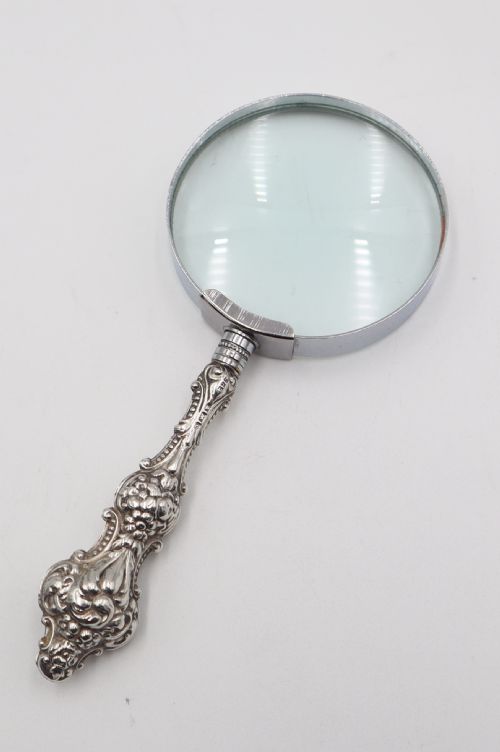
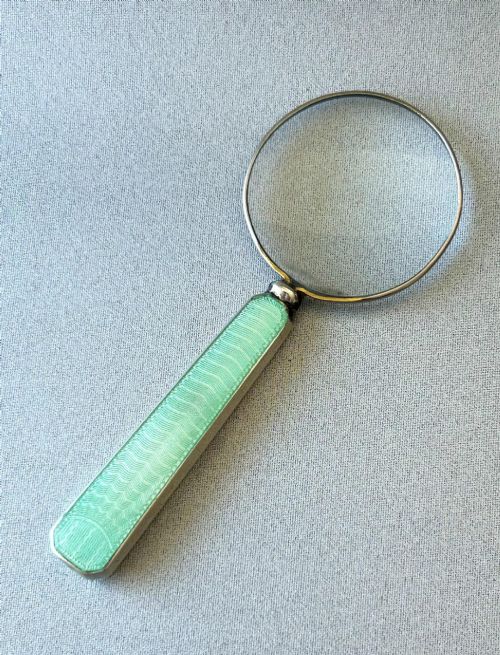
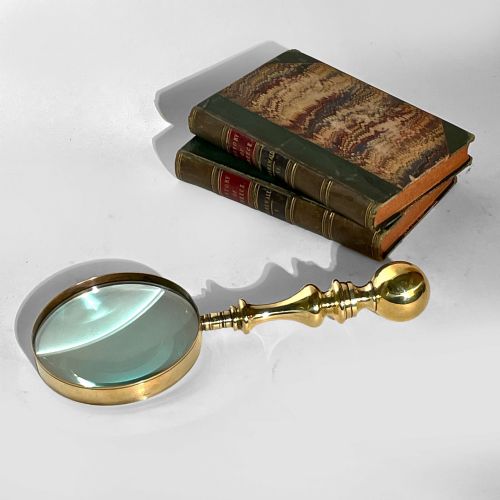
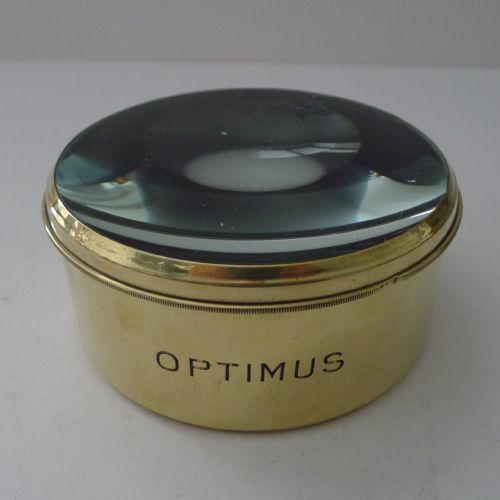
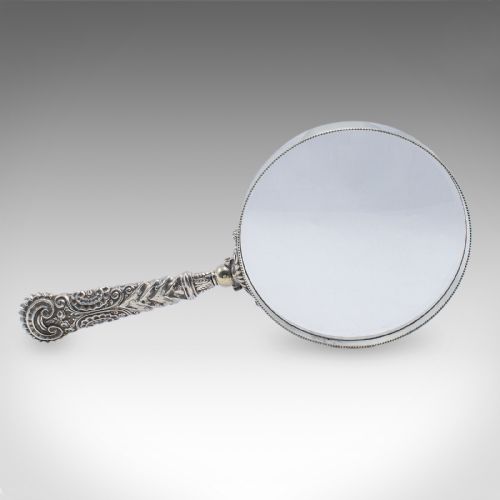
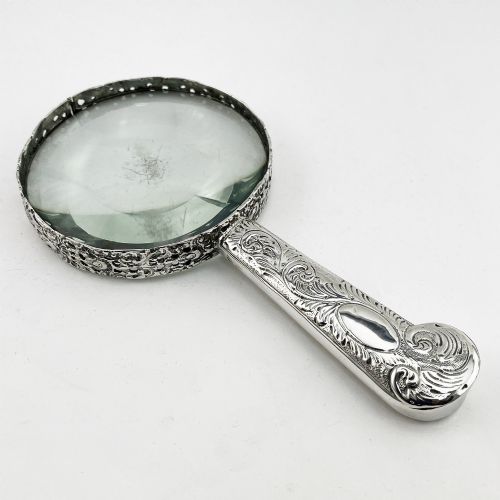
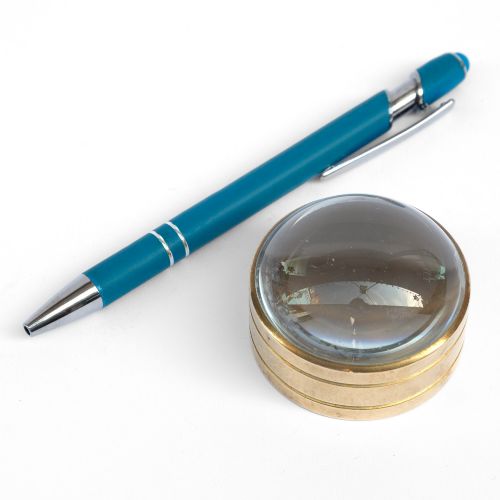
The most common examples encountered in this selection take the form of handheld magnifiers with decorative handles, alongside desk top lenses mounted in brass stands. These utilitarian objects span periods from the Victorian era through the Edwardian years and into the Art Deco period.
Makers ranged from notable retailers like Asprey and Hermes to specialist silversmiths and opticians. Forms vary from simple folding pocket lenses to substantial paperweights and pivoting bullseye designs.
Materials and construction
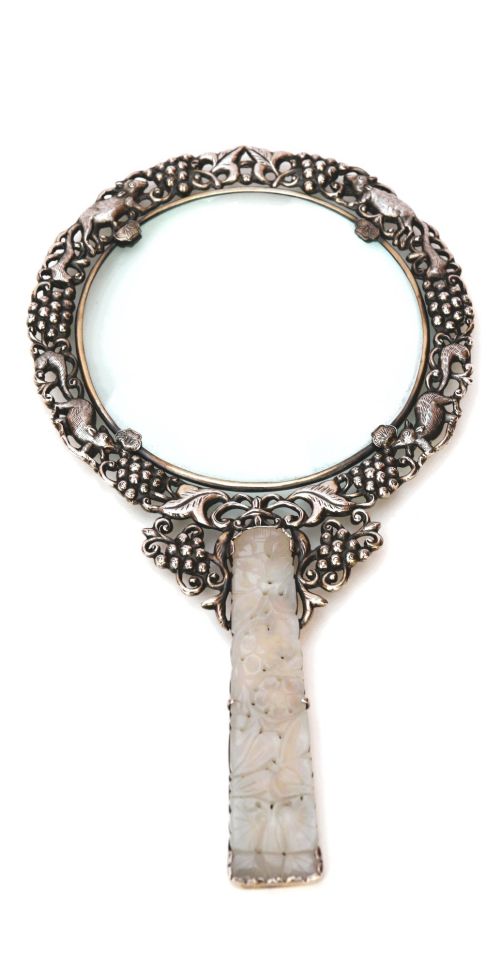
Glass optics form the primary lens element, mounted in frames and handles fashioned from brass, sterling silver, and silver plate. Makers often incorporated natural materials such as jade, ebony, and shagreen to add texture and luxury to the handle.
Metal components show traditional silversmithing and brass-founding techniques, including hallmarks indicating assay offices like Birmingham. Leather cases and fitted boxes occasionally accompany these optical instruments, lined with silk or velvet.
Antique Desk Lens Retail Price Guide 2026
Typical asking prices for desk lens among the pieces listed under this phrase on Sellingantiques today, from the lower quarter to the upper quarter. They describe what is for sale here now, not the wider market.
Quality and craftsmanship
Quality rests in the clarity and weight of the glass lens, the durability of its mount, and the choice of handle materials like silver or shagreen over base metals and celluloid. Signed pieces by established makers or retailers command greater attention.
Superior execution shows in smooth pivoting mechanisms, secure mounts that hold the lens firmly without slack, and crisp hallmarks on precious metals. Simple brass library aids rely entirely on the purity of their casting and the polish of their metal.
Mappin & Webb·P H Vogel & Co·CW Dixey London·Francis West·Asprey
The Antique Desk Lens Glossary
- Bullseye lens
- A thick, hemispherical magnifying glass that sits directly on a map or page to illuminate and enlarge text.
- Shagreen
- Prepared sharkskin or rayskin with a pebbled texture, frequently utilised by luxury houses during the Art Deco period for handles.
- Stanhope lens
- A cylindrical optical lens offering high magnification of microscopic photographs placed at its focal point.
- Hallmark
- A series of stamped marks on precious metals indicating the maker, assay office, and year of testing.
Antique Desk Lens: Frequently Asked Questions
How do I date an antique desk lens?
Dating relies heavily on silver hallmarks, assay office letters, and stylistic markers such as Art Deco geometry or Victorian ornamentation.
Patents stamped into the metalwork, such as Webber Patent, also provide a precise year or era of manufacture.
What is the difference between a desk lens and a paperweight?
While many desk lenses double as paperweights due to their heavy brass or glass bases, pure paperweights lack optical magnification.
Bulbous desk lenses combine both functions, sitting flat on documents to hold them in place while enlarging the text underneath.
Are these lenses suitable for daily reading use?
Most antique desk lenses retain their original optical clarity and function perfectly well for reading small print or examining fine details.
Users should handle pieces with organic handles like shagreen or antique celluloid with care to preserve their historical condition.
How should I clean a silver mounted magnifying glass?
Silver components require gentle polishing with a soft cloth, avoiding any contact between polish liquids and the glass or delicate handle materials.
Glass elements may be cleaned simply with a microfiber cloth to remove dust and fingerprints.