


Antique Derby Cabinet Dish
These antique derby cabinet dish pieces are fine porcelain items for display and dessert service, offering centuries of hand-painted botanical, armorial and Imari decoration.
Antique Derby Cabinet Dish
An antique derby cabinet dish is a porcelain plate or shallow vessel made for display or dessert service, originating from the historic Derby factories. The selection on this page ranges across the eighteenth, nineteenth and twentieth centuries, spanning periods from the Georgian and Regency eras through to the Victorian, Edwardian and later decades.
The forms appearing here include cabinet plates, dessert plates, lobed dishes, shell plates and decorative dishes. Many pieces survive as pairs or individual items, showing the evolving output of the works from early soft-paste porcelain to later bone china and standard porcelain bodies.
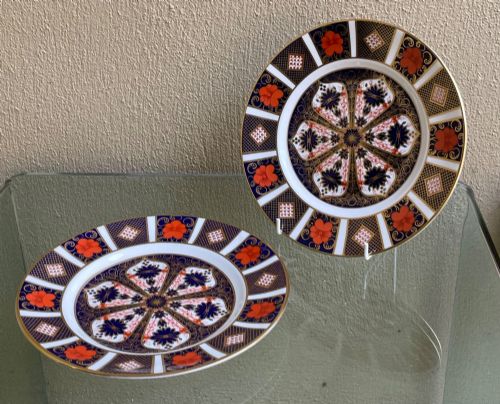
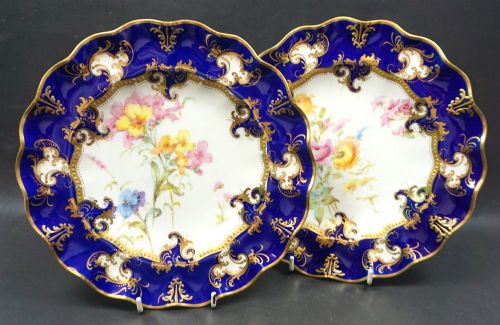
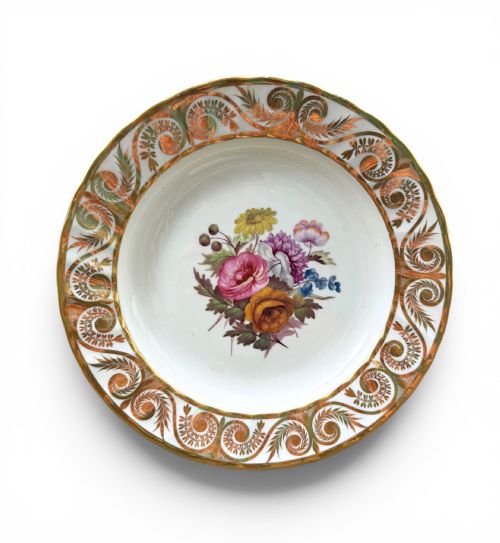
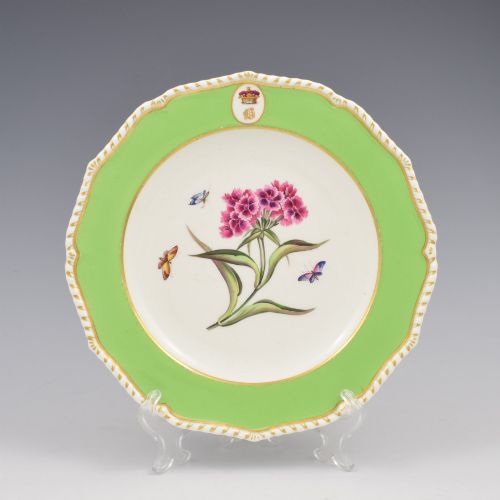
Buyers meet works decorated in diverse aesthetic traditions, from Kakiemon style patterns and the Kylin pattern to armorial designs, floral studies, fruit painting and botanical subjects like Sweet William and rose. Factory names such as Bloor Derby and Royal Crown Derby recur across the inventory.
What varies in quality
The quality of an antique derby cabinet dish is determined by the skill and reputation of the painter and the complexity of the design. Pieces featuring detailed botanical studies, fruit or armorial crests by known decorators command greater attention than standard geometric or simple floral patterns.
The crispness of the porcelain body, the precision of the gilding and the preservation of the enamel colours separate finer examples from standard production. Early soft-paste bodies and specific named factory periods, such as the Bloor Derby or early Royal Crown Derby eras, also influence the character of the piece.
The listings on this page span the 18th century, 19th century, Regency, Georgian, Victorian and Edwardian periods.
Royal Crown Derby·Bloor Derby·Chelsea Derby
The Antique Derby Cabinet Dish Glossary
- Soft-paste porcelain
- An early ceramic composition fired at lower temperatures than hard-paste porcelain, common in eighteenth-century Derby production. It yields a creamy body and a distinctive glaze texture.
- Armorial
- A decorative scheme featuring a coat of arms or family crest, frequently commissioned by noble patrons for dessert services. These plates often denote specific historical lineages.
- Imari style
- A decorative tradition utilising iron red, cobalt blue and gilt, inspired by Japanese export porcelain. Derby adopted this palette early and continued it into the twentieth century.
- Enamel
- Vitreous coloured paints applied over the glazed surface and fired at lower heat to fix the pigments. It forms the vibrant hues seen in floral and fruit painting.
- Bone china
- A porcelain body incorporating bone ash, introduced to increase strength and whiteness. It became widely utilised in nineteenth and twentieth-century Derby wares.
Antique Derby Cabinet Dish: Frequently Asked Questions
How do I date an antique derby cabinet dish?
Dating relies on factory marks stamped or painted on the underside, combined with the ceramic body type and painting style. Soft-paste pieces and early hand-written marks generally indicate eighteenth-century origin.
Later nineteenth-century pieces often display Bloor Derby marks, while twentieth-century examples frequently bear Royal Crown Derby factory stamps and registration numbers.
Were these dishes used for food?
Many dessert plates and dishes were originally manufactured as part of grand dessert services for dining rooms. They held fruit, sweetmeats or confections at the conclusion of formal meals.
Over time, finer pieces transitioned to display roles in cabinets, protecting delicate enamels and extensive gilding from daily wear.
What is the difference between a cabinet plate and a dessert plate?
Cabinet plates were primarily produced for visual display in glazed furniture, featuring elaborate artistic painting or armorials. Dessert plates served a functional role on the dining table before joining cabinet displays.
In practice, eighteenth and nineteenth-century workshops often decorated both forms with equal artistic ambition.
How should I display my derby dish safely?
Dishes should rest securely on stable plate stands designed for porcelain weight, avoiding direct pressure on delicate gilt rims. Wall mounting requires specialised hangers with protective coating to prevent chipping.
Keep pieces away from direct sunlight to preserve the fugitive enamel colours used in early botanical and fruit painting.