




Antique Demilune Entry Table
An antique demilune entry table brings curved elegance to a hallway, offering a shallow surface designed to sit flat against a wall.
Antique Demilune Entry Table
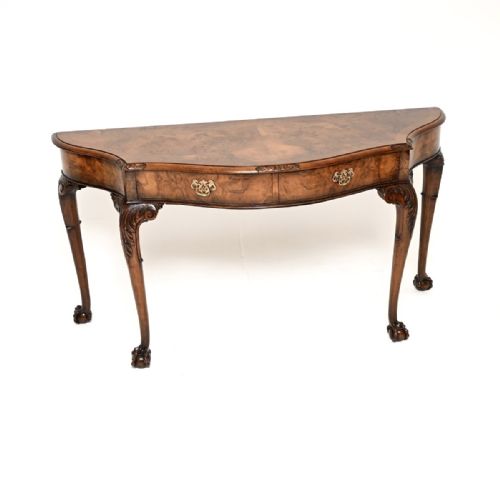
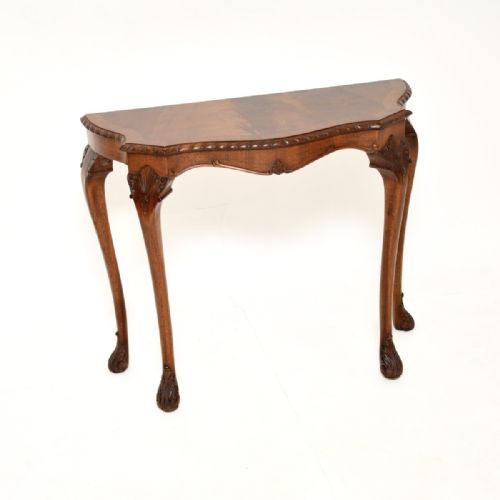
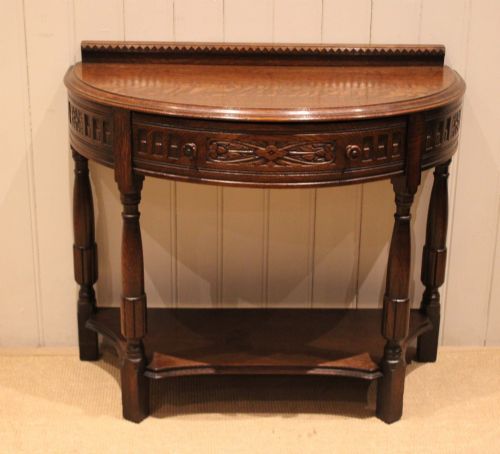
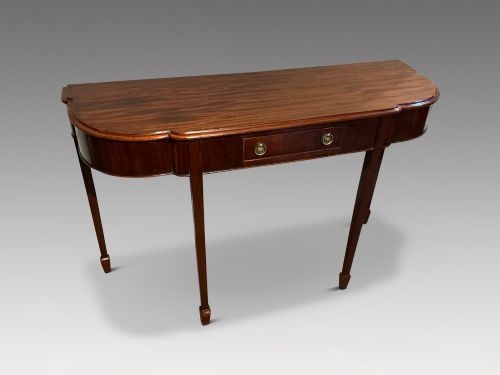
An antique demilune entry table takes the shape of a half-moon, fitting snugly into narrow corridors and hallways where rectangular furniture protrudes too far. These items appear across multiple periods, including the Georgian era, the Victorian period, and the Edwardian years.
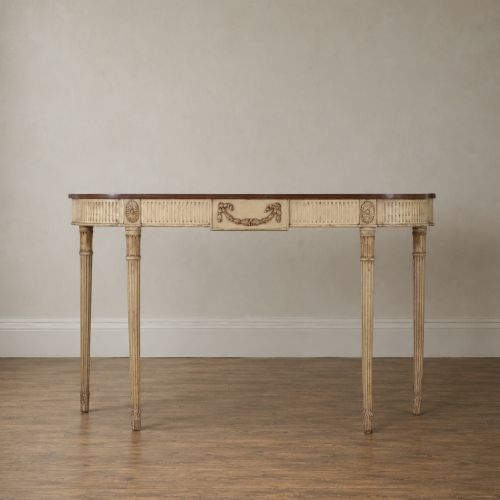
The listings span diverse geographical origins and interpretations, from English mahogany designs to French painted finishes and Swedish folk pieces. Buyers frequently encounter revival pieces from the early twentieth century alongside genuine eighteenth-century examples.
Console tables and hall tables form the primary object types for this search phrase, often serving as decorative surfaces beneath matching mirrors. The format accommodates smaller spaces while providing a distinct period aesthetic.
How they were made
Cabinetmakers utilised timber such as mahogany, satinwood, and rosewood, frequently applying decorative marquetry or intricate veneer patterns across the semicircular top. Solid oak and walnut also appear in regional European workshops.
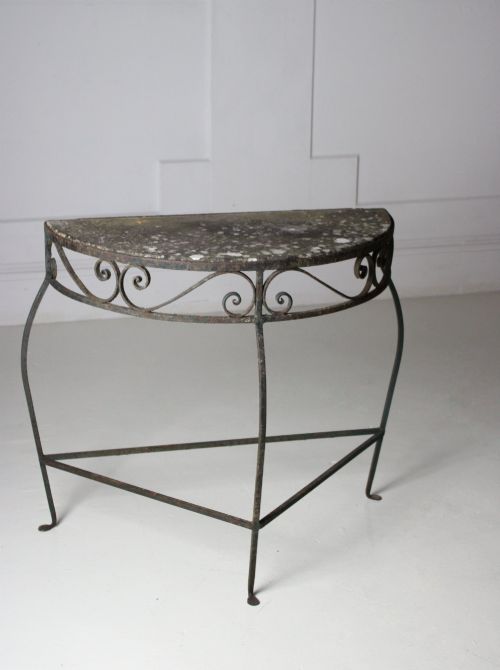
Structural elements incorporate brass mounts, carved giltwood, and wrought iron supports depending on the stylistic influence. Marble tops provide a durable and cool surface on specific nineteenth-century and Edwardian console tables.
Antique Demilune Entry Table Retail Price Guide 2026
Typical asking prices for demilune entry table among the pieces listed under this phrase on Sellingantiques today, from the lower quarter to the upper quarter. They describe what is for sale here now, not the wider market.
Listings for this search phrase span from the eighteenth century through to the 1930s, featuring mahogany, satinwood, marble, and giltwood.
What varies in quality
The refinement of the timber selection and the precision of the inlay dictate the upper tiers of craftsmanship. Finer pieces demonstrate meticulous hand-carving and balanced proportions across the curved apron.
Origin and attribution elevate certain works, particularly when associated with notable makers or specific regional traditions. The integrity of the original painted surfaces or polished veneers significantly influences the character of each piece.
Edward and Roberts·Thonet
The Antique Demilune Entry Table Glossary
- Demilune
- Half-moon shape characteristic of these tables, allowing them to sit flush against a wall while projecting a curved front into the room.
- Console table
- A table designed to be fixed against a wall, frequently supported by ornamental legs or brackets rather than four freestanding posts.
- Marquetry
- Decorative veneer work formed by fitting pieces of various coloured woods into patterns to create pictorial or geometric designs on the tabletop.
- Pier table
- An ornamental table designed specifically to stand against the wall between two windows, often paired with a matching wall mirror above.
- Padoukwood
- A dense, durable exotic timber occasionally utilised in eighteenth-century cabinetmaking for its rich reddish-brown tone.
Antique Demilune Entry Table: Frequently Asked Questions
Where should I put an antique demilune entry table?
These tables suit narrow hallways, landings, and entrance foyers because their flat back rests securely against the wall. The shallow depth prevents obstruction in confined spaces.
They also function effectively in living rooms or dining spaces beneath a wall mirror or painting, serving as a display surface for lamps and decorative objects.
How do I identify a Georgian demilune table?
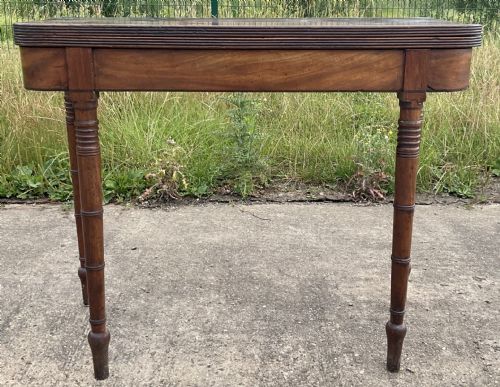
Georgian examples often feature solid mahogany construction with understated stringing inlay, tapered legs, and subtle proportions. They date from the eighteenth or early nineteenth century.
Revival versions from the early twentieth century mimic these eighteenth-century characteristics but typically display cleaner internal construction and modern timber seasoning.
What is the difference between a console and a hall table?
Console tables historically fastened to the wall with structural brackets or legs beneath, often holding heavy marble slabs. Hall tables served a similar domestic function for receiving callers.
In modern usage, the terms overlap considerably, particularly for semicircular furniture placed in entrance areas.
Can I use a marble top table in an entryway?
Marble top console tables provide a resilient surface for keys, post, and decorative bowls in busy entranceways. The stone resists moisture and everyday wear.
Edwardian and nineteenth-century makers frequently paired marble with wrought iron or carved wood bases to create robust hall furniture.