

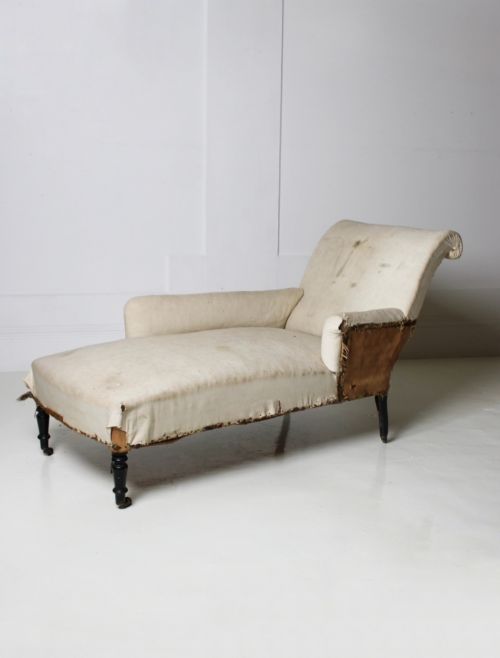


Antique Deconstructed Couch
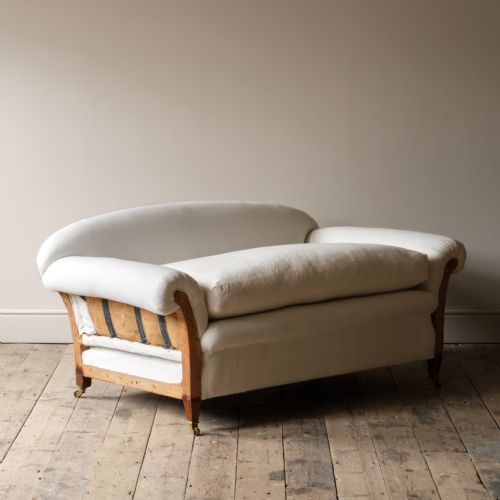
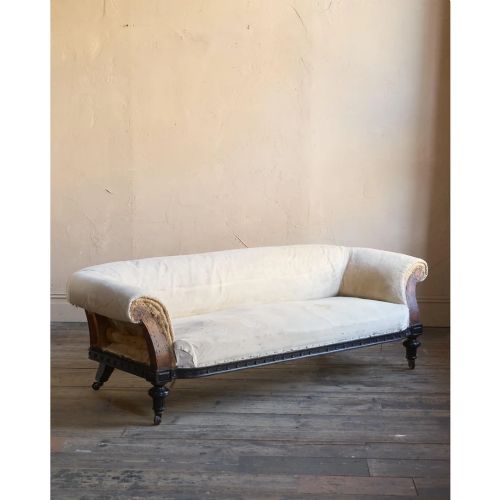
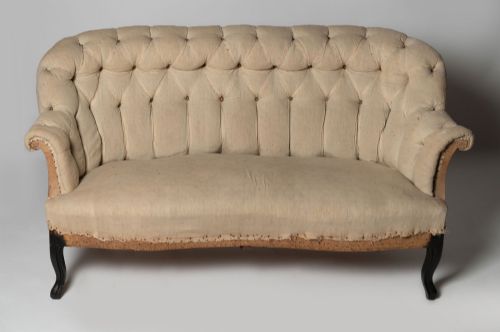
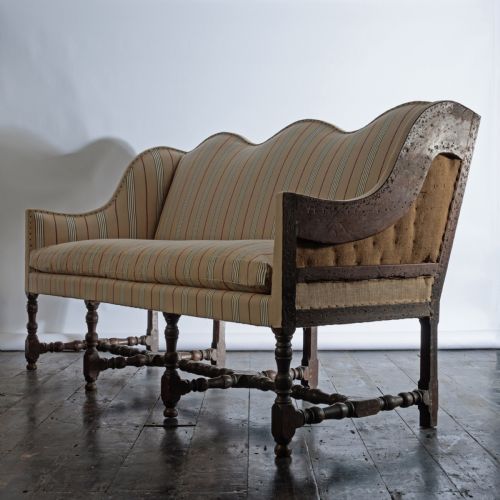
An antique deconstructed couch strips away formal upholstery to reveal the raw canvas, webbing, and timber frame beneath.
Antique Deconstructed Couch
When you search for an antique deconstructed couch, you are looking at seating stripped back to its foundational inner construction, showing hessian and calico linings instead of a finished outer covering. The pieces available here span from the 17th century through the Victorian period, 1910, 1920, and 1930s, encompassing styles such as English Country House, Aesthetic Movement, French Provincial, and Napoleon III.
The forms you are most likely to encounter on this page include Chesterfield sofas, deep-seated country house two-seater sofas, wingback sofas, daybeds, and chaise longues. These pieces range from substantial three-seater couches down to individual chaise longues, bringing a raw, textural honesty to traditional seating forms.
Originating largely from English and French traditions, these couches combine structural timber frames with visible cotton, hessian, and calico support layers. The aesthetic relies entirely on the exposed skeleton and internal padding materials rather than decorative exterior textiles.
How they were made
The underlying frames of these couches are built from solid timbers including mahogany, walnut, beech, and general timber, providing a robust skeletal structure designed to endure decades of use. Brass detailing often appears in the form of tacks or castors, securing the upholstery layers and elevating the mobility of heavier wooden frames.
Technique relies on traditional inner stuffing retained by coarse hessian and smoother calico or cotton layers, held in tight alignment by rows of metal tacks rather than being hidden beneath decorative velvet or damask. This exposed method of layering raw textiles allows the structural integrity and hand-stitched contours of the piece to remain visible to the room.
Antique Deconstructed Couch Retail Price Guide 2026
Typical asking prices for deconstructed couch among the pieces listed under this phrase on Sellingantiques today, from the lower quarter to the upper quarter. They describe what is for sale here now, not the wider market.
A solitary chaise longue waits patiently with its piecrust edge, wondering why everyone else got a three-seater.
What varies in quality
Quality in a deconstructed piece rests heavily on the integrity of the exposed timber frame and the precision of the joinery rather than the condition of a surface fabric. A well-made frame shows careful timber selection, such as figured walnut or dense mahogany, with joints that remain tight and true despite the removal of outer upholstery.
The execution of the interior webbing and tack work also distinguishes finer examples from simpler workshop output. Neat alignment of brass tacks and evenly tensioned hessian indicate a high standard of underlying craftsmanship that rewards close inspection.
Hampton and Sons
The Antique Deconstructed Couch Glossary
- Deconstructed
- Upholstery stripped back to expose the hessian, webbing, calico, and internal frame. This style highlights the raw materials and structural bones of the seating.
- Hessian
- A coarse woven fabric, typically made from jute fibres, used as the primary foundation layer to hold stuffing in place. It forms the textured beige surface characteristic of stripped furniture.
- Calico
- A plain-woven cotton fabric used beneath outer coverings or left exposed on deconstructed pieces to provide a smooth, pale interior layer. It offers a clean surface over the internal padding.
- Webbing
- Strong woven bands stretched across the frame springs to support the weight of the seat. Traditional versions utilise hemp or jute webbing tacked directly to the timber rails.
Antique Deconstructed Couch: Frequently Asked Questions
What is a deconstructed couch?
A deconstructed couch is a traditional seating form where the final decorative outer fabric has been removed to expose the hessian, calico, webbing, and timber frame beneath. This exposes the inner mechanics and raw materials of the furniture for a textural aesthetic.
These pieces retain their original Victorian, Regency, or 20th-century shapes, such as Chesterfields or daybeds, while offering a stripped-down appearance that suits neutral or industrial interiors.
Are these couches comfortable to use?
Yes, because the core padding, springs, and internal support systems remain intact beneath the calico and hessian layers. They provide the same supportive sit as fully upholstered antiques.
Makers built these frames for deep, supportive seating, particularly in country house and Chesterfield formats, ensuring daily usability without needing heavy surface textiles.
How do I clean exposed calico?
Exposed calico and hessian require gentle maintenance, typically limited to careful surface dusting with a soft brush or low-suction vacuum attachment. Avoid aggressive scrubbing which can disturb the underlying tacks and padding.
Spot cleaning should be done sparingly with mild, dry agents to prevent water rings on the untreated cotton and jute fibres.
How do I date a deconstructed sofa?
Dating relies on examining the timber species used in the frame, the shaping of the legs, and the joinery methods visible beneath the exposed upholstery. Styles such as Regency sabre legs or 17th-century Baroque forms provide clear chronological markers.
Additionally, the presence of specific maker stamps on the timber rails or the style of brass tacks can narrow down the period of manufacture.