



Antique Cutlery Pieces
These antique cutlery pieces encompass boxed canteens, christening sets, and individual serving implements spanning the Victorian era to the Art Deco period.
Antique Cutlery Pieces
Antique cutlery pieces cover everything from large multi-piece canteens housed in fitted wooden cases down to individual butter knives, soup ladles, and caddy spoons. When people search for antique cutlery pieces, they typically encounter Victorian silver settings, Edwardian fish services, and substantial silver-plated sets from the early twentieth century.
The assortment on this page ranges from modest nineteenth-century bone-handled implements to extensive Art Deco services and boxed christening sets. Buyers will find sterling silver alongside silver plate, brass, and diverse handled materials designed for dining and display.
Originating across different eras including the Victorian period and the nineteen-thirties, these items reflect changing dining habits and domestic hospitality. The smaller items such as christening sets sit alongside large canteens intended for complete table service.
What varies in quality
Quality rests on the weight and purity of the metal used, distinguishing heavy sterling silver from plated alternatives, as well as the integrity of the fitted cases. Maker attribution also plays a central role, with established houses commanding distinct attention compared to unmarked pieces.
The preservation of the original fitted case, whether burr walnut or lined velvet, influences the overall integrity of the set. Furthermore, the intricacy of patterns such as Queens or Faneuil demonstrates the level of craftsmanship invested in the individual pieces.
Antique Cutlery Pieces Retail Price Guide 2026
Typical asking prices for cutlery pieces among the pieces listed under this phrase on Sellingantiques today, from the lower quarter to the upper quarter. They describe what is for sale here now, not the wider market.
Materials across these listings include sterling silver, silver plate, brass, wood, fabric, silk, velvet, and mother-of-pearl.
Christofle·Tiffany·Elkington and Co·George Unite
The Antique Cutlery Pieces Glossary
- Sterling silver
- A silver alloy containing 92.5 percent pure silver by mass, frequently marked on quality cutlery pieces to denote metal standard.
- Silver plate
- A layer of silver applied to a base metal core, commonly utilised for large canteens and extensive dining services.
- Canteen
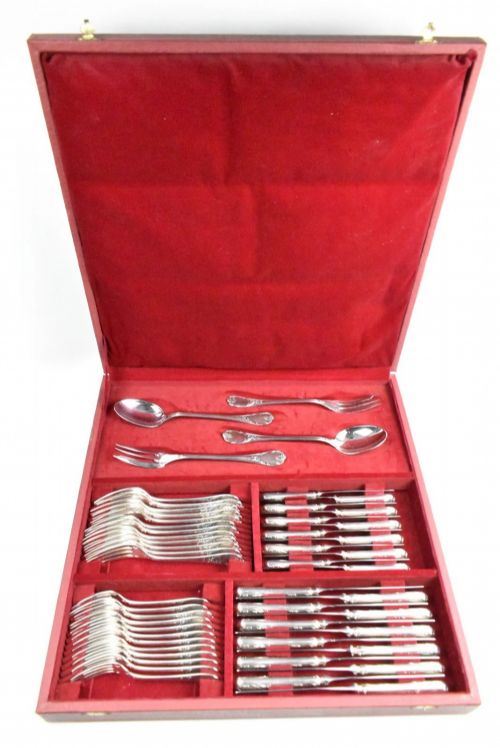
- A fitted box or chest designed specifically to store a complete set of cutlery pieces securely in designated slots.
- Christening set
- A small, specialised presentation group typically comprising a knife, fork, and spoon, often boxed for gift-giving during the Victorian era.
- Mother-of-pearl
- An iridescent inner shell layer utilised extensively for decorative knife handles throughout the nineteenth century.
Antique Cutlery Pieces: Frequently Asked Questions
How do I clean tarnished silver cutlery?
Silver cutlery requires gentle cleaning with a specialised silver cloth or mild polish to remove tarnish without abrading the surface details.
Harsh chemical dips should be avoided on pieces with organic handles like bone or mother-of-pearl to prevent material degradation.
Are silver plate and sterling silver marked differently?
Sterling silver items generally display hallmarks indicating the silver standard, maker, and assay office of origin.
Silver plate items usually bear manufacturer marks specific to electroplating firms rather than official assay sterling hallmarks.
Can antique cutlery be used for daily dining?
Many sturdy sterling silver and silver-plated pieces remain entirely functional for regular meal use today.
Implements featuring delicate handles of mother-of-pearl or bone benefit from careful hand washing rather than automated dishwasher cycles.
What is a cutlery canteen?
A canteen is a dedicated wooden box or cabinet, sometimes made from burr walnut, featuring fitted interior slots for organised storage.
These cases often include velvet or silk linings to protect the metal surfaces from friction when closed.
How do I identify Victorian cutlery?
Victorian pieces frequently display distinct regional hallmarks, heavier gauges of metal, and characteristic revival styles like Rococo or Gothic.
Matching the pattern name and checking for period specific maker marks helps confirm the nineteenth-century production era.